If you read nothing else
- Ships come alongside beside the centre. There is no transfer to reach anything.
- The largest town in the Westfjords, and it is walkable in an hour.
- Which is the practical reason to book an excursion rather than improvise.
- The most visible thing about the town, once someone tells you what they are.
Where the ship puts you
Ísafjörður sits on a curved sandspit that reaches out into Skutulsfjörður, which is itself a side fjord off the very large Ísafjarðardjúp. The town occupies the spit; the harbour is on the sheltered side of it; and the cruise berth is right there.
That geography is unusually convenient. You come down the gangway and you are effectively in the town, with the centre a few minutes on foot. There is no shuttle bus to a distant terminal and no port-gate walk through industrial estate.
Larger ships anchor out and tender in when the berth is occupied or the vessel is too big for it, which adds a boat ride to the start and end of the day. Either way the arrival point is beside the town rather than away from it, and the excursion coaches wait on the pier.
Everything about the day therefore starts on foot. You walk off, you find the coach on the pier, and you are on the road within a few minutes of leaving your cabin.
How small it actually is
Around two and a half thousand people live in Ísafjörður, which makes it the largest town in the Westfjords and the administrative centre for the whole region. Those two facts together tell you most of what you need to know about how empty this part of Iceland is.
You can walk the whole place comfortably in an hour. The old centre has a cluster of timber buildings from the eighteenth and nineteenth centuries, some of the oldest in the country, built when this was a busy trading and fishing port. There is a heritage museum in the old harbour warehouses, a bookshop, a swimming pool, cafés and a handful of restaurants.
On a day when two ships are in, the visitors outnumber the residents. This is worth holding in mind. The town absorbs it well and it remains a working place rather than a stage set, but the ratio is real.
The airport is worth a mention for anyone arriving another way. Its approach runs down a narrow fjord between mountains and requires a turn on the way in, and pilots need a specific certification to fly it. It is regularly described as one of the more demanding scheduled approaches in Europe.
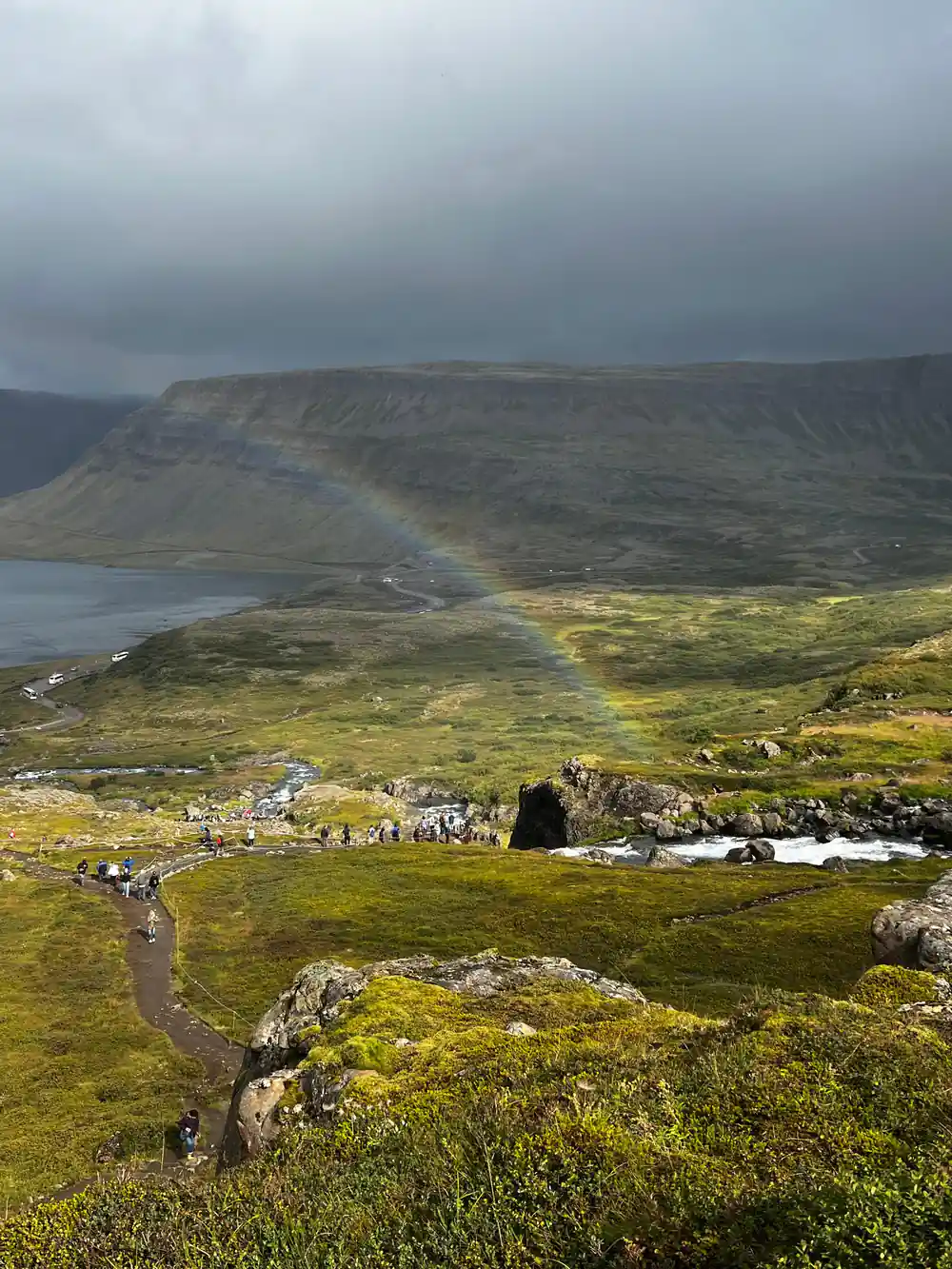
Isafjordur on its spit, with ships alongside the pier
The walls above the houses
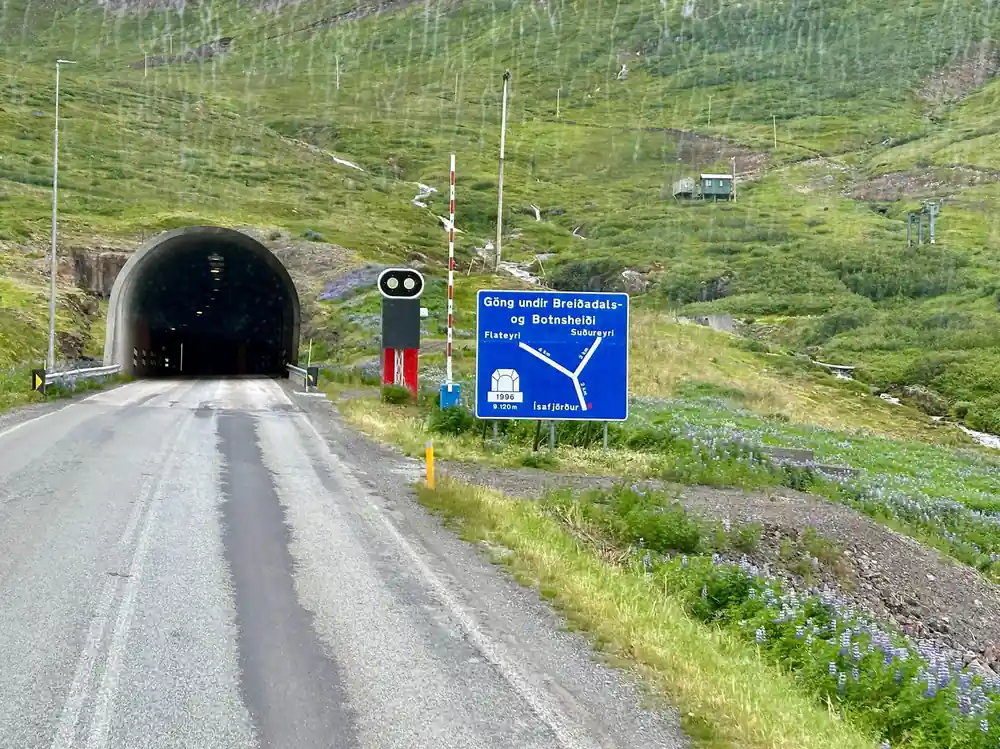
Look up from anywhere in town and you will see enormous earth and concrete structures on the mountainside above the roofs. They are not fortifications and they are not decorative.
They are avalanche defences. The Westfjords have very steep slopes directly above their settlements, and in the mid-1990s two catastrophic avalanches in this region killed dozens of people in their homes. What followed was a national programme of protective works, and the results are the walls, ditches and deflecting dams that now stand above most towns here.
It is the most striking thing in Ísafjörður once you know what you are looking at, and it explains a great deal about the relationship between these towns and the mountains they sit under.
They also tell you something about the winter here, which a visitor arriving in July has no other way of seeing. This is a place where the weather is occasionally a matter of survival rather than comfort.
How an excursion works against the ship
This is the question that decides whether people relax or spend the day watching the clock, so it is worth being clear about.
A shore excursion sold through the ship or through a booking platform is scheduled against the ship's own departure time with a margin built in. The tour is designed to be back at the pier well before all aboard, and the operators running these routes have been doing so for years on a timetable that does not change.
If you are on a ship-sold excursion and the tour is genuinely delayed, the ship's policy is to wait or to make arrangements. If you have booked independently, the responsibility is yours, and the answer is to look at the numbers: a four-hour tour against a call that is usually eight or nine hours leaves a very comfortable buffer.
The one thing worth doing is checking your own ship's all-aboard time, which is not the same as its departure time and is typically half an hour earlier.
2,500
Around two and a half thousand people live in Isafjordur, and it is the largest town in the Westfjords. On a two-ship day the visitors outnumber them.
If the ship cannot call at all
It happens, and honesty is better than reassurance. Ísafjörður sits at the end of a long fjord in a part of the world with serious weather, and a call is occasionally cancelled or cut short for wind or sea state.
That is a decision made by the captain, usually early, and it applies to everyone aboard. Excursions are refunded when the ship does not dock.
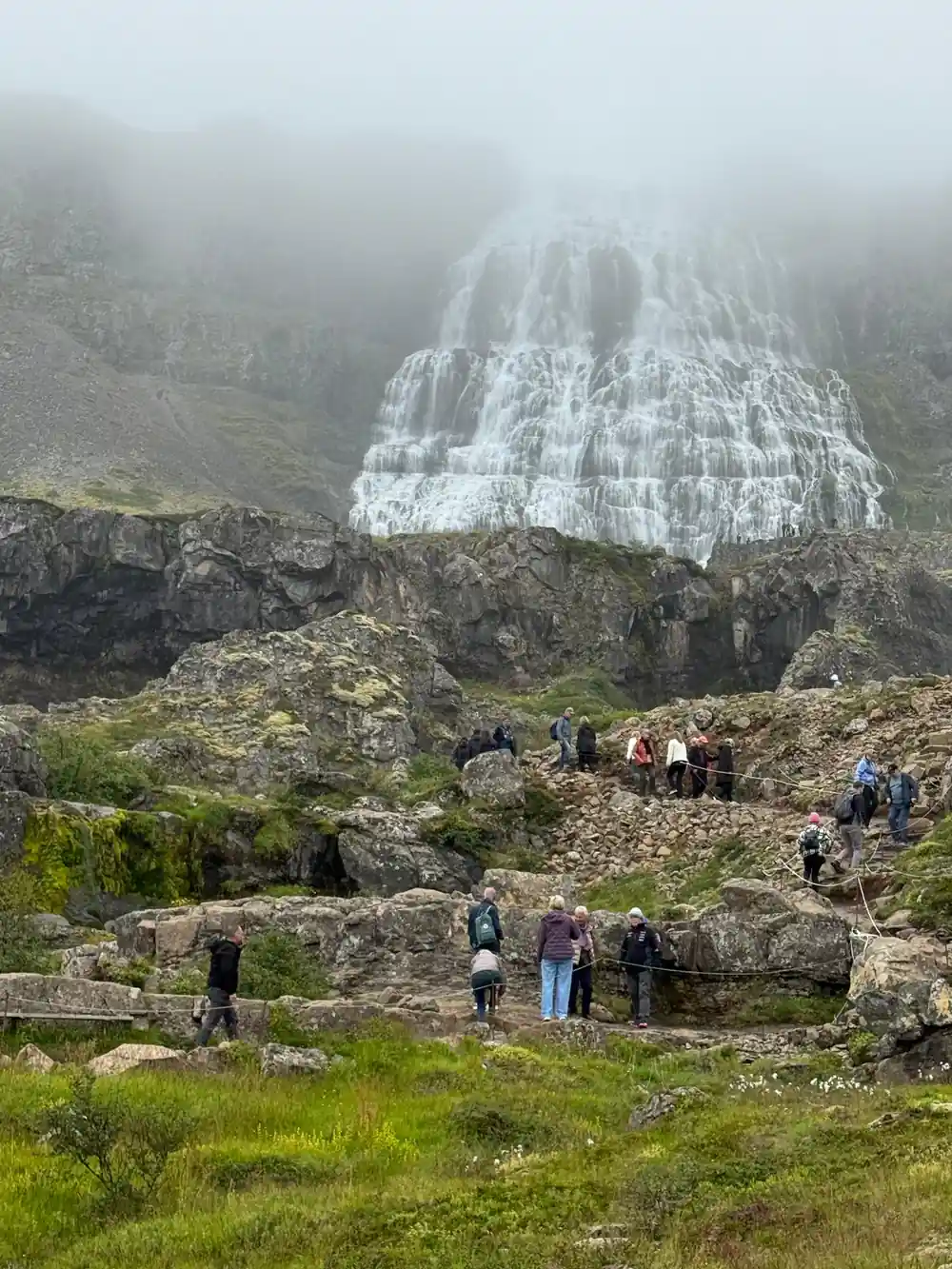
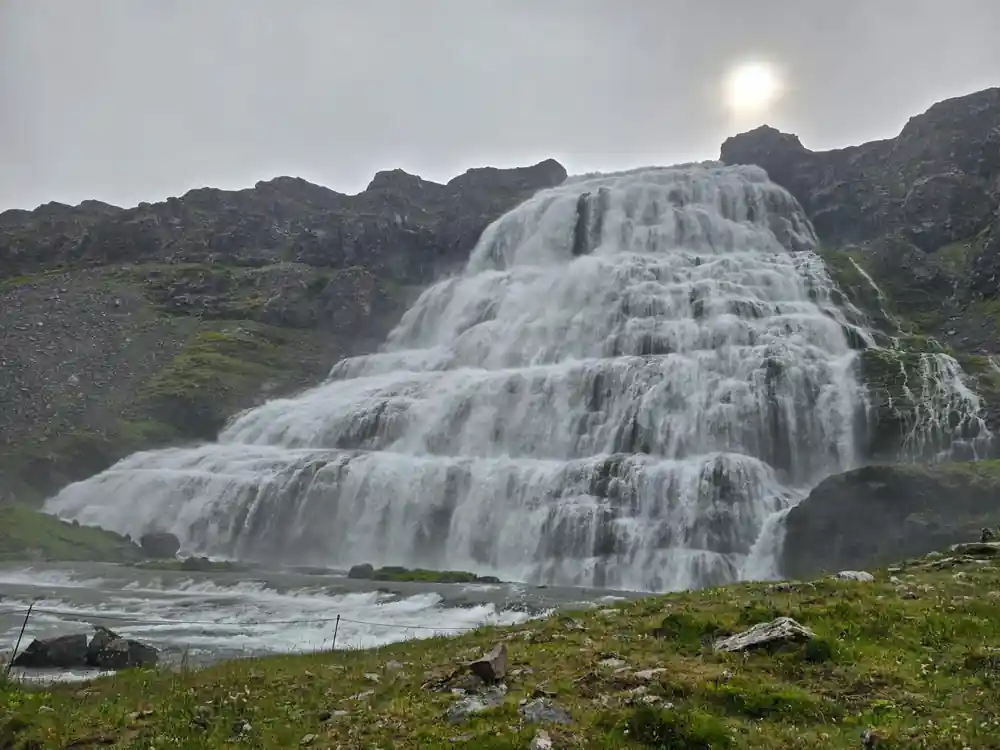
It is not common in the summer months when most ships call here, but it is not unheard of either, and anyone planning a trip around one specific waterfall should know that the sea gets a vote.
Off the ship, onto the coach, out of the fjord
from US$144Reserve now & pay later