If you read nothing else
- The ocean keeps it cool in summer and stops it freezing hard in winter.
- It decides how the day feels far more than the temperature does.
- It is a coach and a waterfall. Both are better wet.
- Which is also when the roads are reliably open.
What the climate actually is
The Westfjords sit just below the Arctic Circle, which suggests a severity the weather does not deliver. The ocean moderates everything.
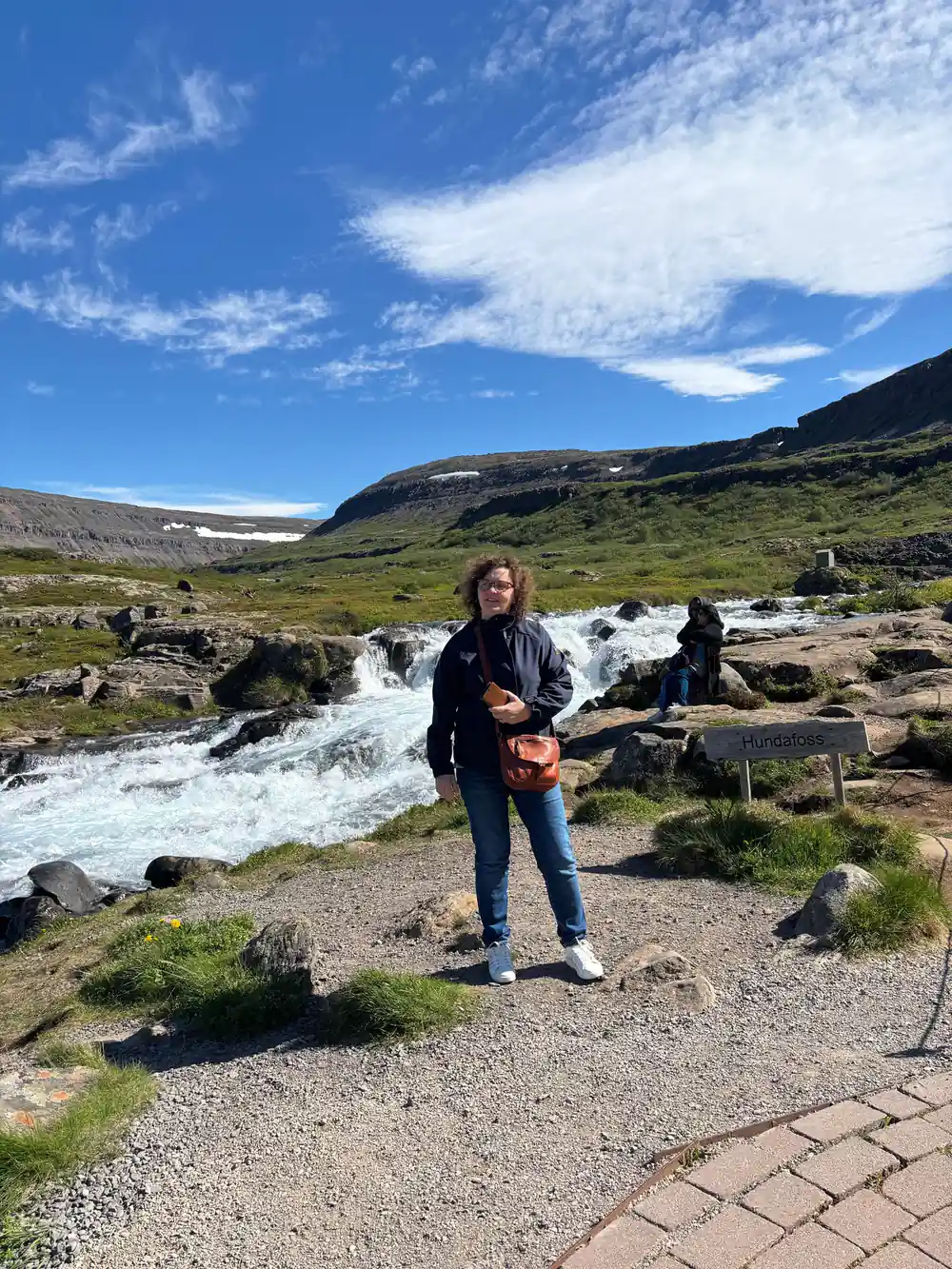
Summer here is cool rather than warm: a good day is comfortable in a fleece, a hot one is rare, and a visitor arriving from southern Europe in July will want a jacket. Winter is cold but not extreme, hovering around freezing rather than plunging far below it, because the sea never freezes and the air over it never gets truly continental.
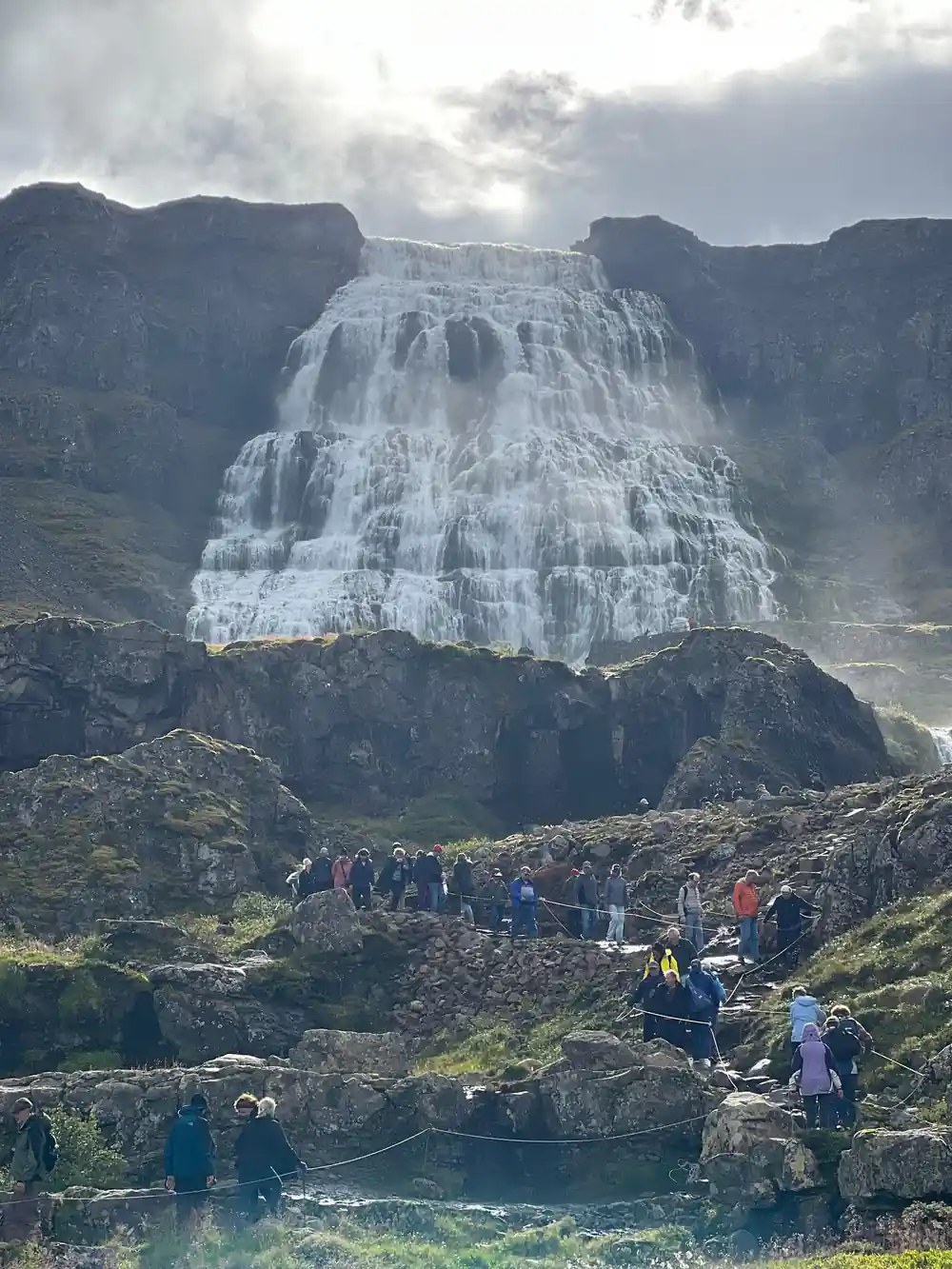
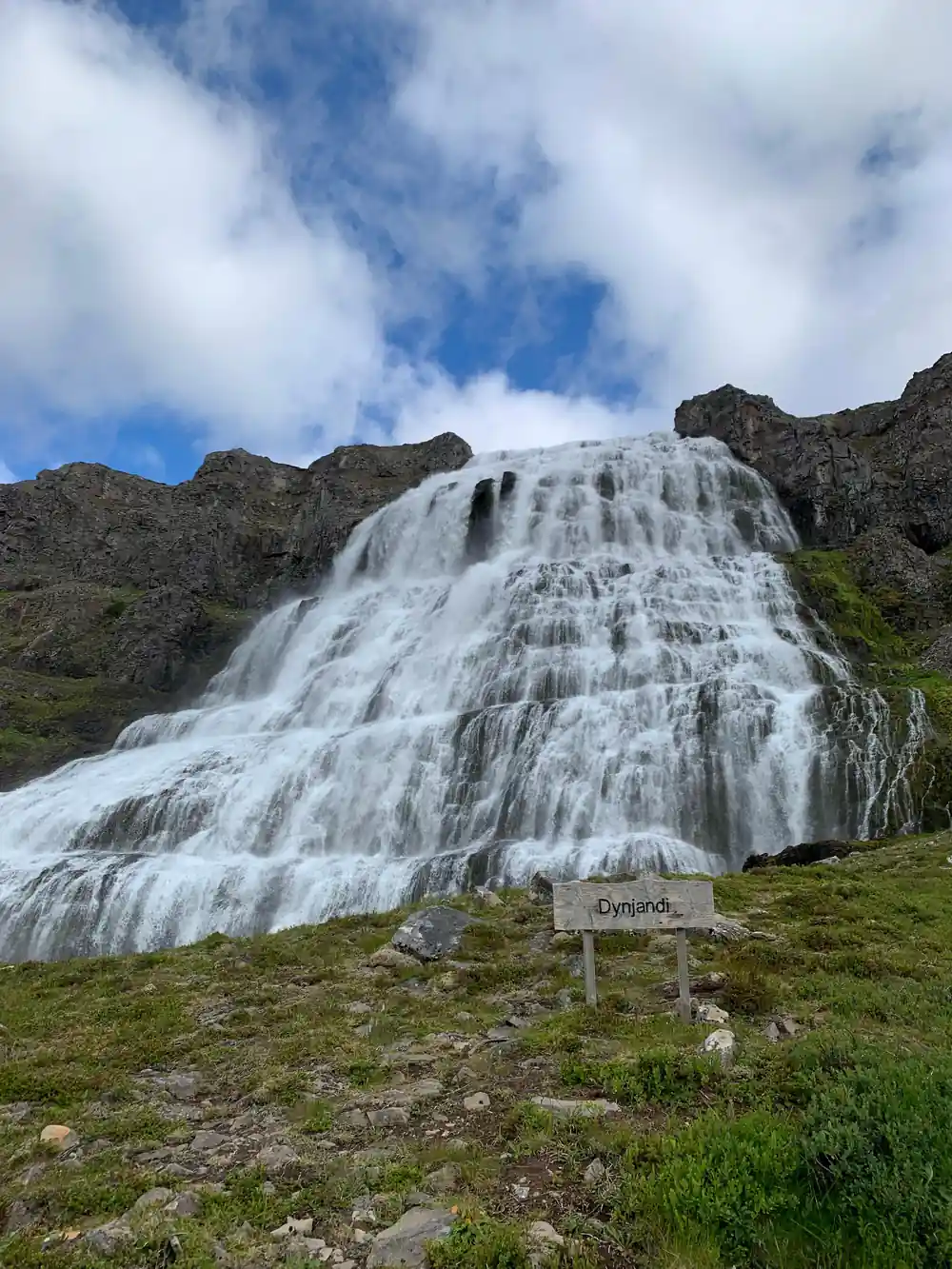
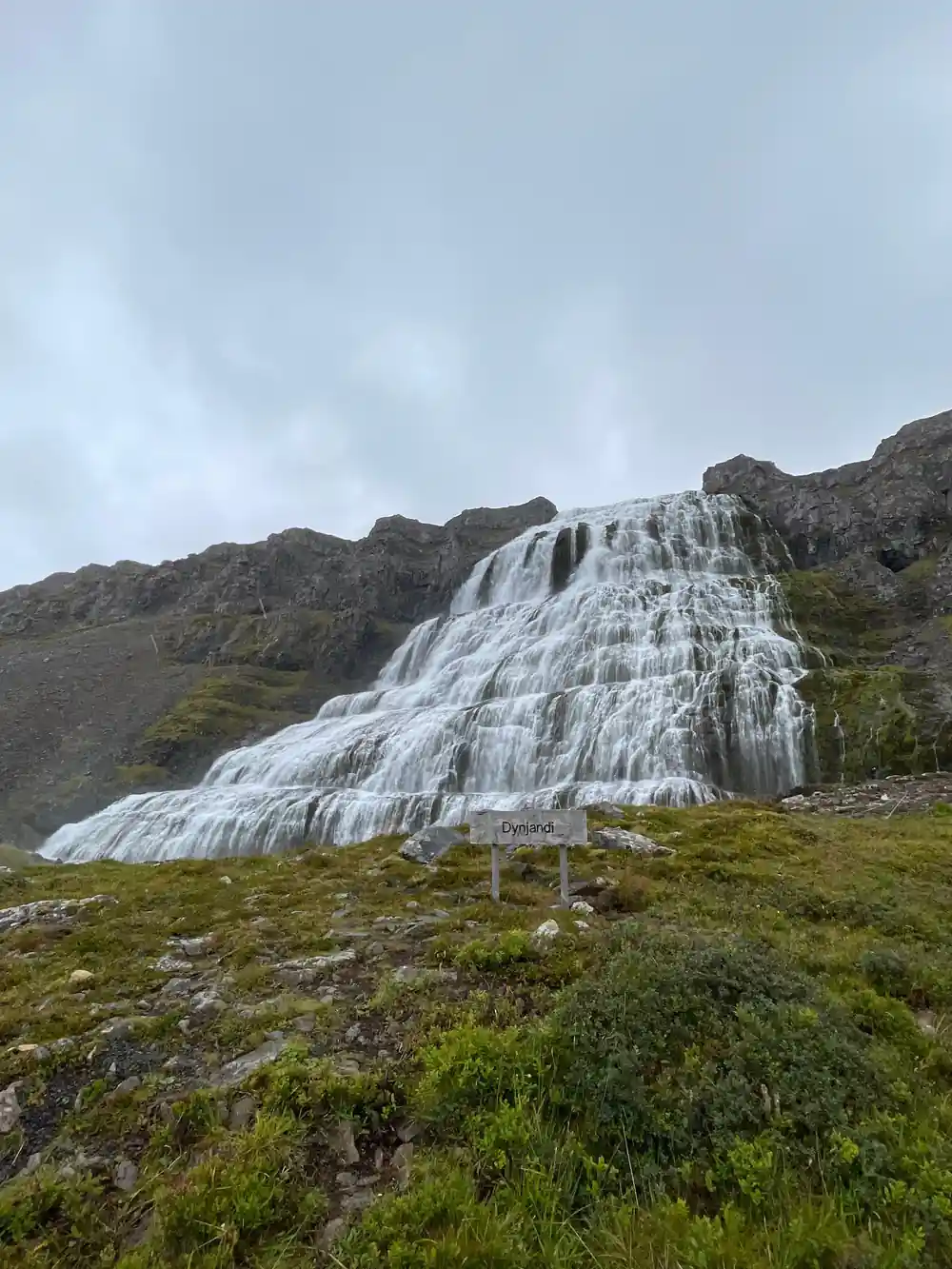
The consistent feature across the whole year is moisture. It is a maritime climate on the windward side of an island in the North Atlantic, and precipitation is a normal condition rather than an event. That is also why there is a hundred-metre waterfall here in the first place.
Rain, and the difference between the figure and the day
A rainfall figure tells you how much water fell. It tells you nothing about how it fell, and in the Westfjords the how is the part that matters.
Rain here usually arrives fine, persistent and horizontal, driven by wind rather than falling out of the sky. An umbrella is useless. A jacket without a hood is nearly useless. What works is a proper waterproof shell with the hood up, and trousers that do not soak through in ten minutes.
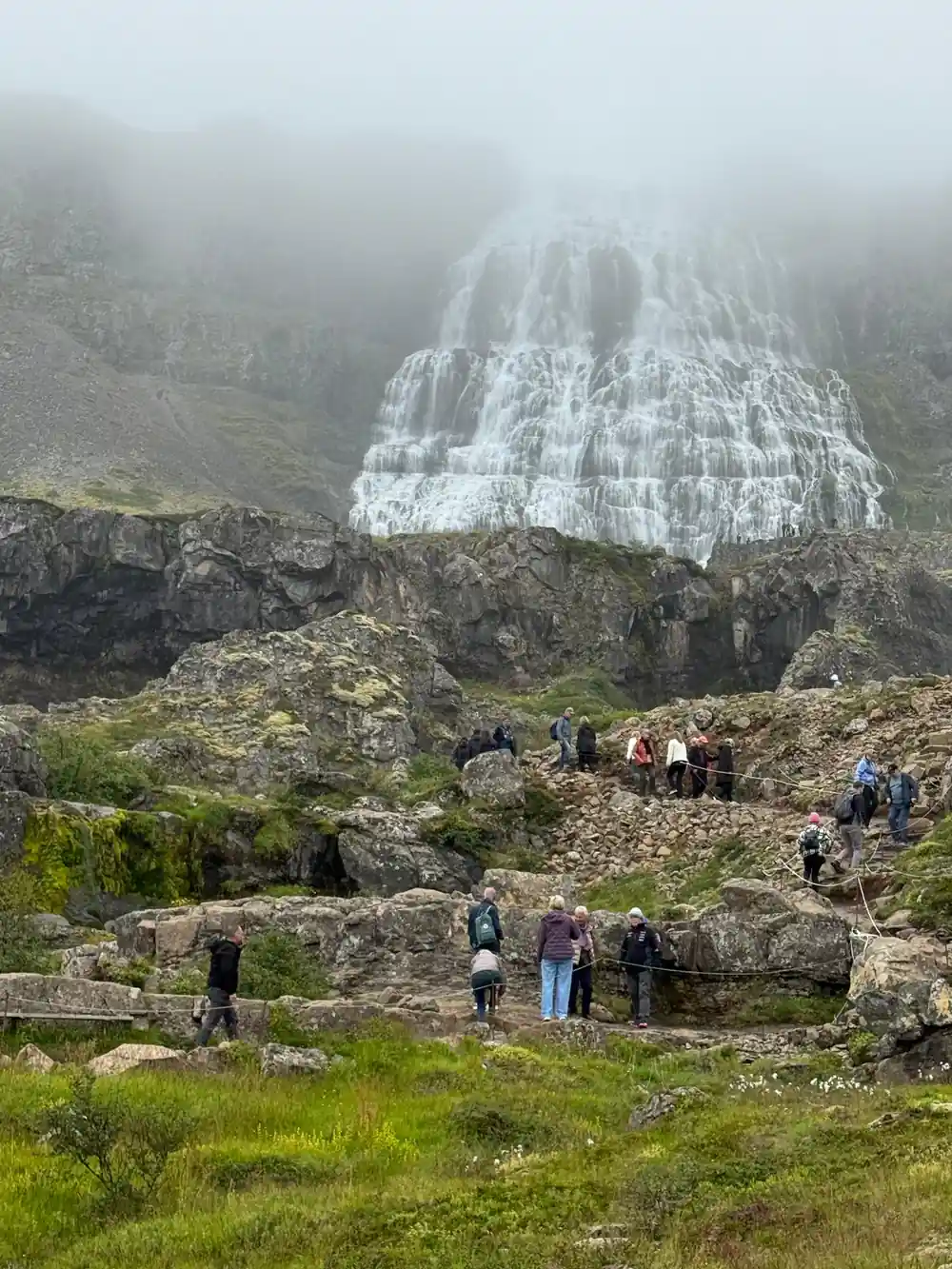
It also changes constantly. A morning of low cloud and drizzle can turn into a clear afternoon and back again inside the four hours of this excursion, which is why nobody local plans a day around a forecast more than a few hours old.
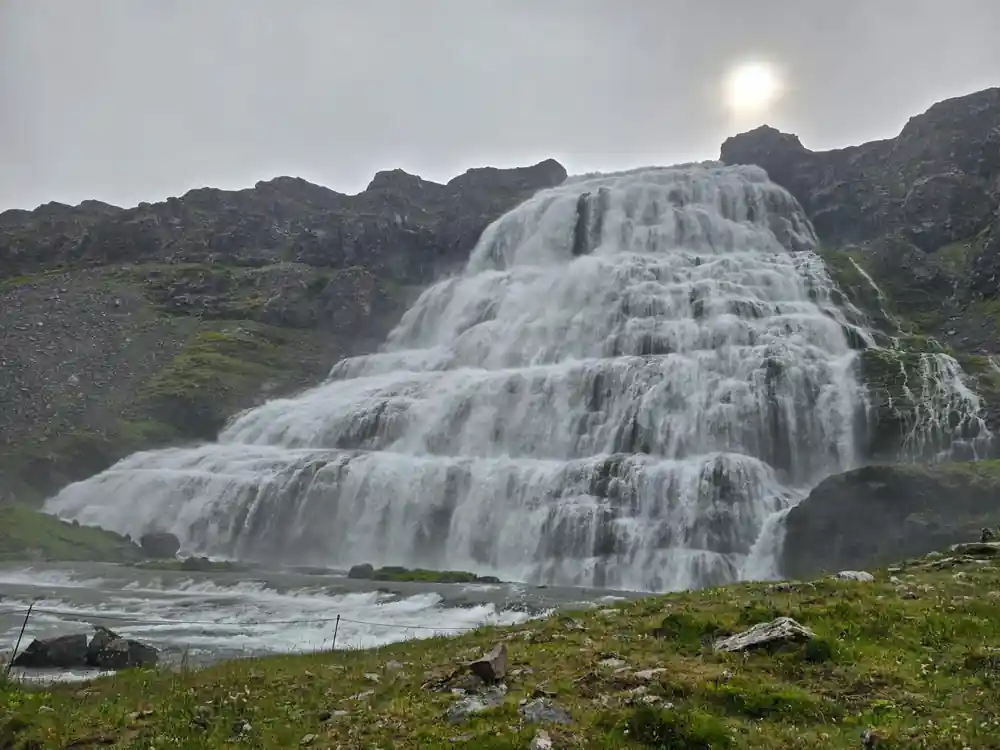
The waterfall does not care. If anything it is better in rain, with more water in the river, more threads coming off the mountain walls beside the road, and cloud sitting halfway down the fjords.
Wind, which is the one that counts
If you take one thing from this page, take this: the temperature is not the problem here, the wind is.
Iceland is one of the windiest inhabited places in the world, and the Westfjords, with steep-sided fjords funnelling air off the ocean, are among the windier parts of it. Wind turns a mild eight degrees into something that feels close to zero, drives rain through inadequate clothing, and makes standing still beside a waterfall for twenty minutes a genuinely different experience from walking in the same conditions.
It is also the thing that closes roads. Snow gets cleared; wind is what actually stops traffic in this part of the country, and it is the reason the road authority publishes gust forecasts alongside everything else.
For a summer visitor none of this is dangerous. It is simply the difference between an enjoyable forty-five minutes at the falls and a cold, wet, miserable one, and the difference is entirely down to what you are wearing.
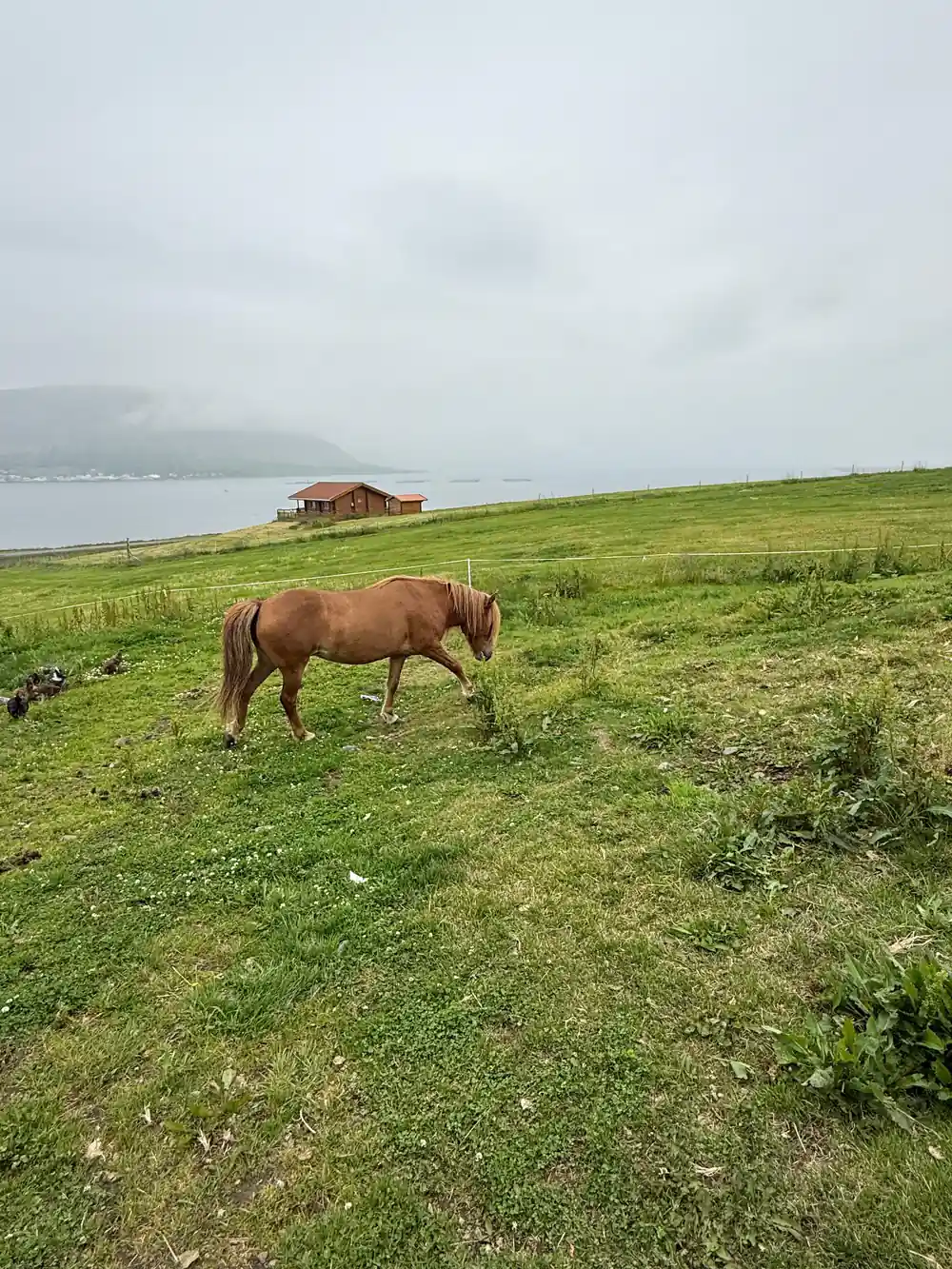
Low cloud sitting on the fjord walls
What actually cancels the tour
Not much, in the season this runs.
Rain does not cancel it. Cloud does not cancel it. A grey day does not cancel it. The excursion is a coach on a surfaced main road to a waterfall that is impressive in any conditions, and it runs in weather that would close a boat trip several times over.
What can change the day is severe wind, which occasionally closes exposed sections of road, and snow or ice on the high ground outside the summer months. Both are rare during the cruise season.
The more common disruption is upstream of the tour entirely: a ship that cannot dock at Ísafjörður because of sea state, in which case nobody goes anywhere and the excursion is refunded. That is a decision made on the bridge, not by the tour operator.
Daylight, and when it runs
This far north the year is lopsided. In midsummer it does not get properly dark at all, and at the end of June there is usable light around the clock. In midwinter the sun barely clears the mountain walls, and the fjords sit in shadow even on a clear day.
The excursion belongs to the light half of the year. Cruise calls at Ísafjörður run through the summer, which means long days, open roads and a waterfall lit for most of the hours you might visit it.
The practical consequence is that the time of your call matters less than it would elsewhere. A morning tour and an afternoon tour in July see much the same conditions, and neither is racing the dark.
What to wear
A waterproof shell with a hood, and shoes with grip. Those two items carry the entire day.
Under the shell, layers rather than one thick coat, because the coach is warm and the waterfall is not. A hat is worth having even in July; gloves are not excessive on a windy day.
The one mistake people make is dressing for the temperature they read rather than the wind they will stand in. Eleven degrees in a valley full of spray with the wind coming down the fjord is not eleven degrees, and forty-five minutes is long enough for that to matter.
Cool, wet, windy, and better for it
from US$144Reserve now & pay later