









What Dynjandi actually is
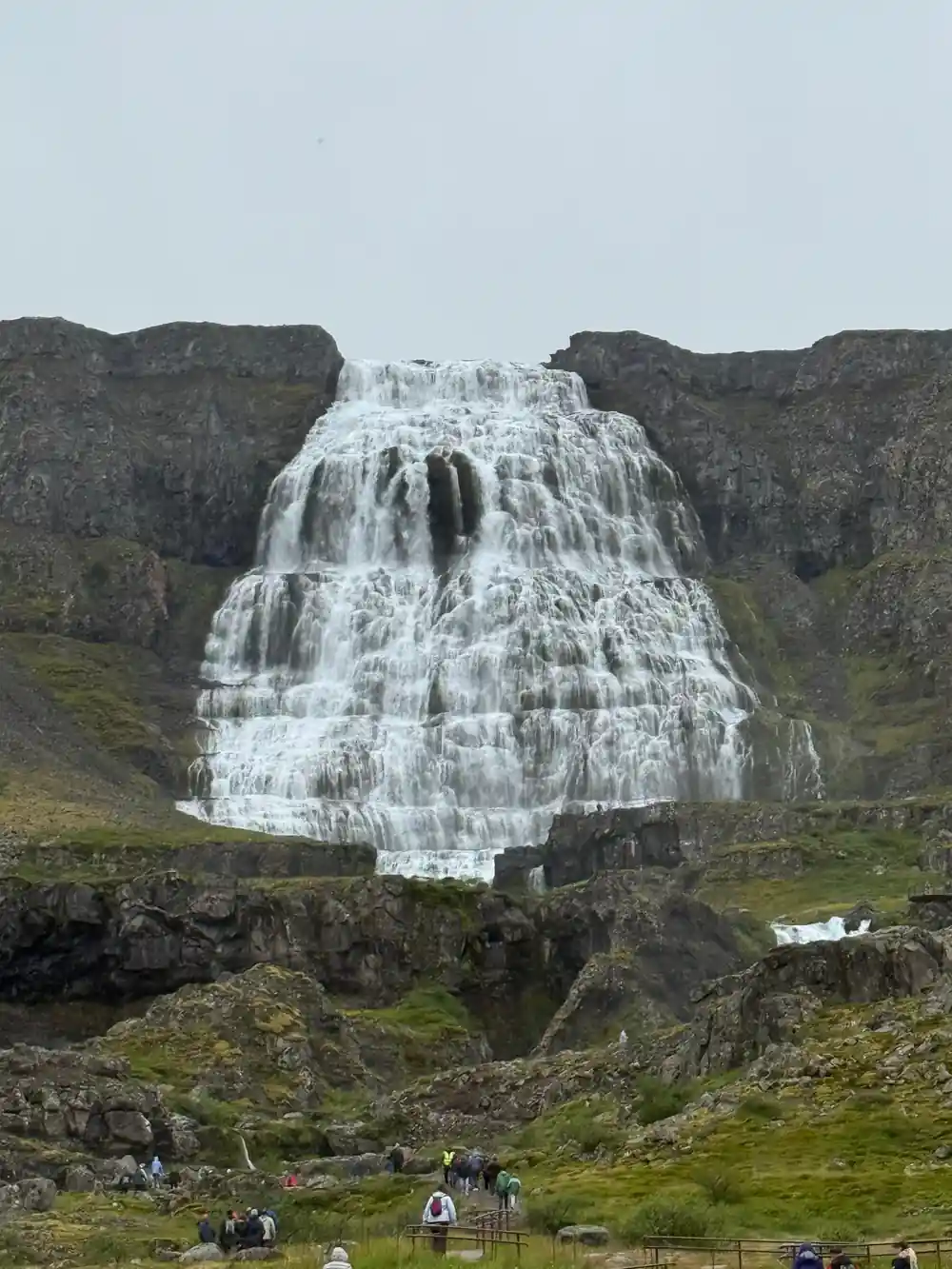
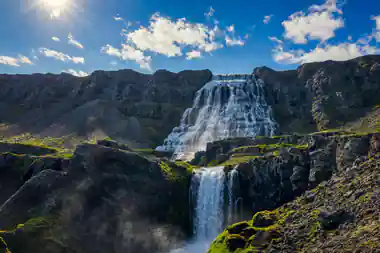
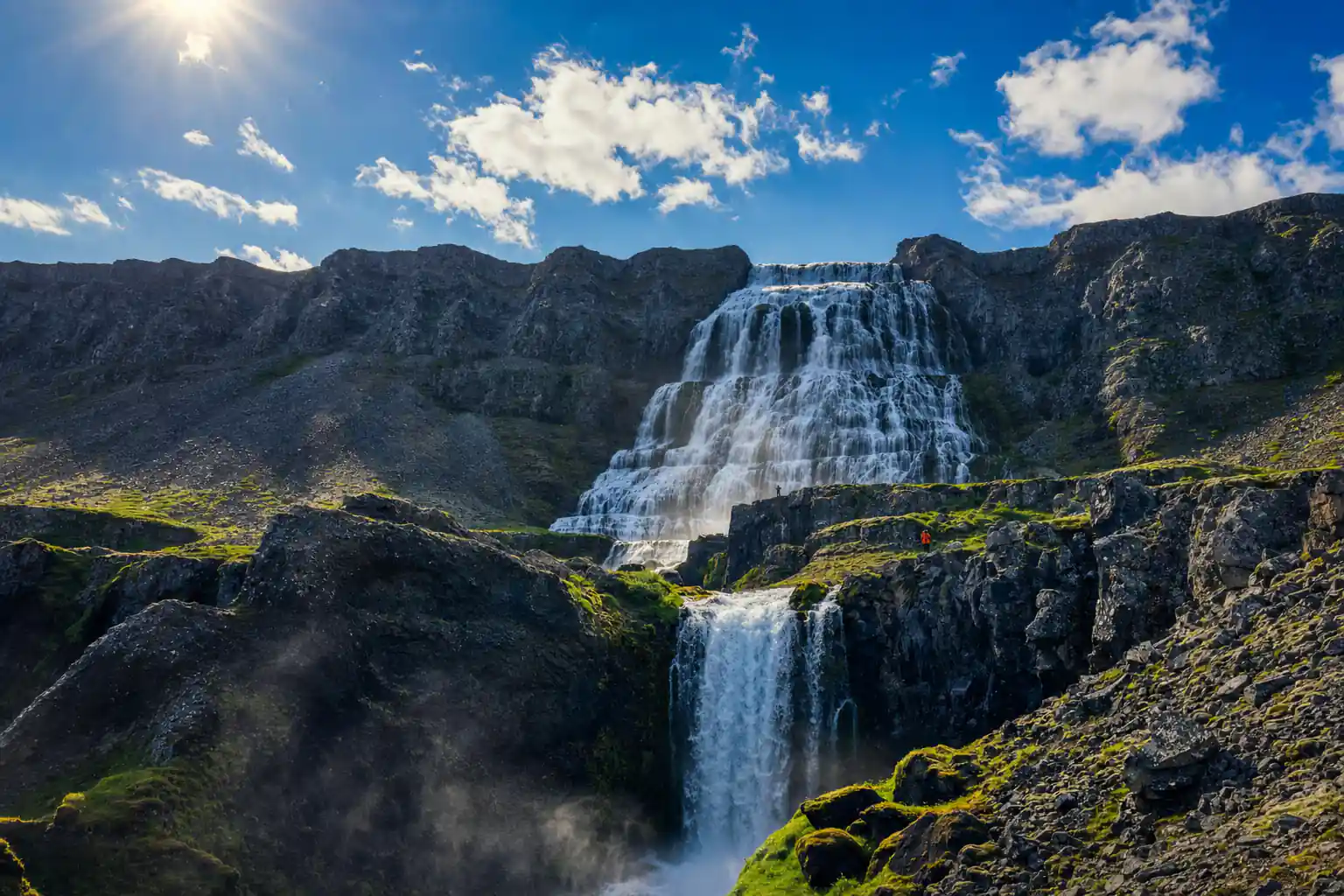
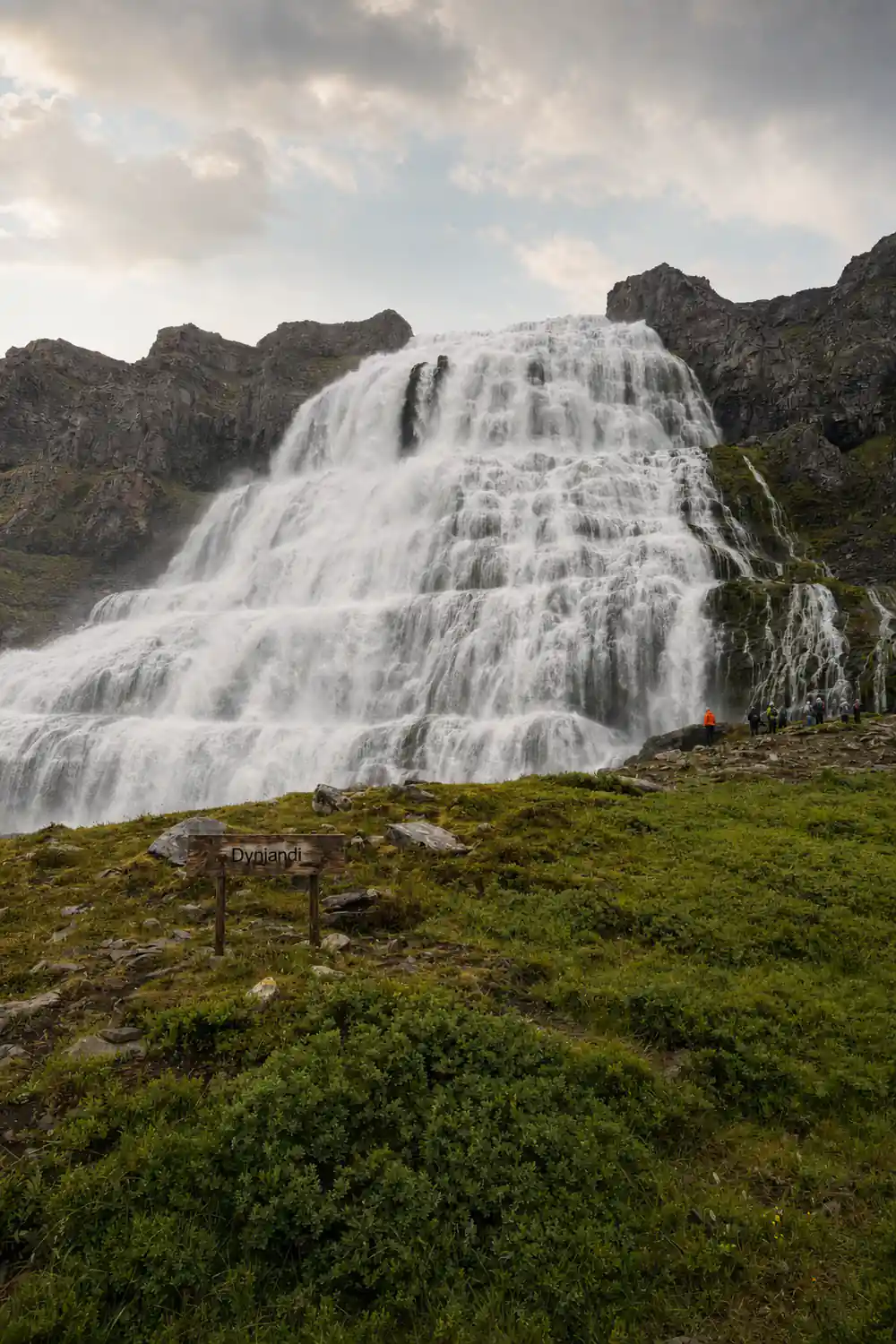
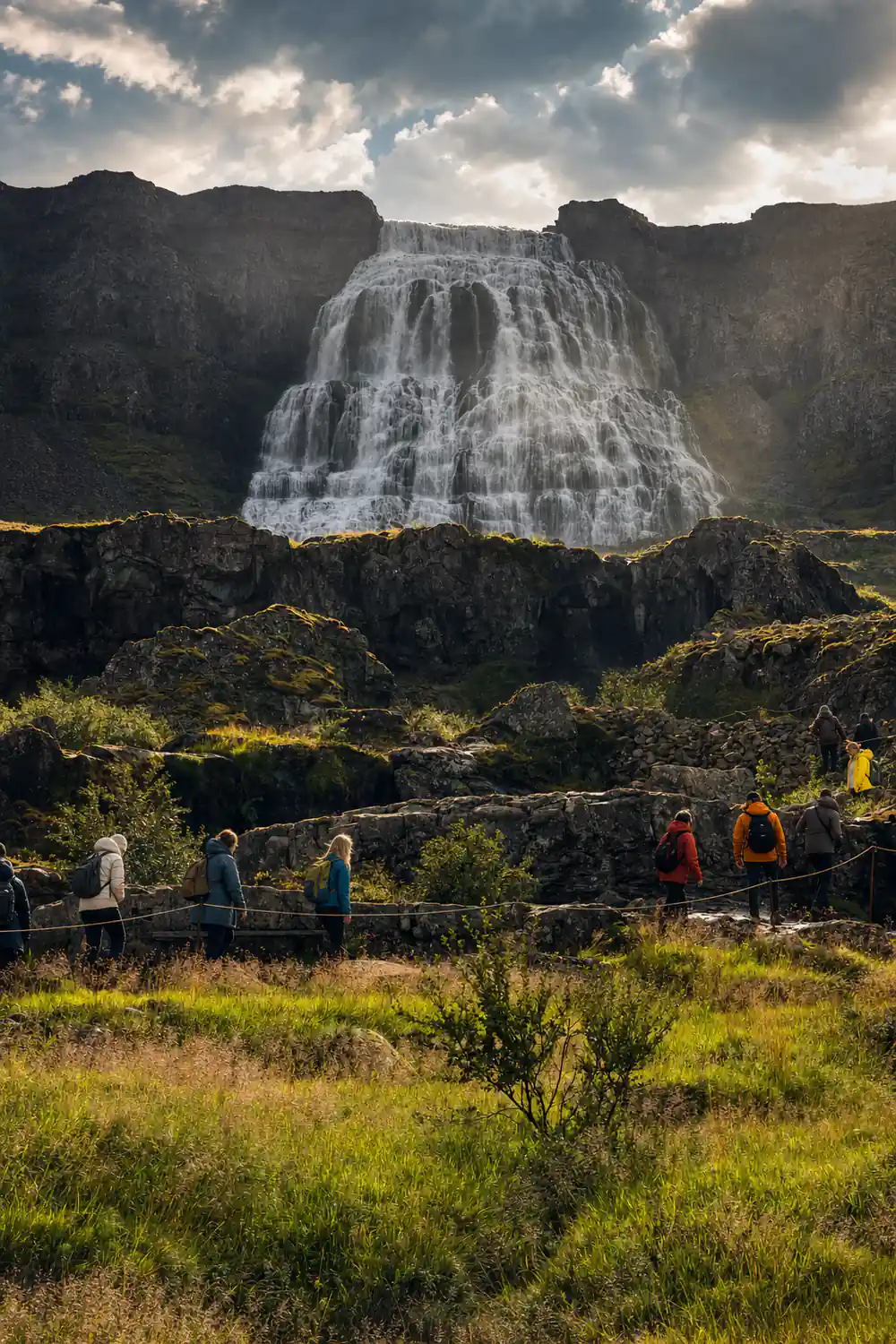
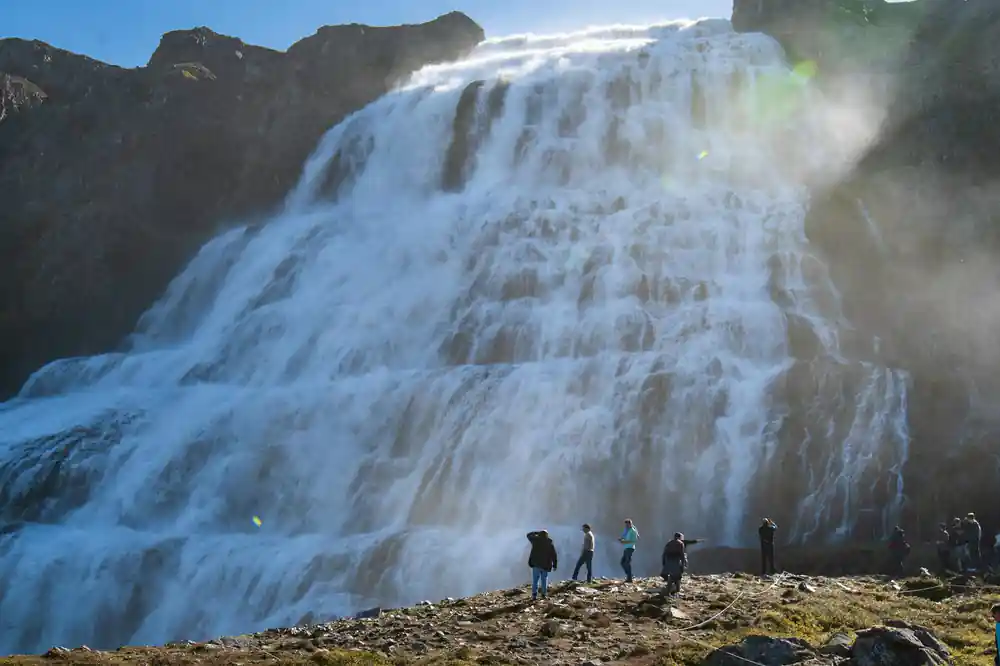
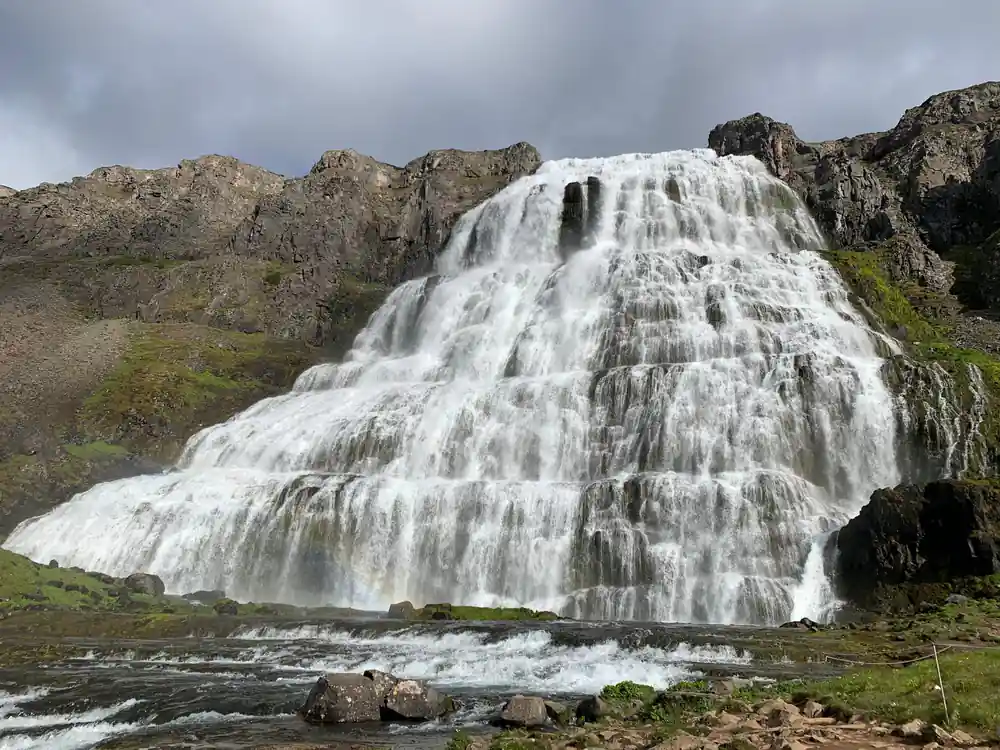
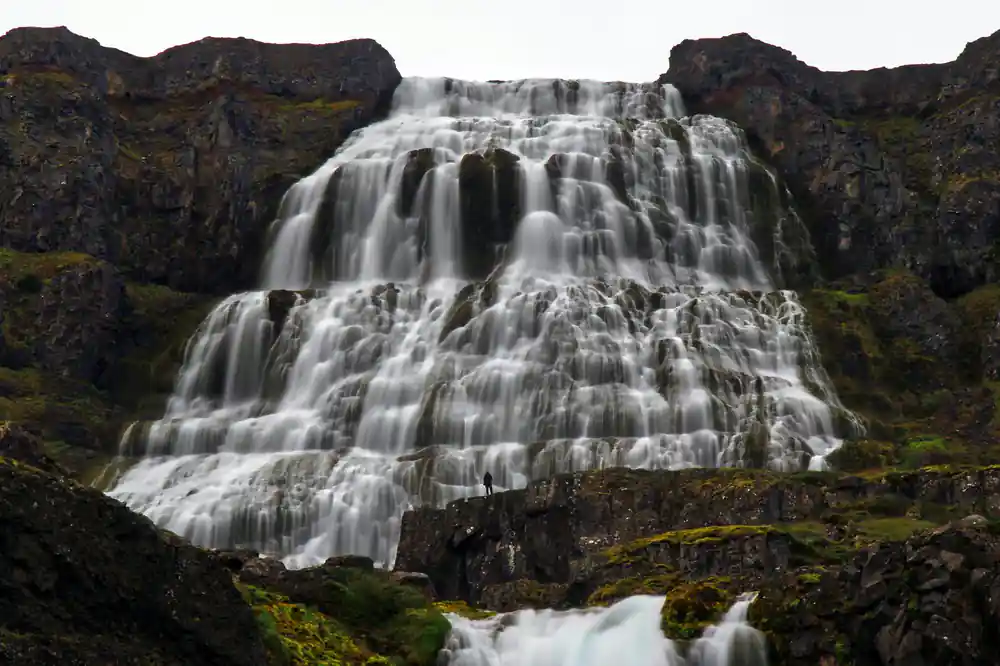
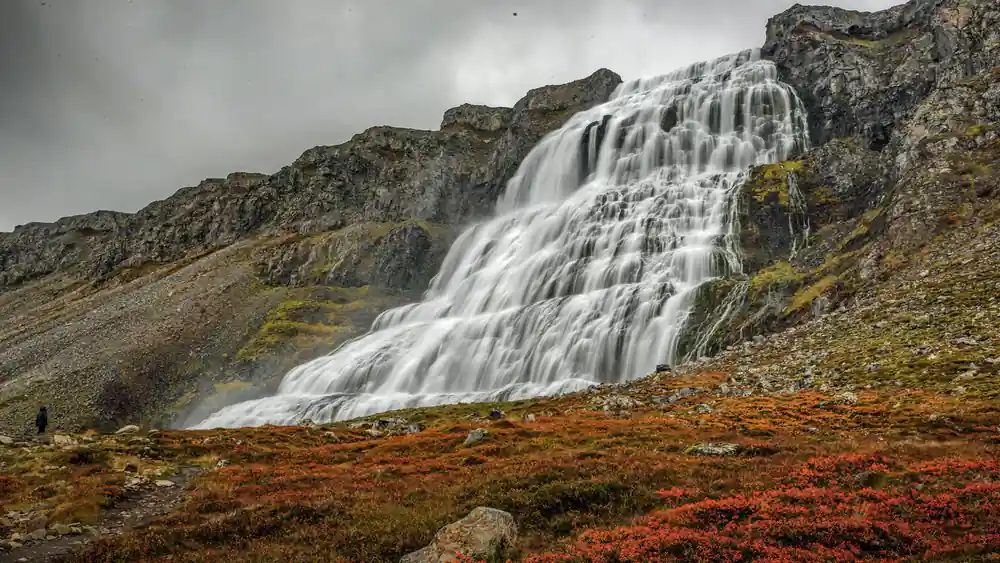
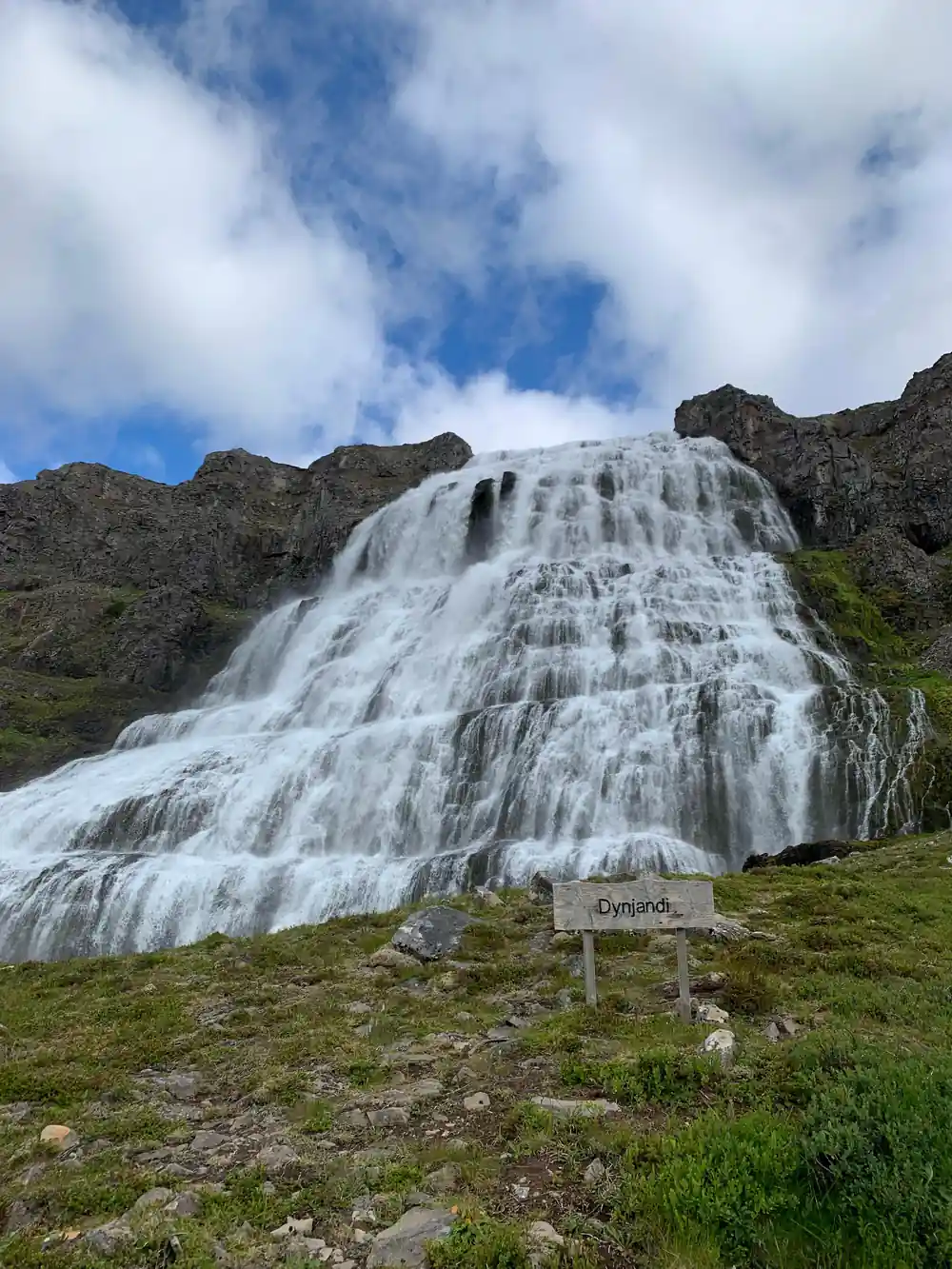
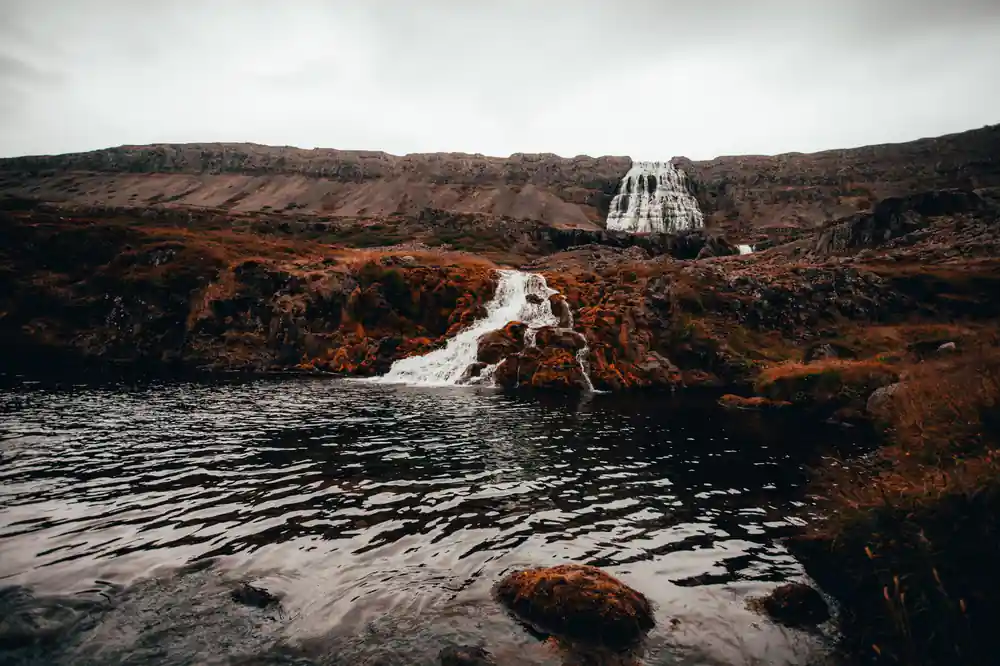
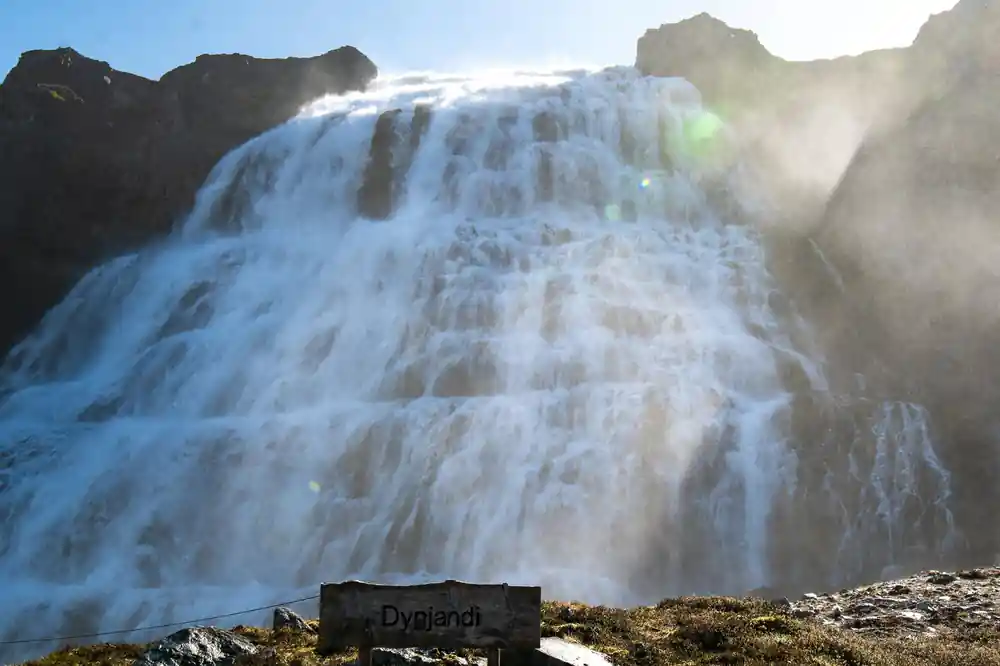
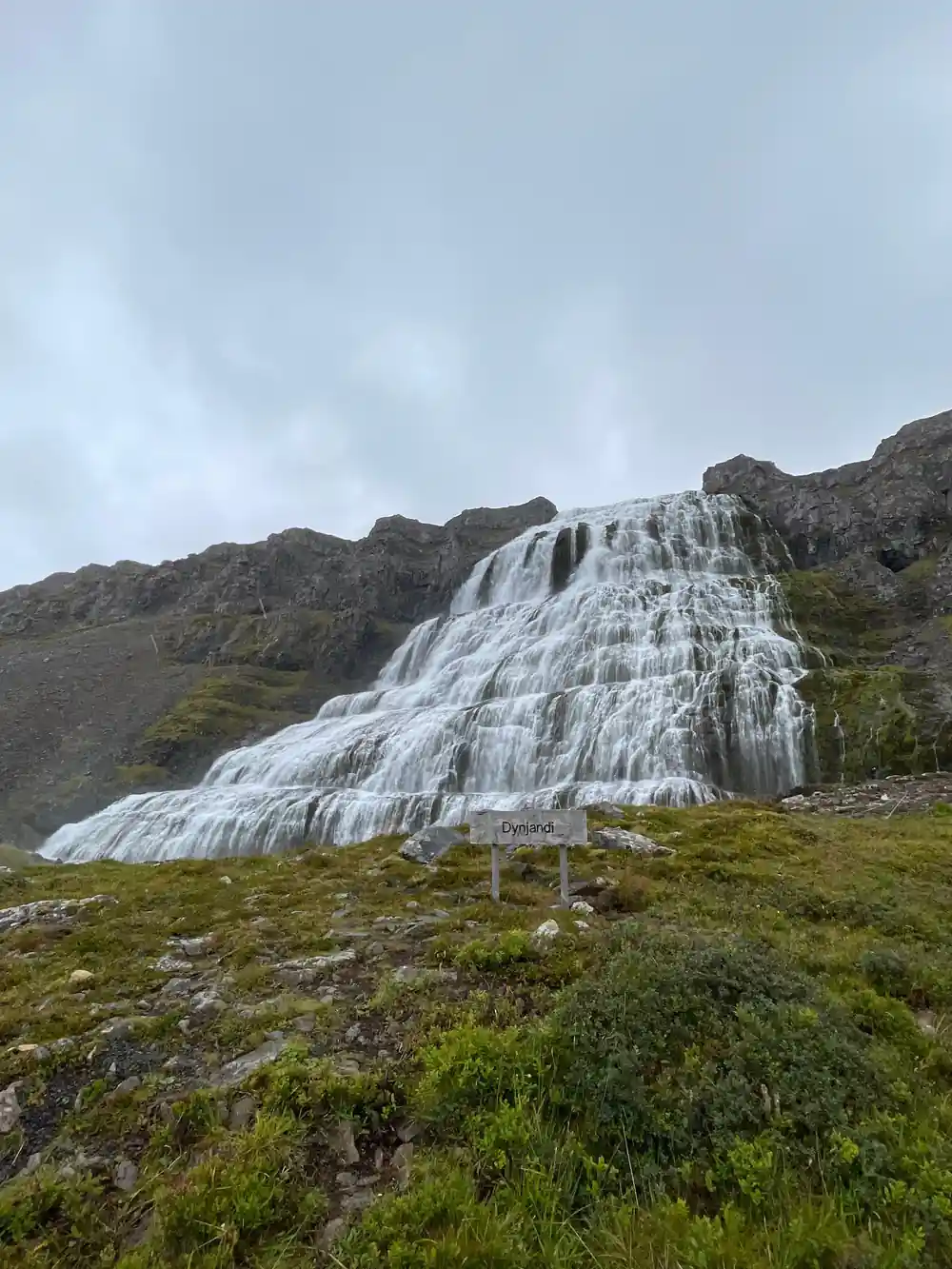
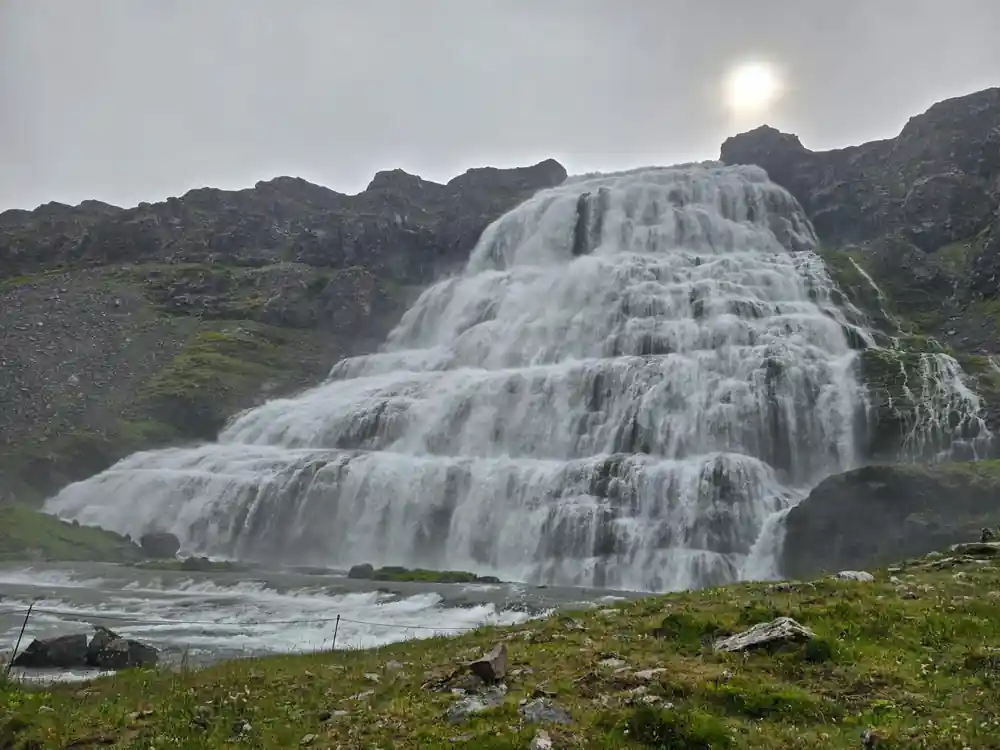
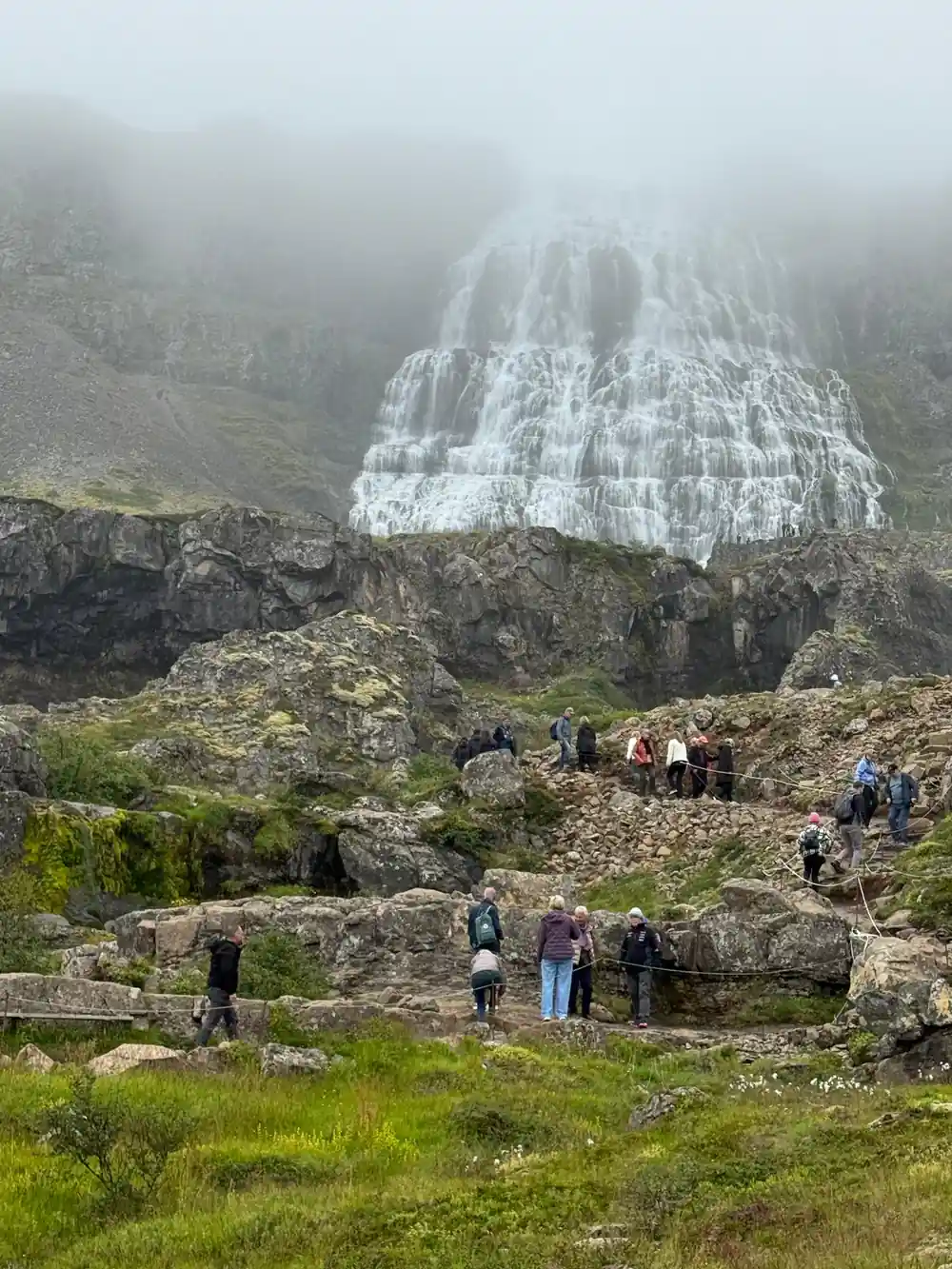
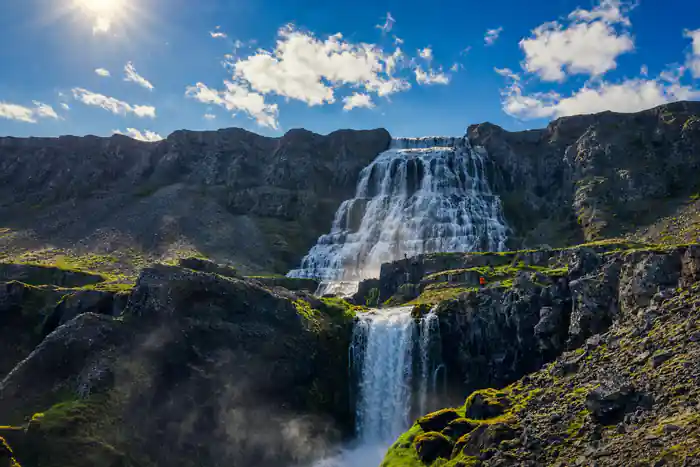
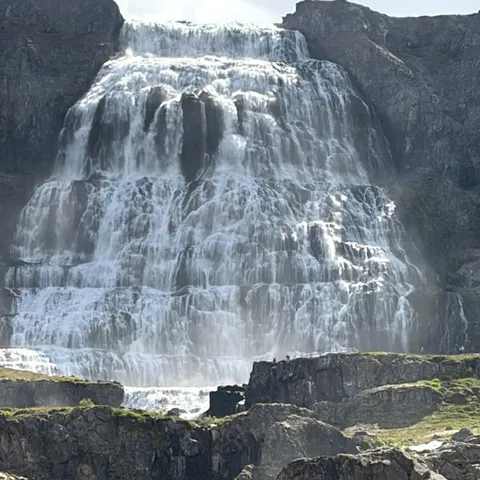
Most large waterfalls narrow as they fall. Water gathers, accelerates and drops in a column, and the further it goes the tighter it gets. Dynjandi does the opposite, and that single fact is why photographs of it look unlike photographs of anything else in Iceland.
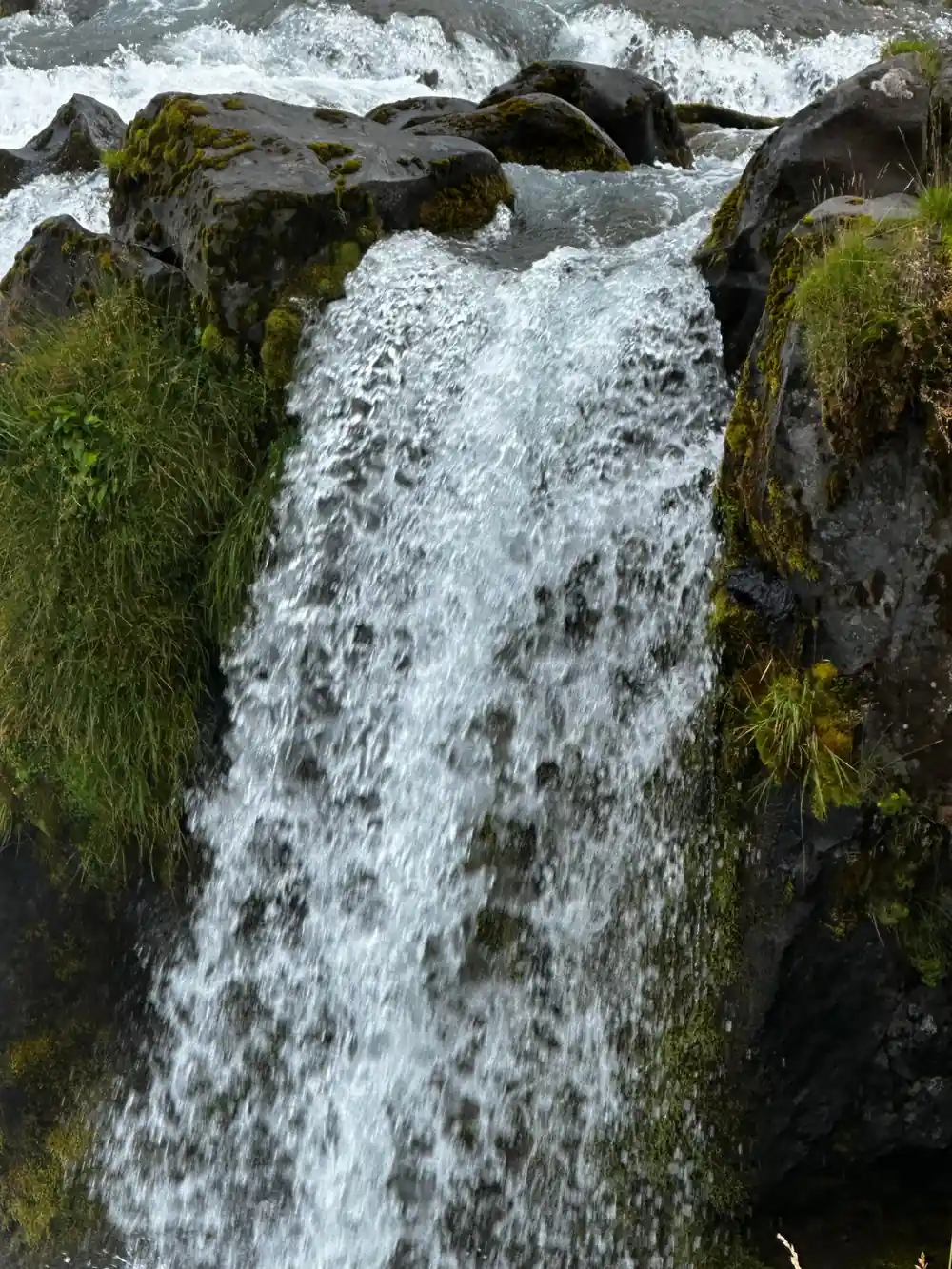
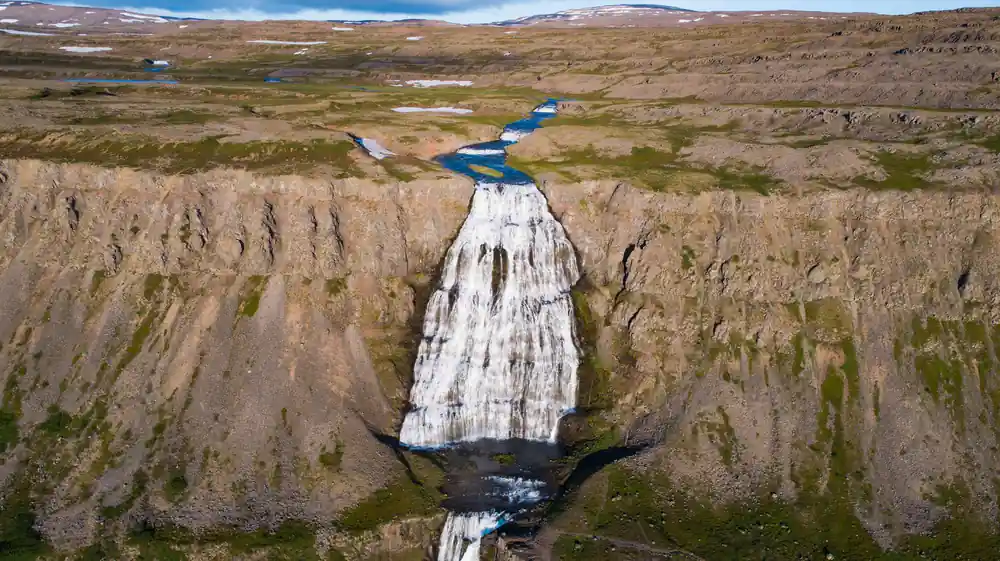
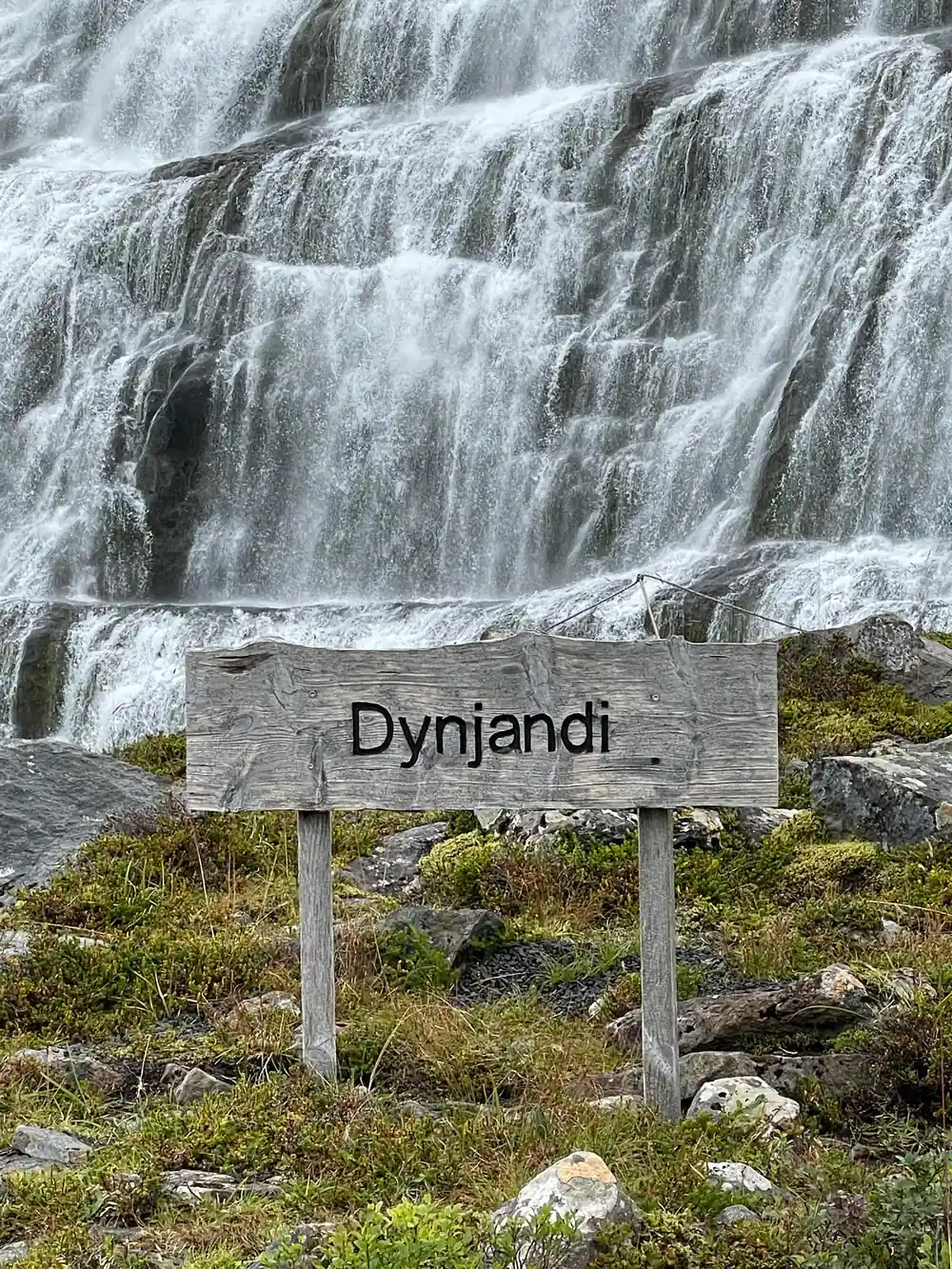
The river comes over the lip of a basalt shelf about thirty metres wide and then meets a face made of stacked lava layers, each one a step. Instead of falling clear, the water runs down that staircase, and every step throws it further sideways. By the time it reaches the bottom it is spread across something closer to sixty metres.
The total drop is around a hundred metres. It is the largest waterfall in the Westfjords by a wide margin, and it has been protected as a natural monument since 1980, which is early by the standards of Icelandic tourism.
Six more waterfalls, and why the walk takes longer than you think
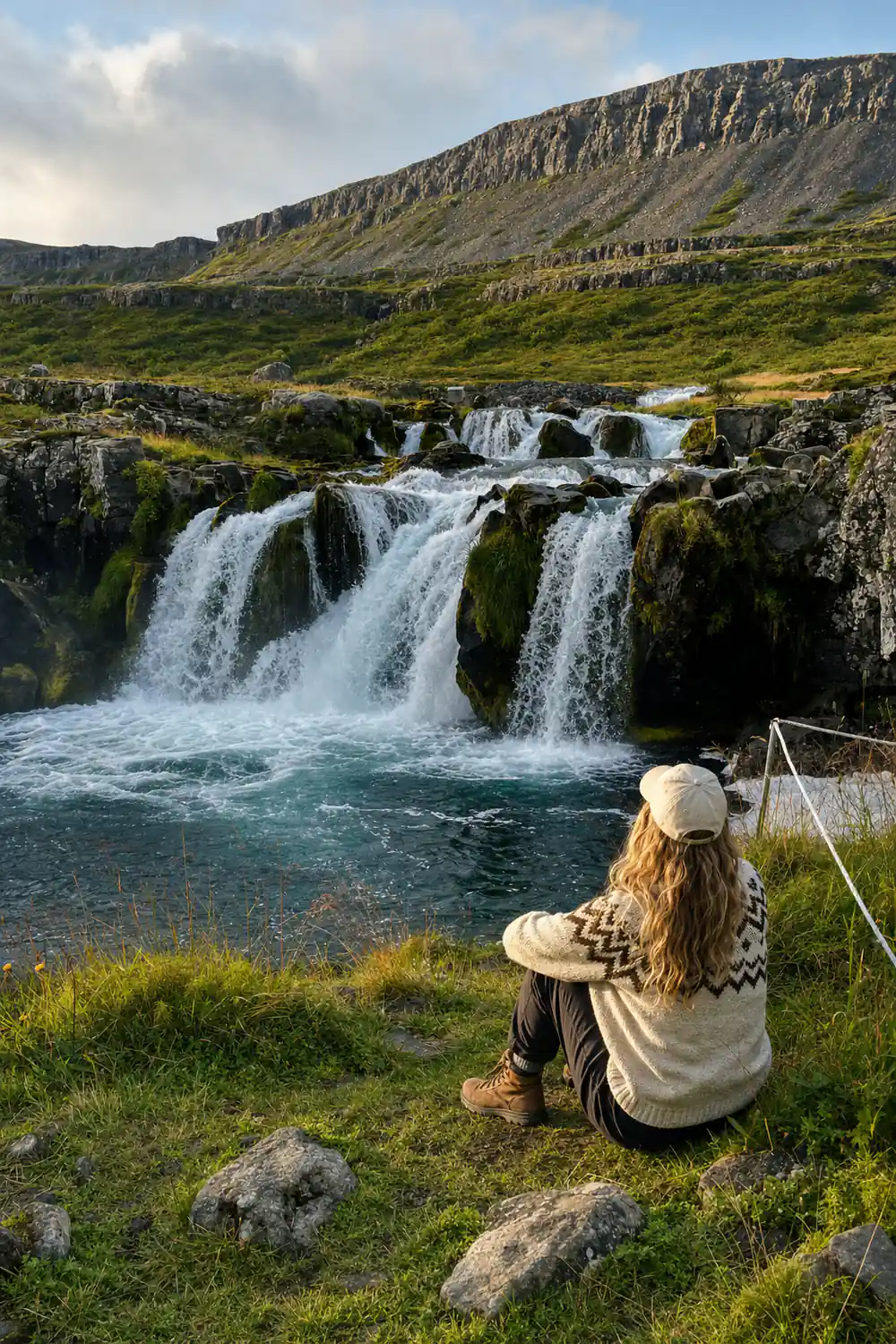
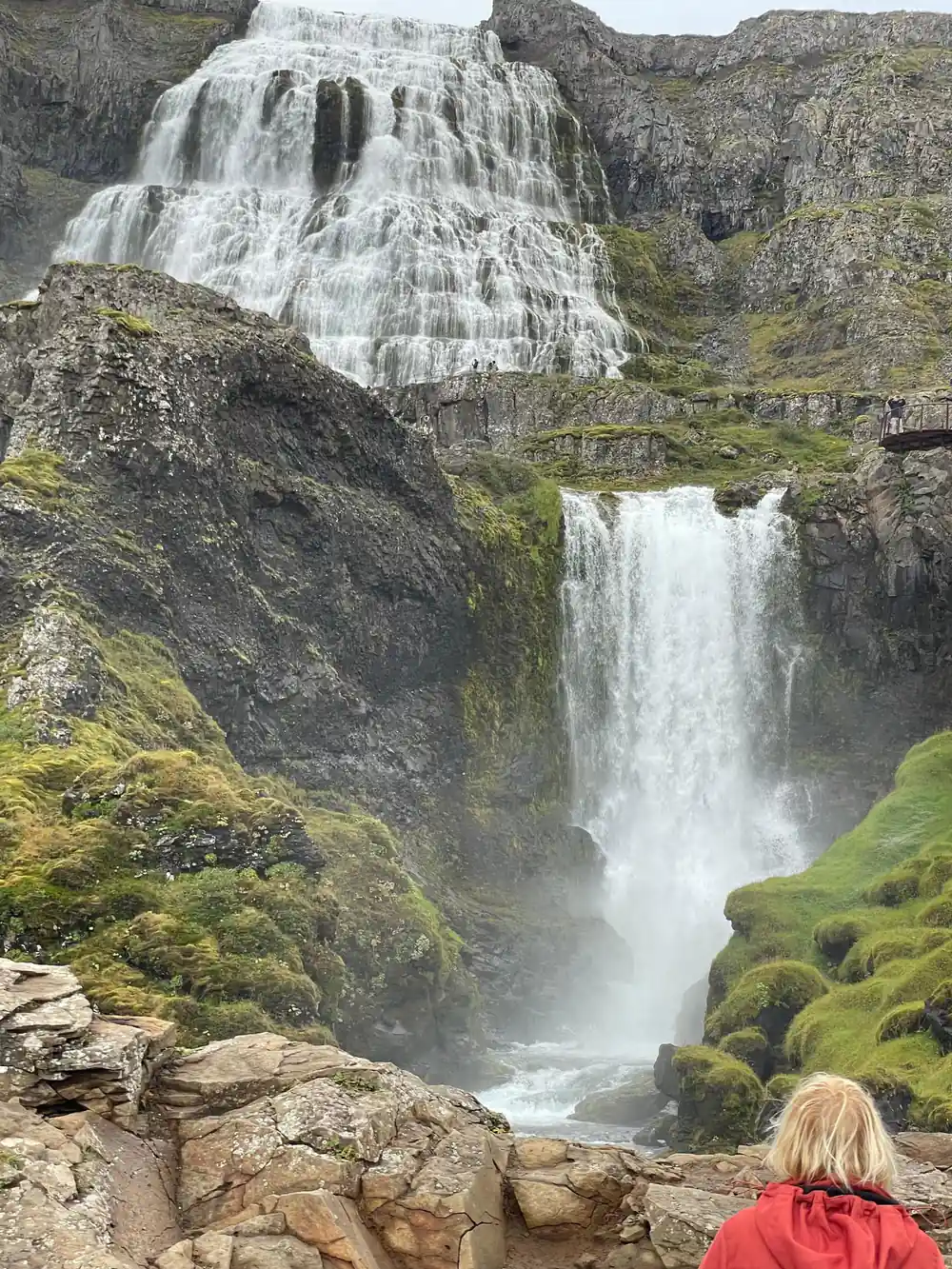
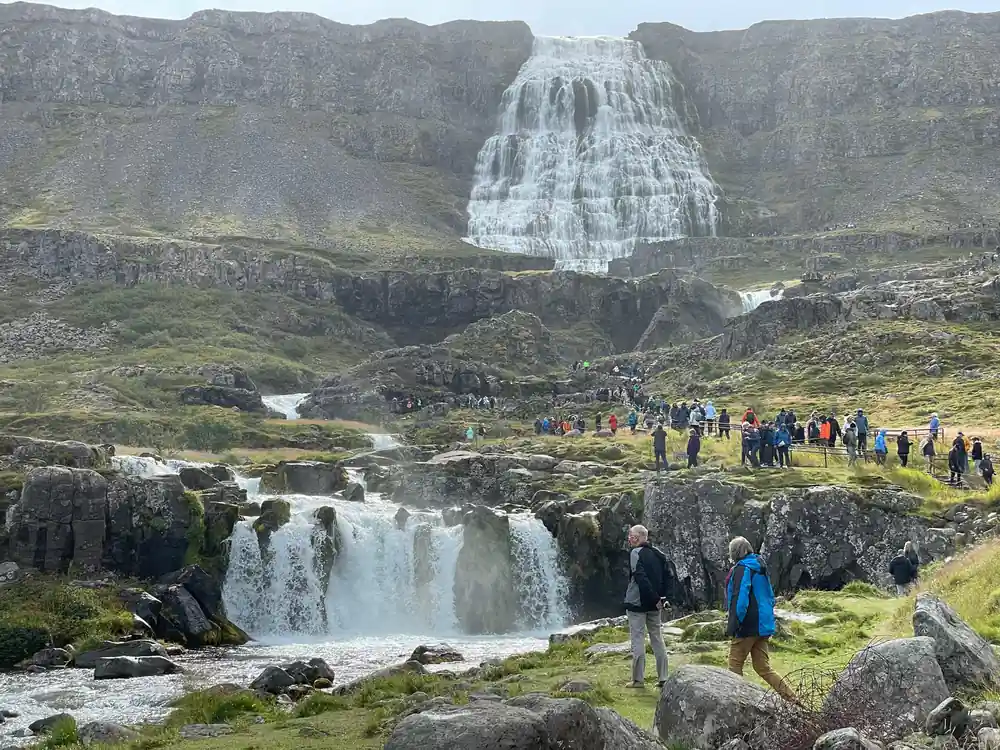
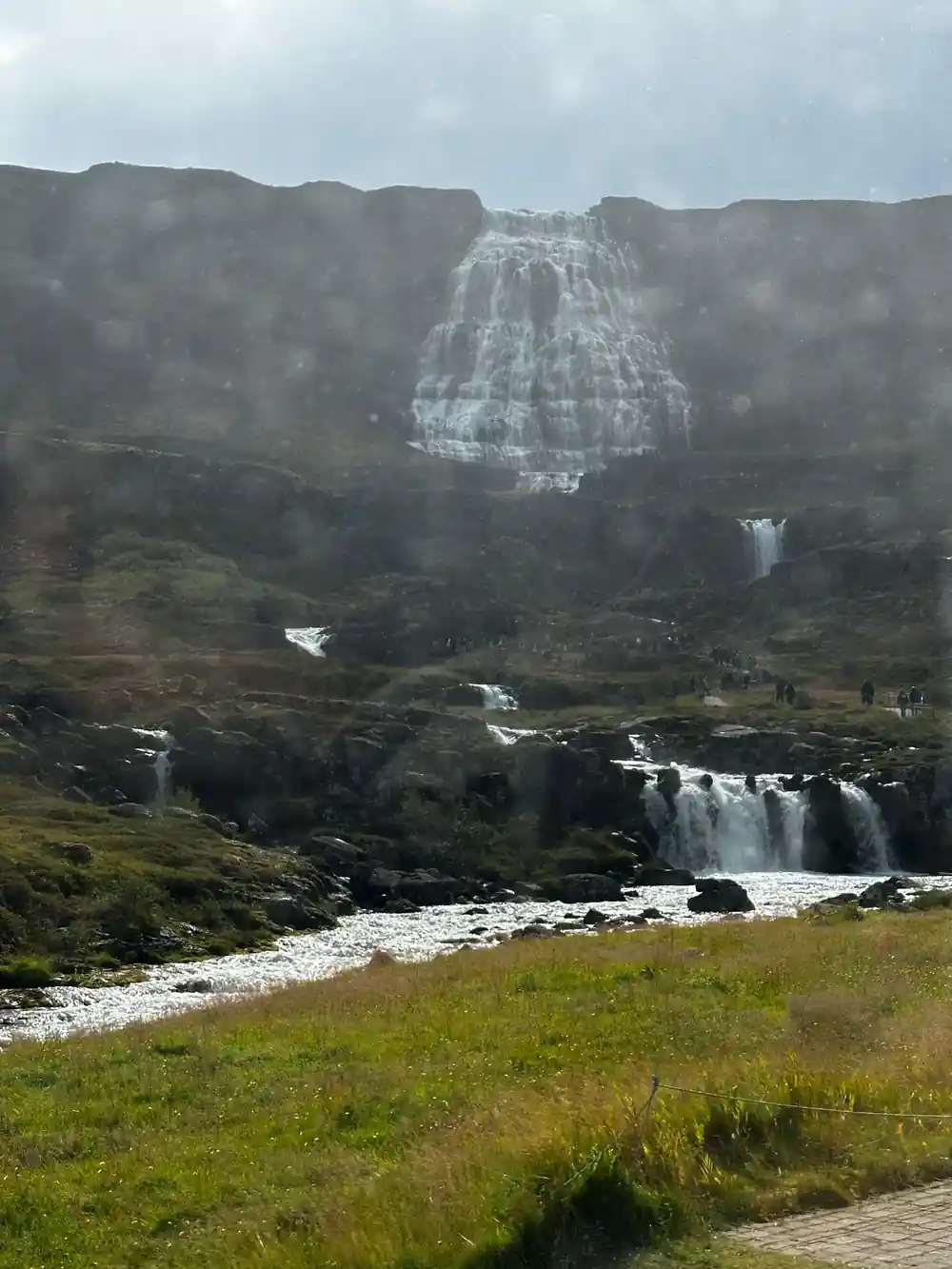
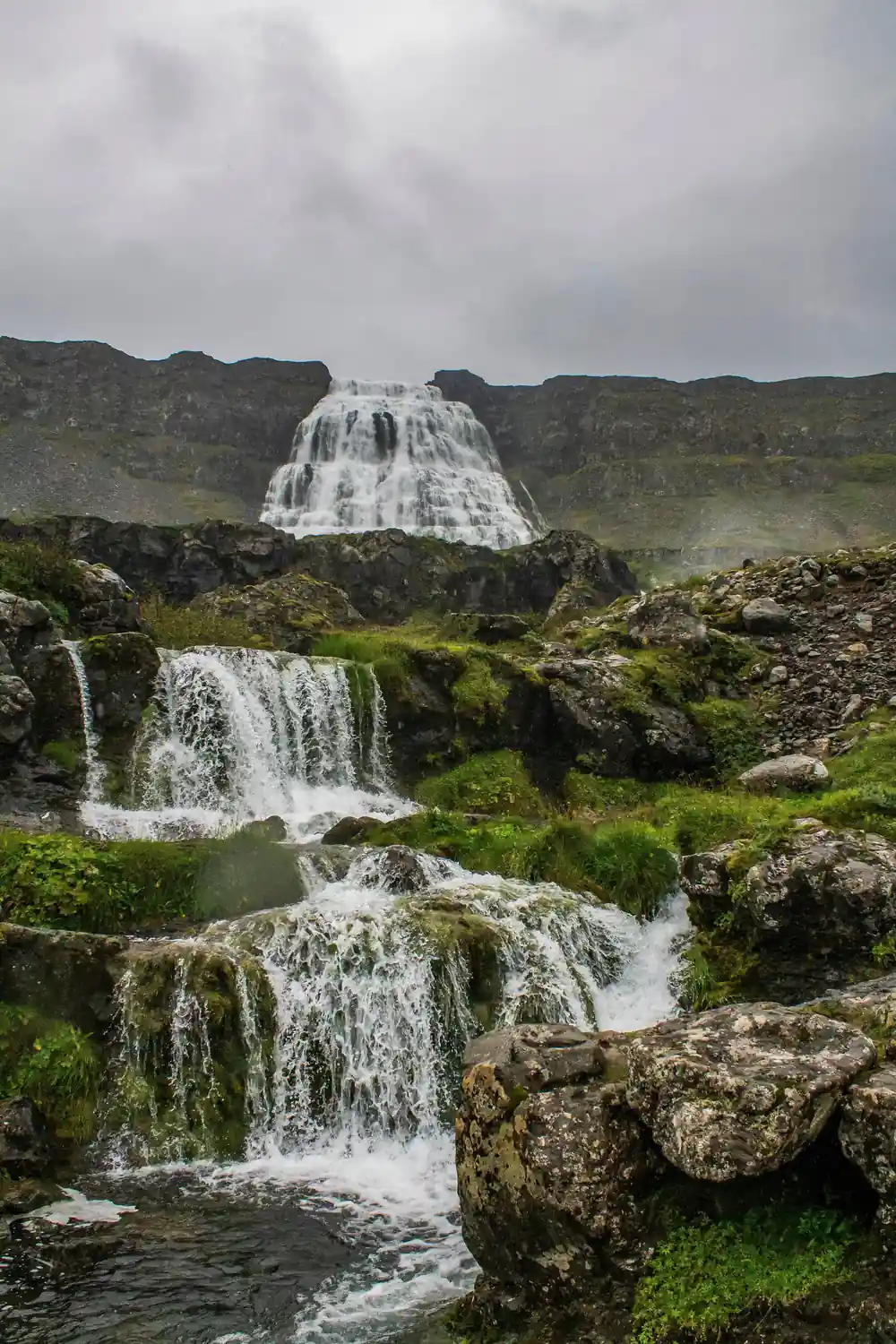
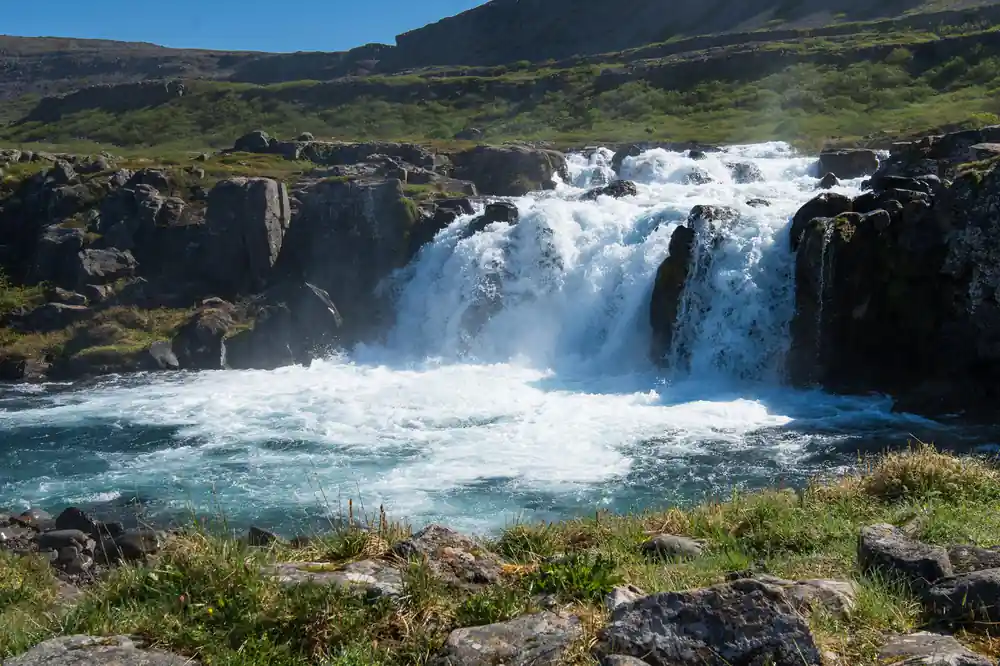
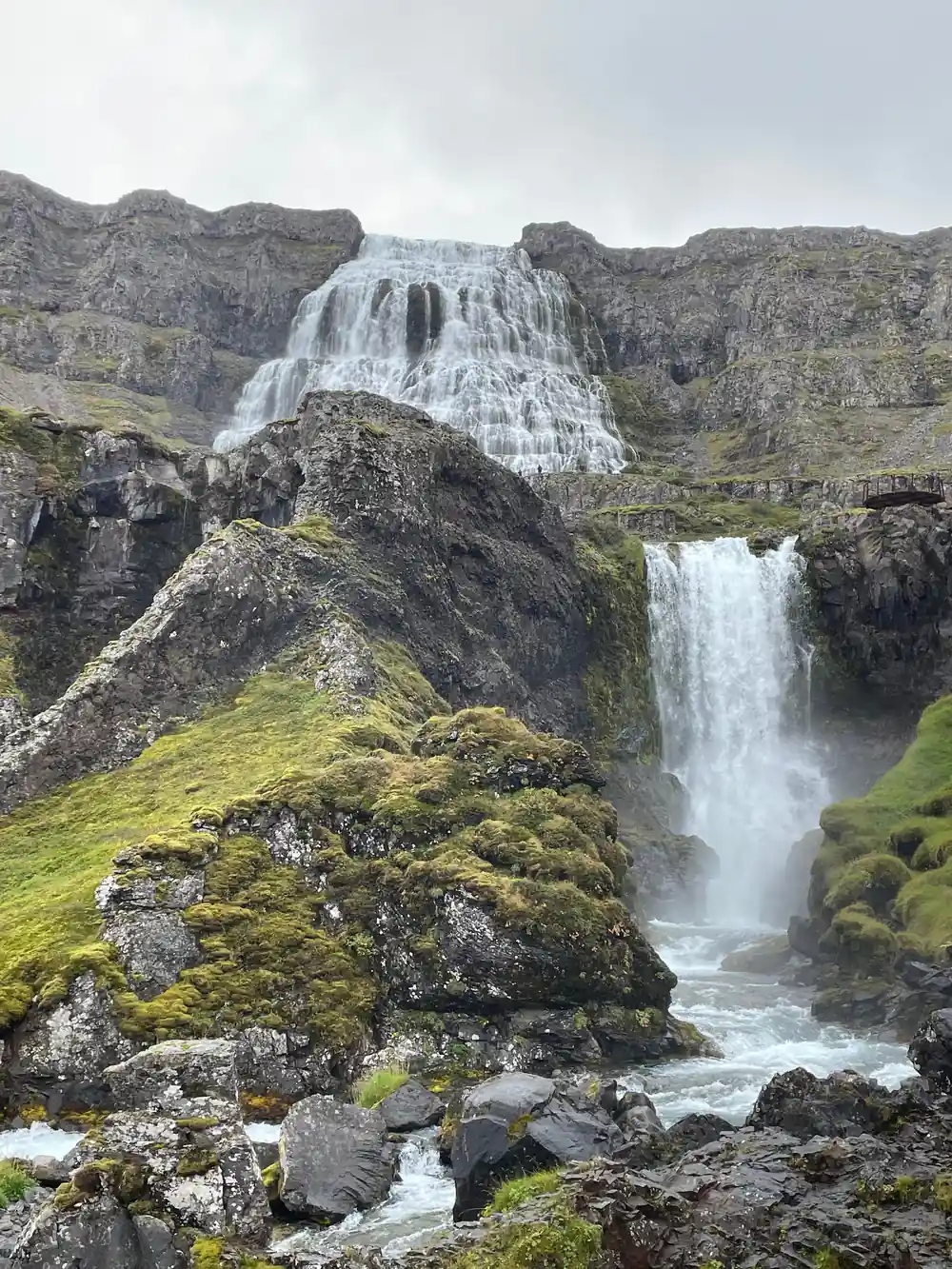
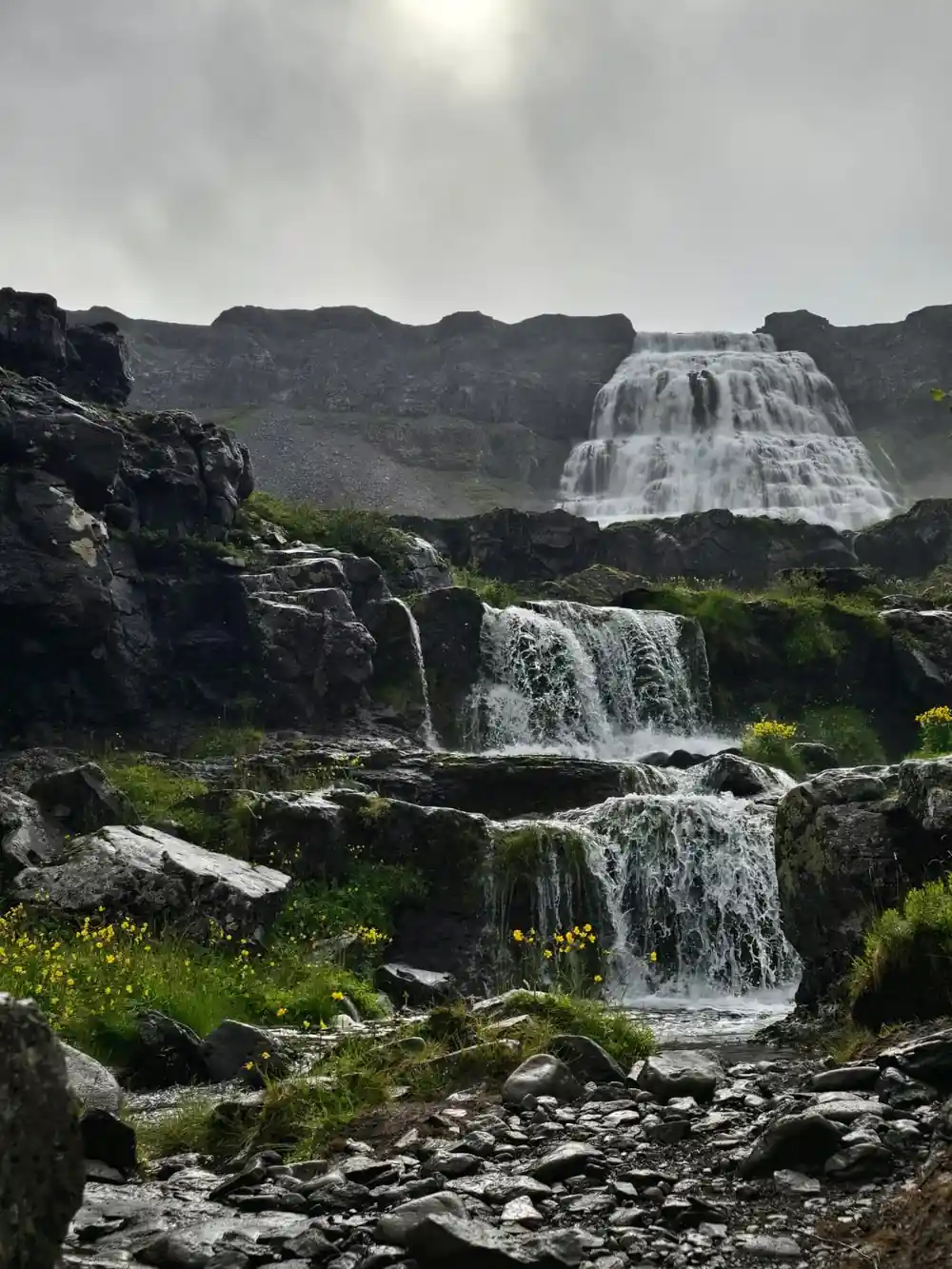
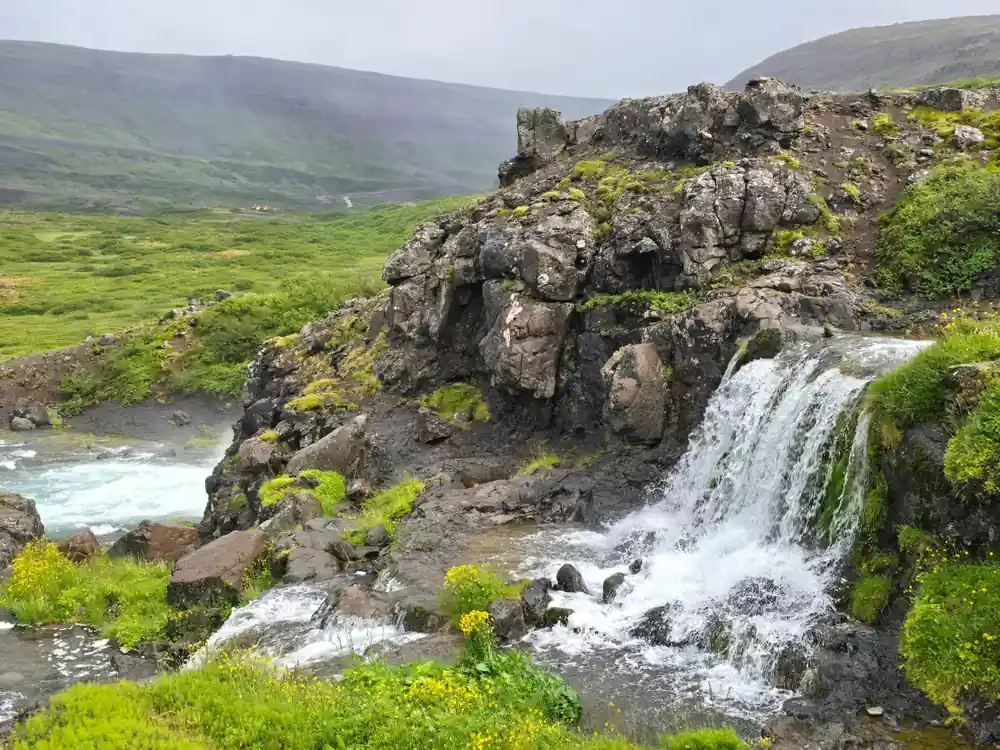
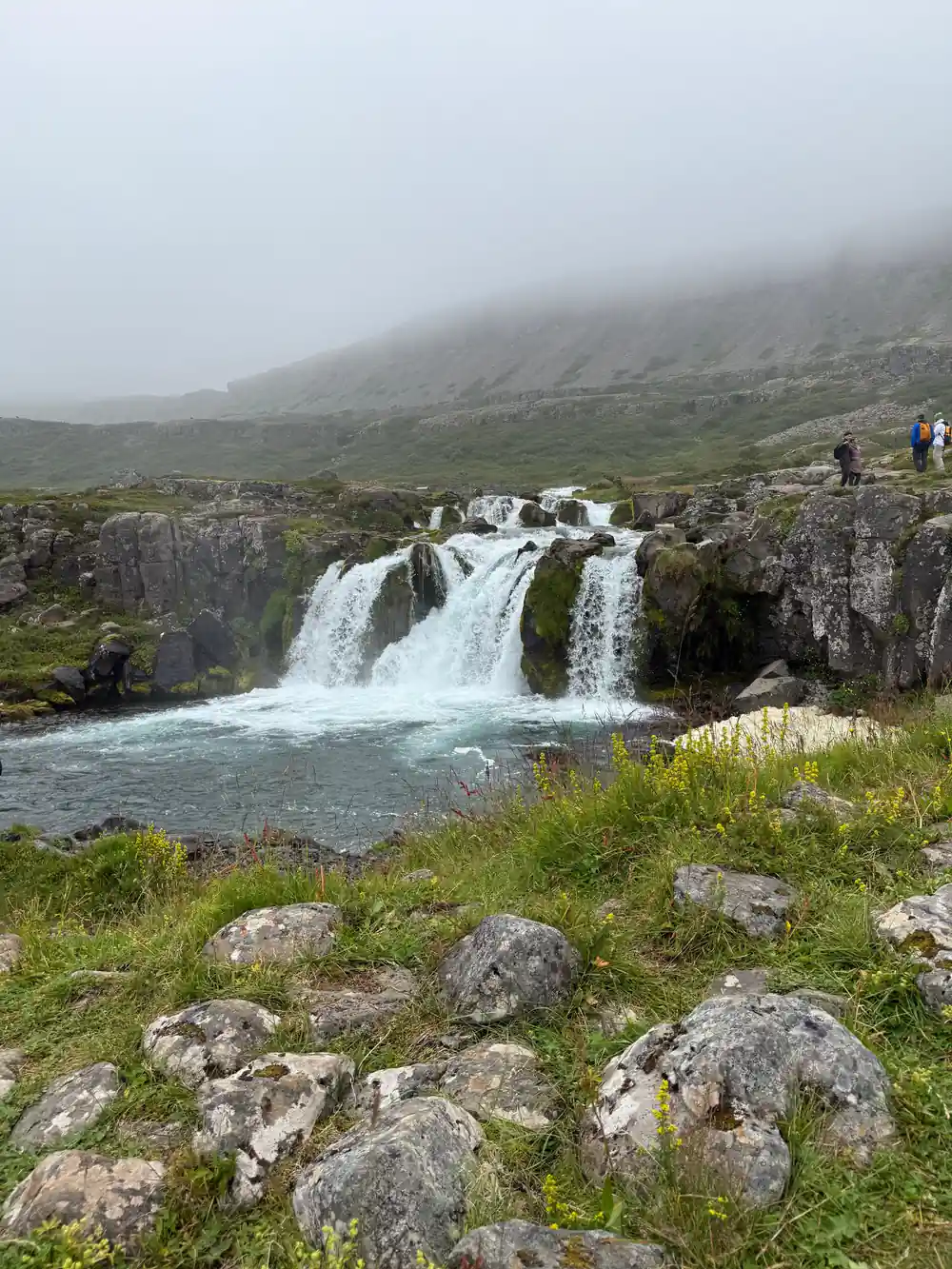
Dynjandi is the one on the postcard, but it is not alone on this river. Below it, between the car park and its base, sit six further waterfalls, each with its own name and none of them small.
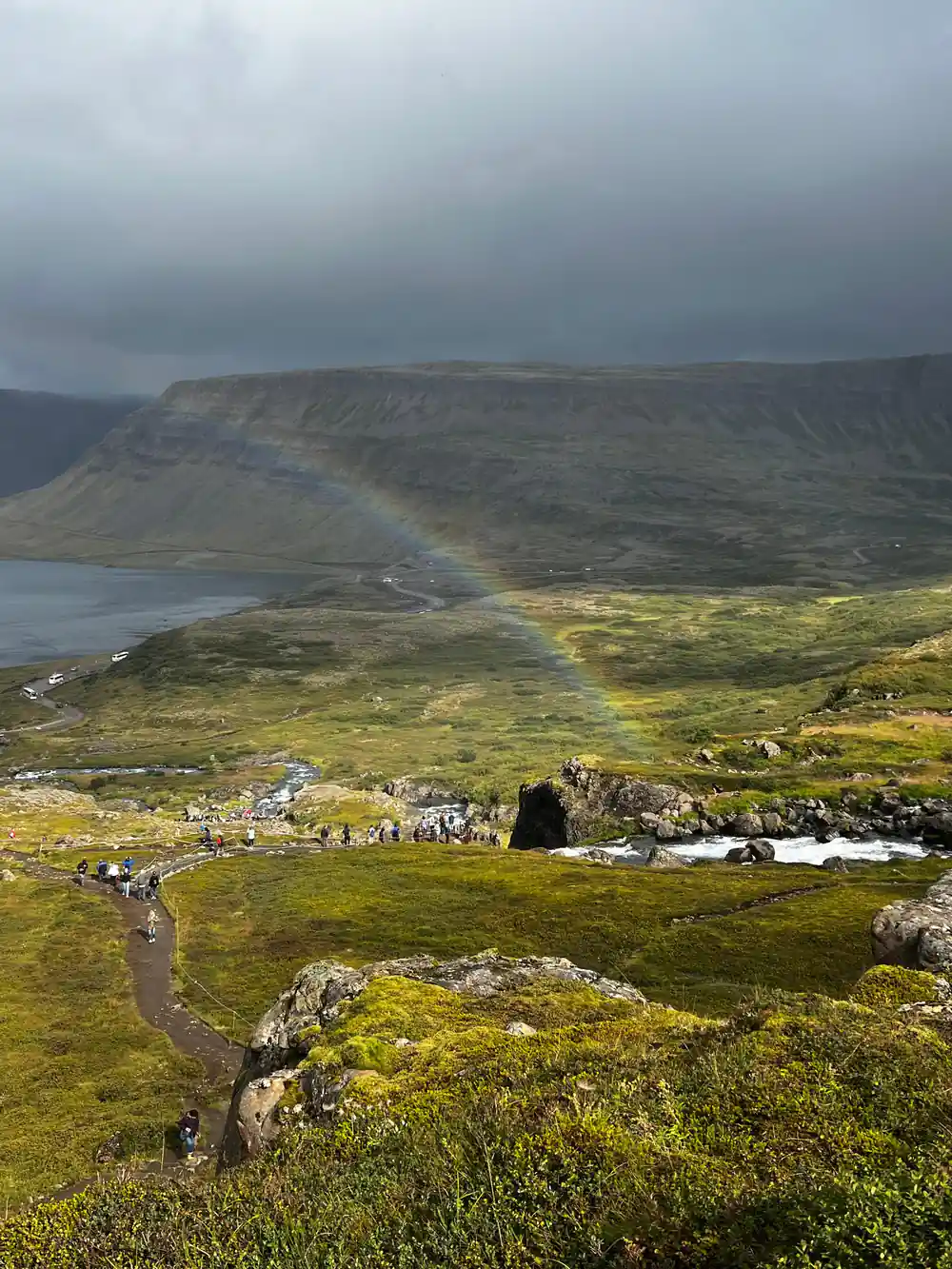
The path passes every one. You climb from the parking area on rock and gravel, and every few minutes another fall opens up beside you: a curtain into a turquoise pool, a chute through a gorge, a wide shallow step over green rock. People stop at each one, which is the correct response and also the reason nobody finishes the walk as quickly as they planned.
The stop is about forty-five minutes. Fifteen up and fifteen back leaves half an hour for seven waterfalls, so the advice from anyone who has done it is simple: start walking immediately, and take the photographs on the way down.
The road, which is half the tour
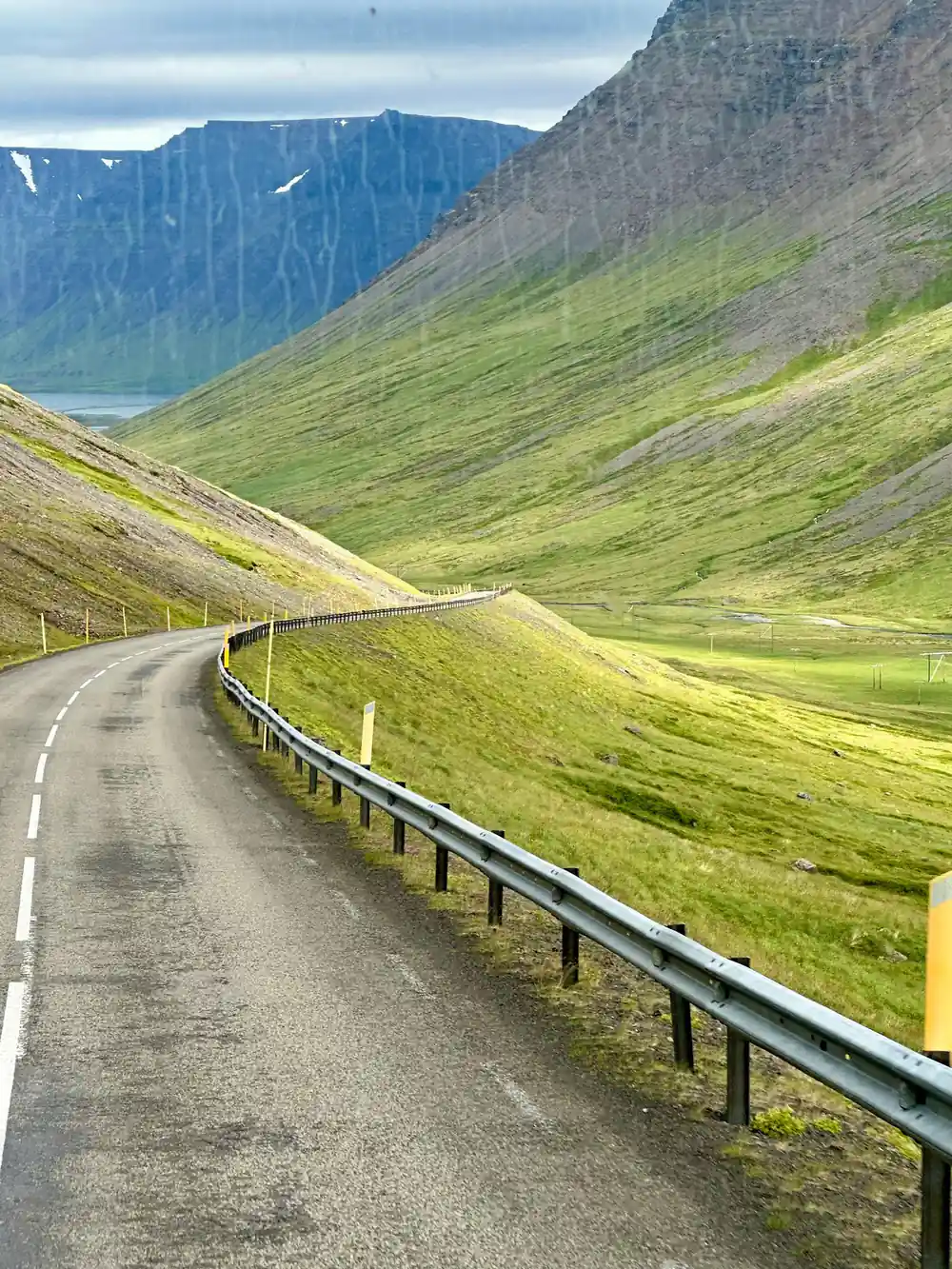
Getting there is the best part of an hour each way, and it is not dead time. The Westfjords are a peninsula shaped like an open hand, and roads here have to go around every finger, over the high ground between them, or through it.
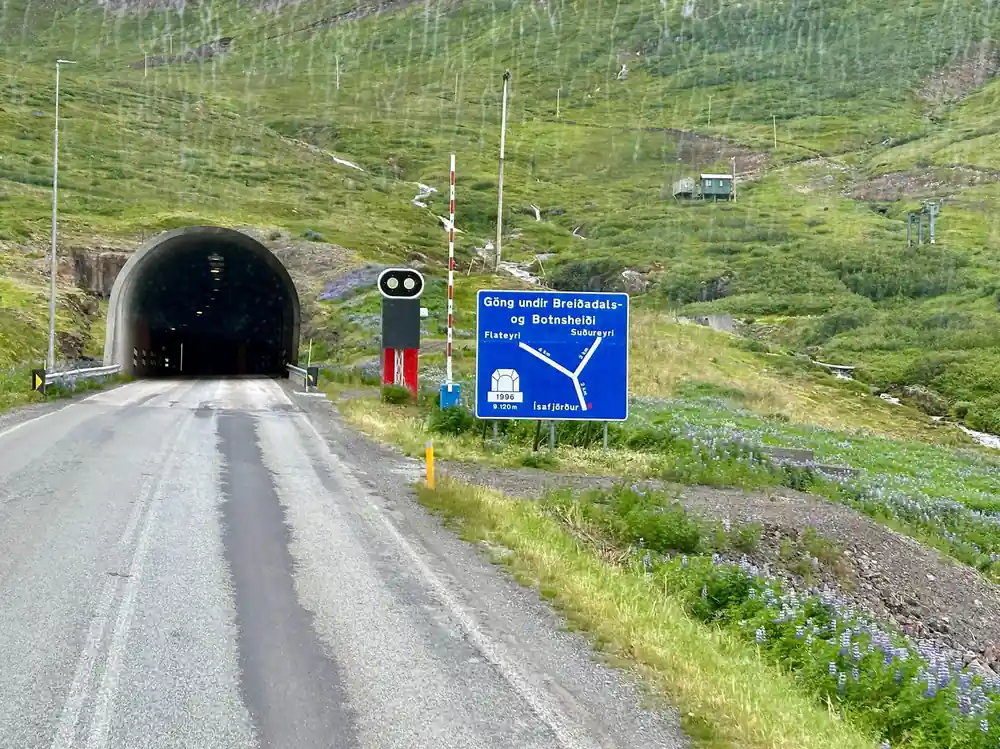
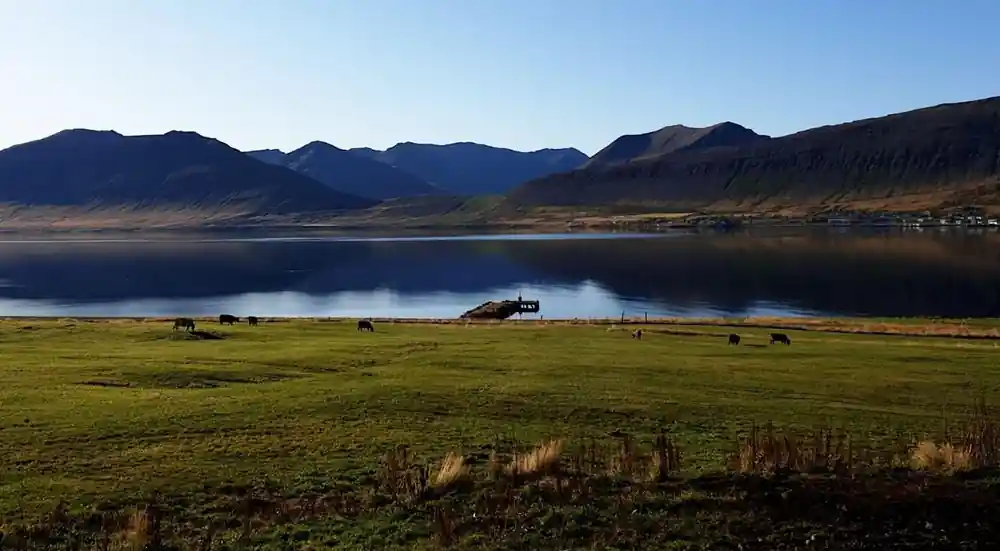
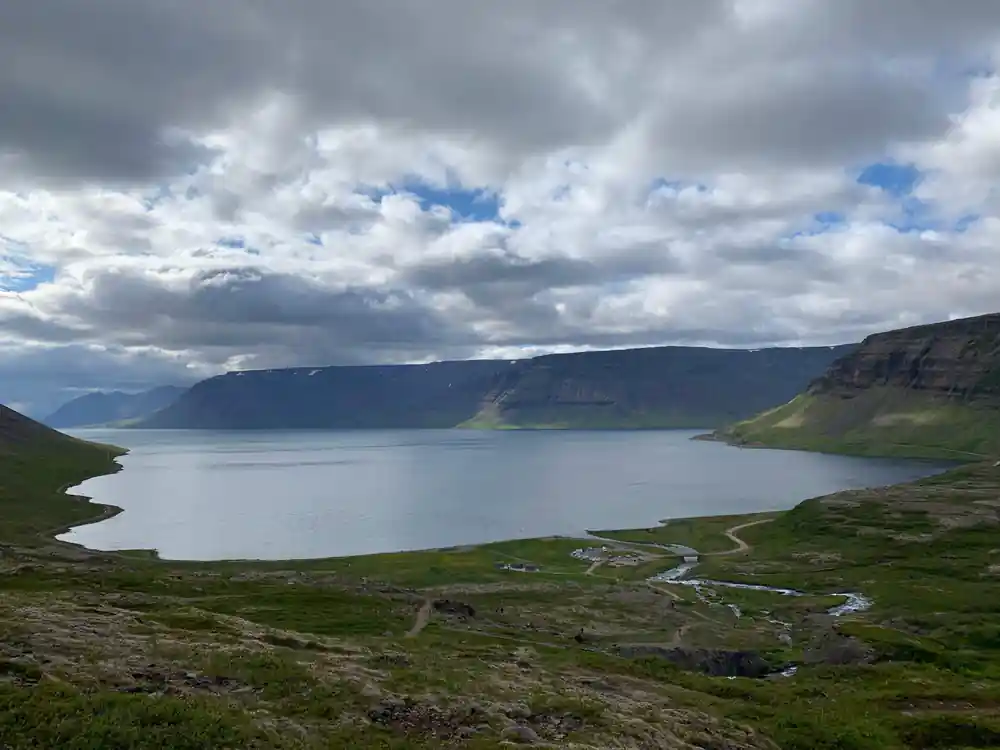
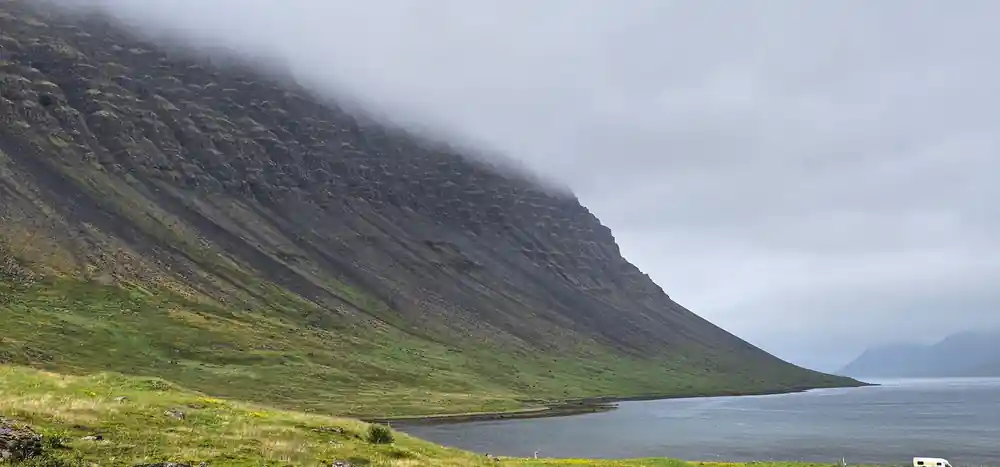
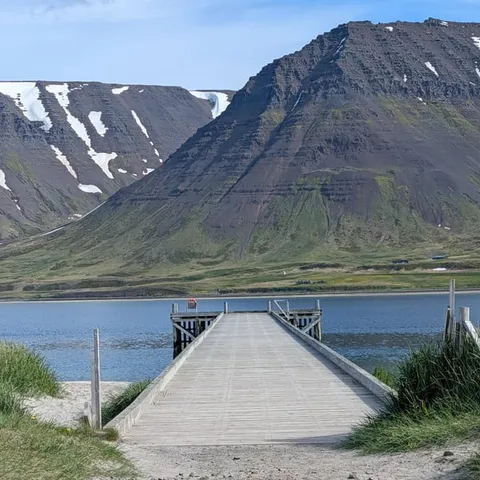
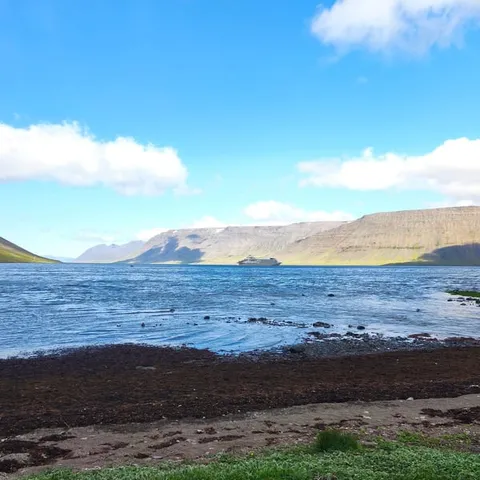
You leave Ísafjörður through a tunnel, run down the length of one fjord, cross to the next, and finally come over into Arnarfjörður with the waterfall visible at the head of the bay long before you reach it. Sheep on the verge, red-roofed farms at the water's edge, and mountain walls striped horizontally with the lava layers that built them.
For most of the year almost nobody drives this. Traffic here is measured in vehicles per hour rather than per minute, and the emptiness is not a shortage of anything. It is the point.
The coffee stop
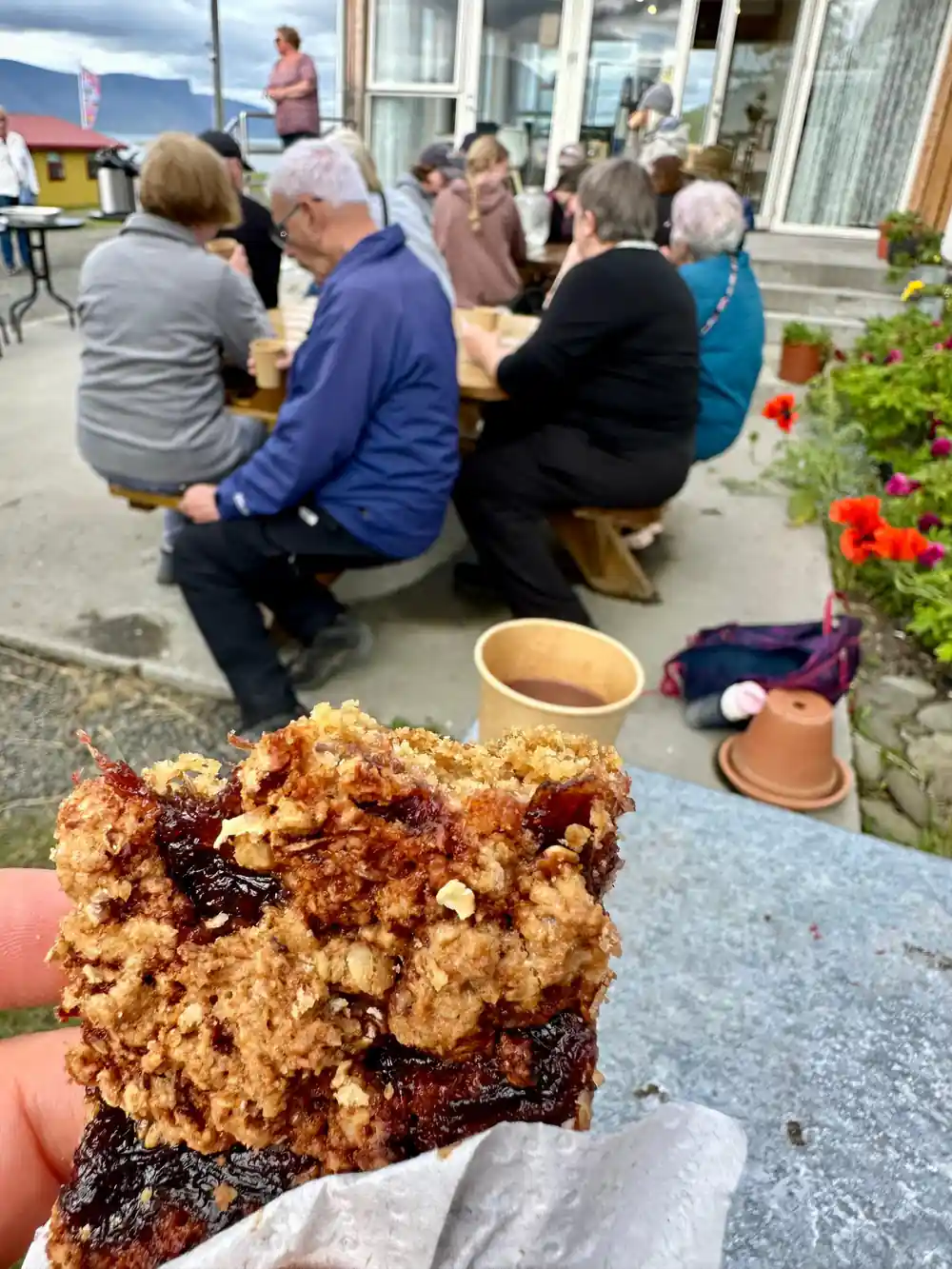
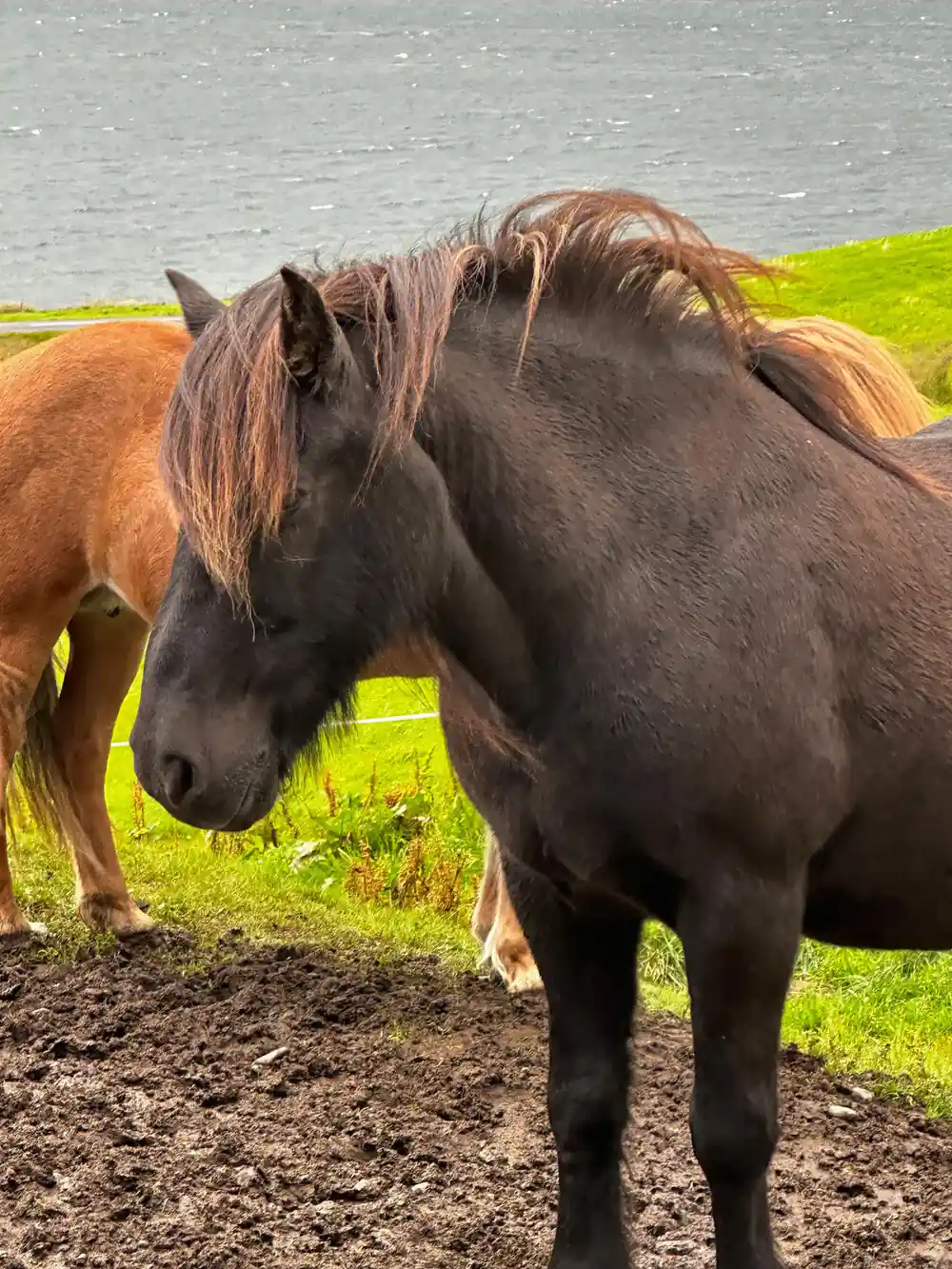
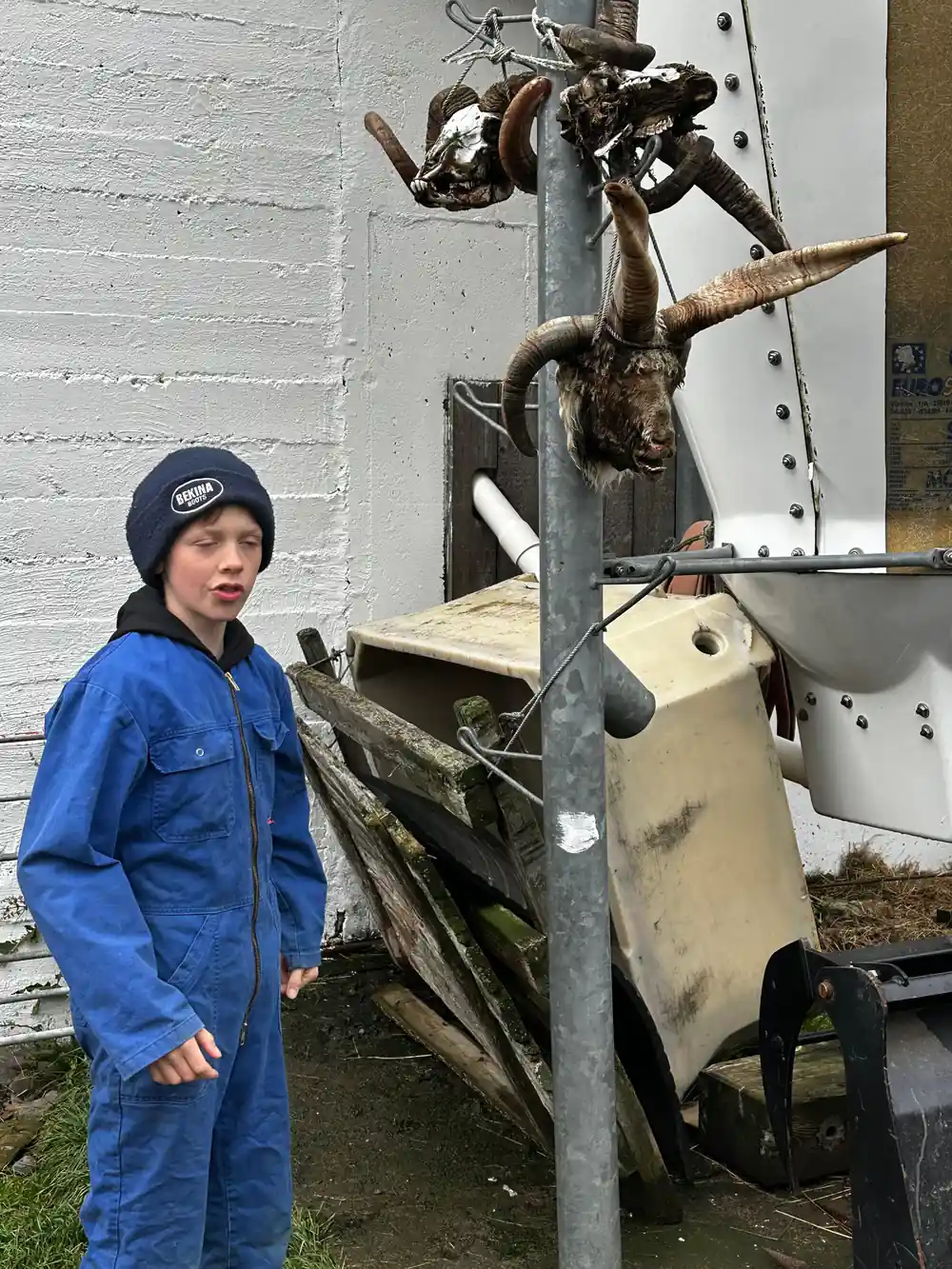
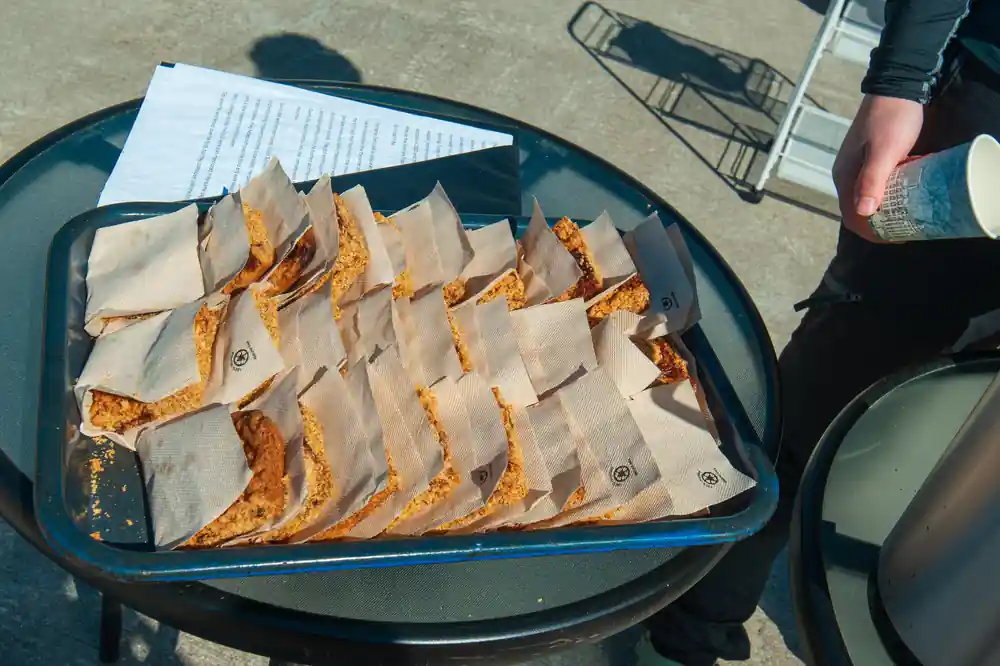
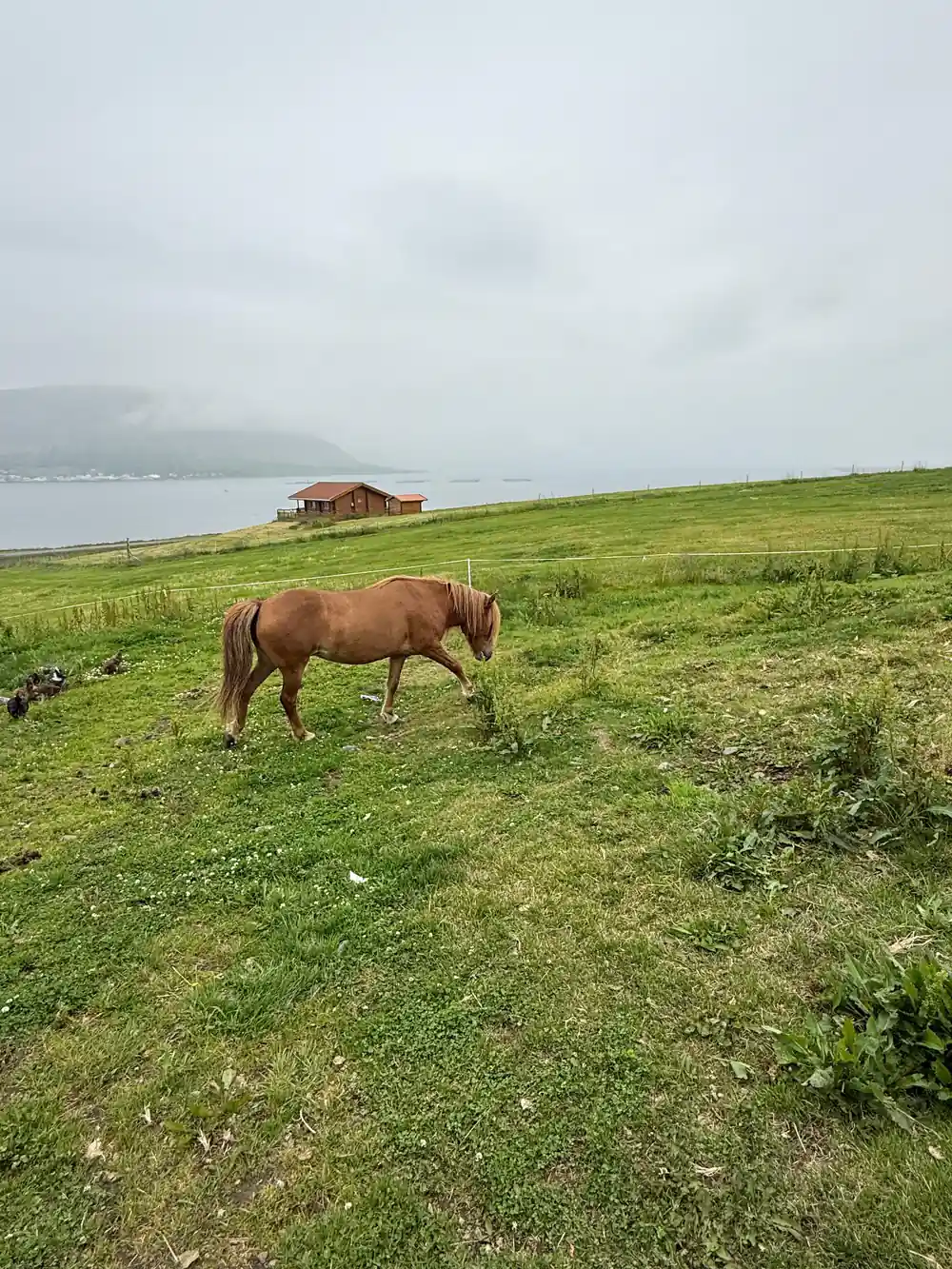
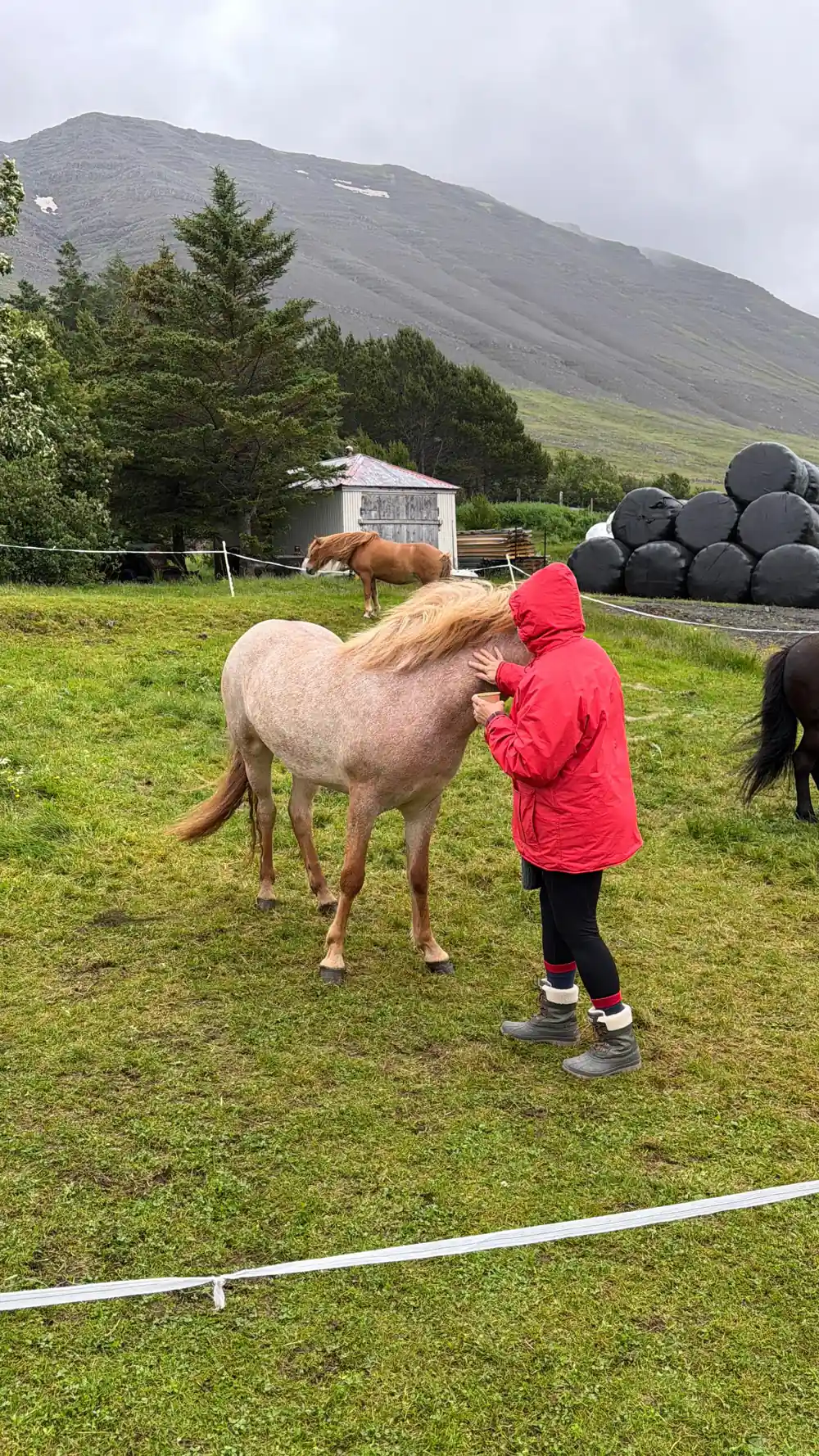
On the way back the coach pulls in at a farm guesthouse for coffee, tea and Icelandic cake, and it is worth arriving at that stop with some curiosity rather than treating it as a comfort break.
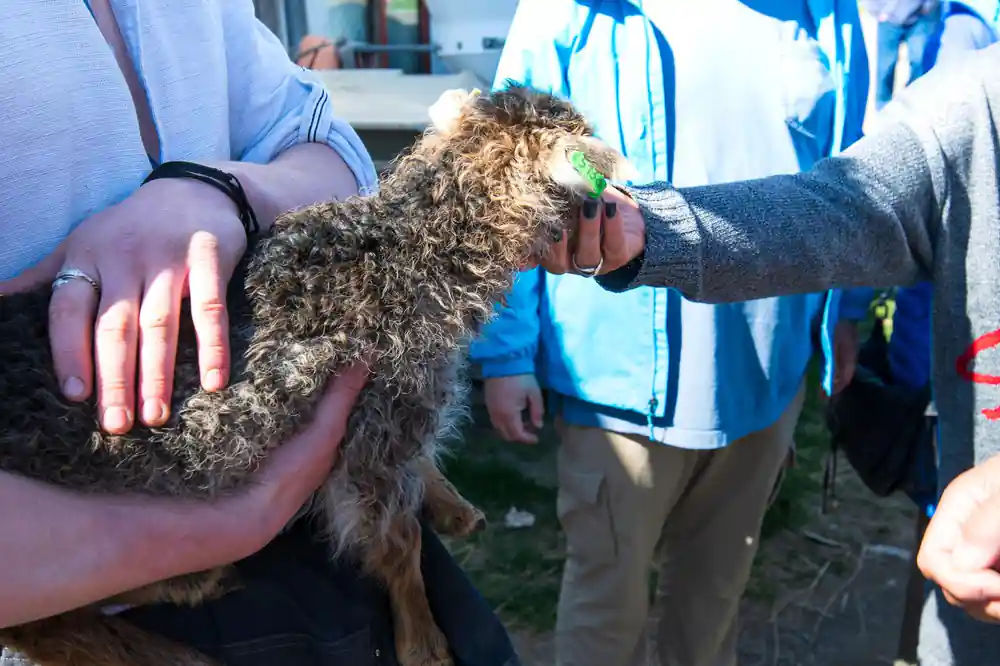
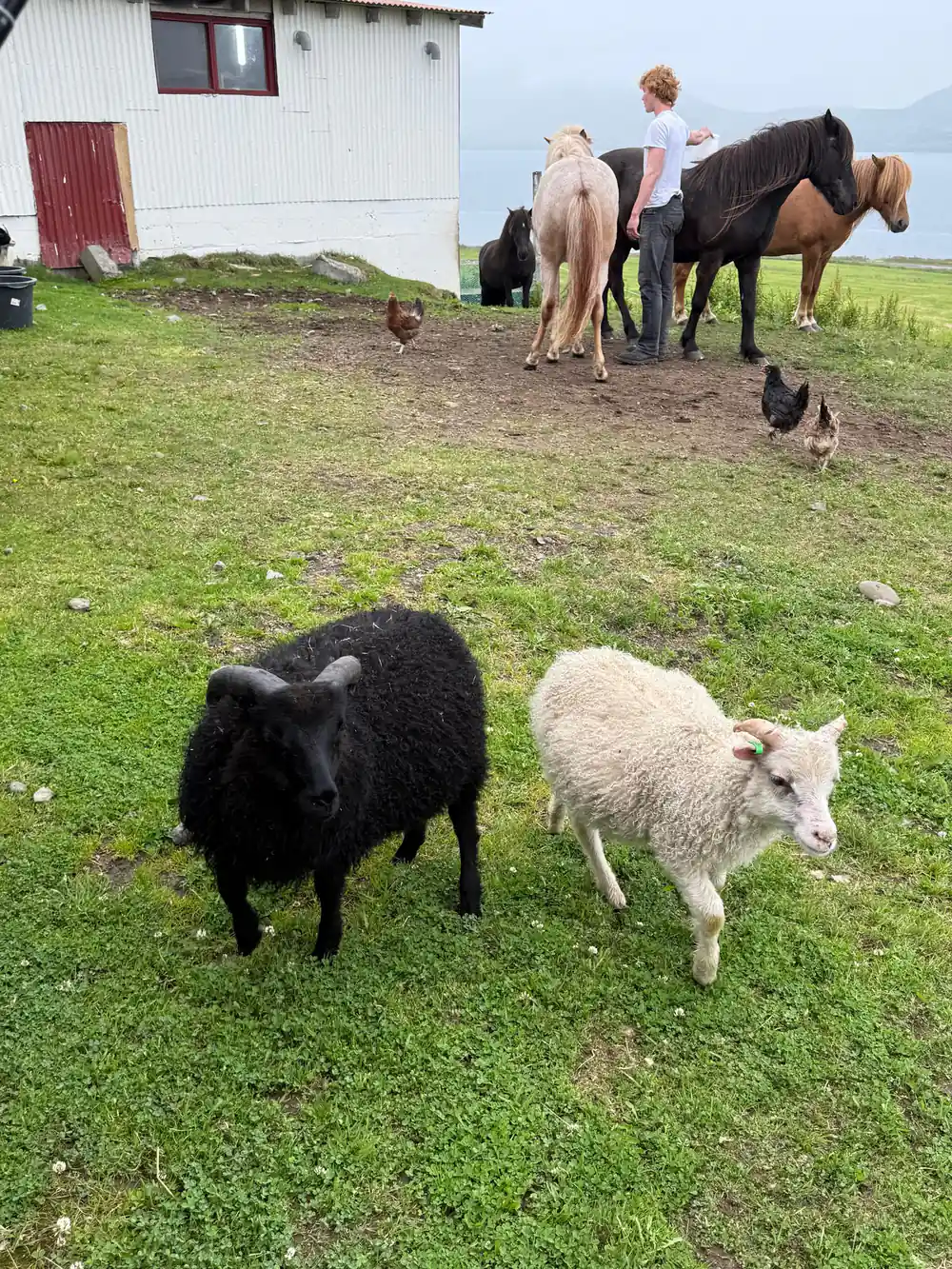
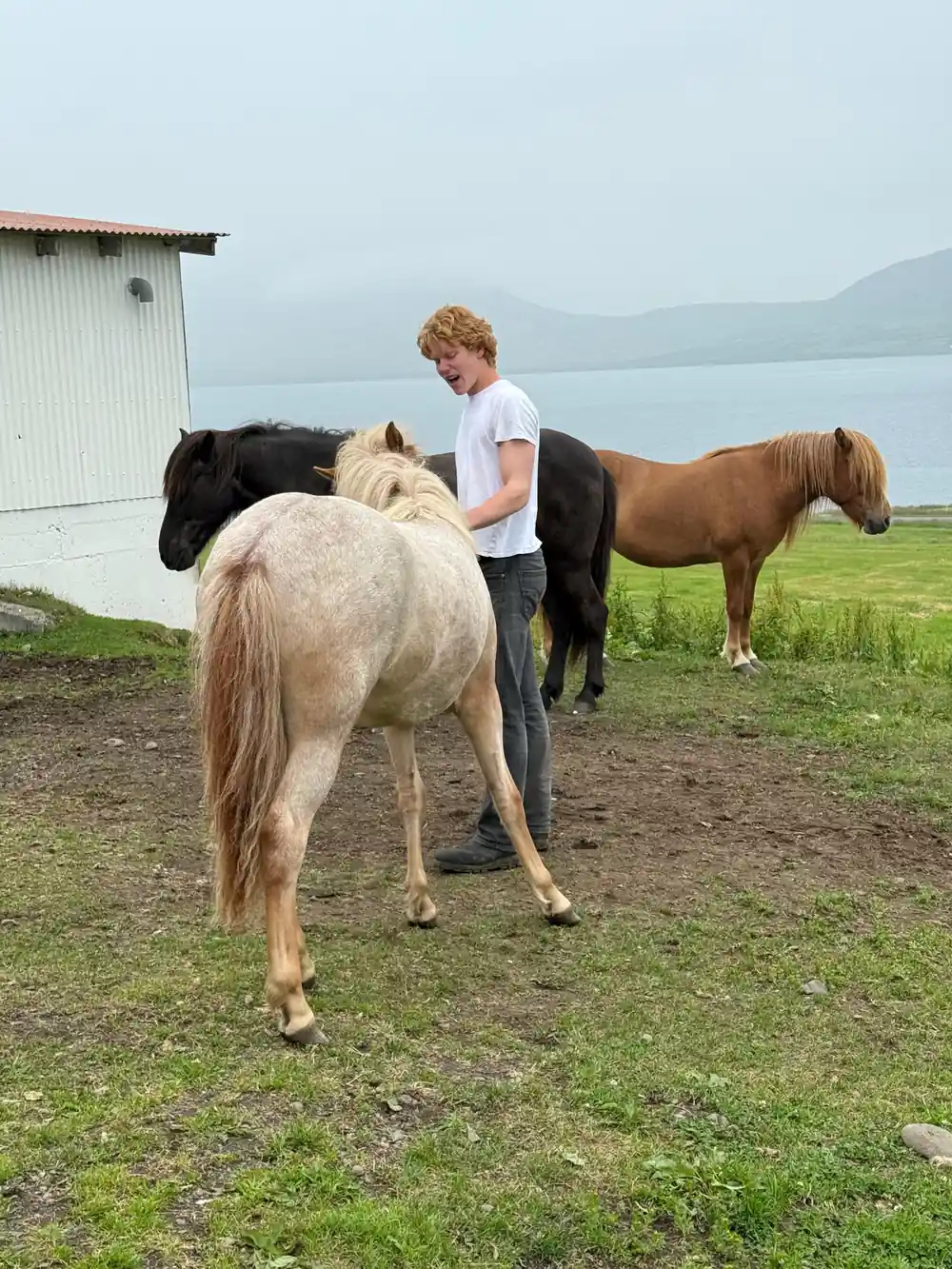
Coffee and something sweet in the afternoon is a genuine Icelandic habit rather than a tourism invention, and a farm out here is not a hobby. Sheep, weather and a very short growing season, at the end of a road that used to close for months at a time.
It also puts the emptiness in context. Half the farms in these fjords are ruins, and the ones still working are run by people who chose to stay. Thirty minutes with a coffee is not a long time to think about that, but it is better than driving straight past.
The Westfjords, briefly
This corner of Iceland is the oldest part of it. The basalt here was laid down roughly sixteen million years ago, long before the rock under Reykjavik existed, and the peninsula now sits well off the active volcanic zone. No eruptions, no lava fields, no steam.
What it has instead is ice damage on an enormous scale. Glaciers cut the fjords, planed the tops flat and left the vertical walls and the stepped terraces you see all day from the coach window.
It also has almost nobody. Around seven thousand people live in the whole region, most of them in a handful of towns, and the number has been falling for a century. That is why a waterfall of this size sees a fraction of the visitors that a smaller one on the south coast gets in a morning.
What the day is honestly like
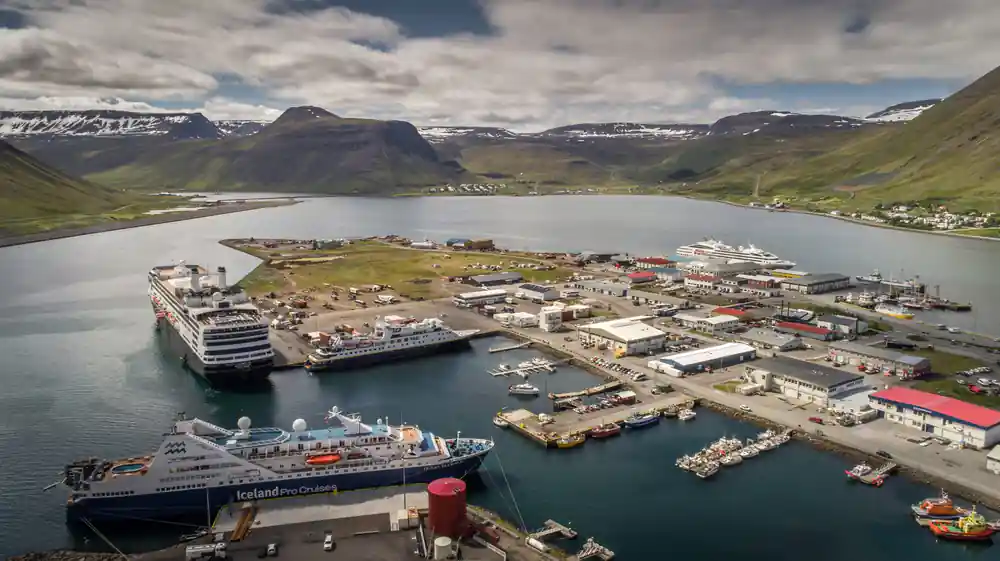
Four hours from the pier and back, of which the best part of two is on a coach. If that ratio bothers you, this is not the excursion to book.
If it does not, you get a waterfall that almost no one you know has seen, a walk past six more, a working farm, and a couple of hours of some of the emptiest inhabited landscape in Europe. The weather will do whatever it does, which is usually cool and often wet, and the waterfall is unaffected either way.
Wear shoes that grip and bring a proper waterproof. Everything else is on the coach.