If you read nothing else
- Roughly two of the four hours are spent driving. Know that going in.
- Enough for the walk up and back if you start immediately.
- A comparable waterfall on the south coast has ten times the people.
- Rocky and uphill. There is a good alternative, but it is not the same.
The straight answer
Yes. If you are in Ísafjörður for a day and you are physically able to walk uphill on rough ground for fifteen minutes, this is the thing to do with the time.
Dynjandi is one of the most distinctive waterfalls in a country full of them, it is a hundred metres tall, it has six more waterfalls stacked below it, and it sits in a landscape with almost nobody in it. Nothing else within reach of this port comes close.
The conditions on that yes are worth setting out properly, because the people who come back disappointed are almost always the ones who did not know one of them.
What you are actually buying
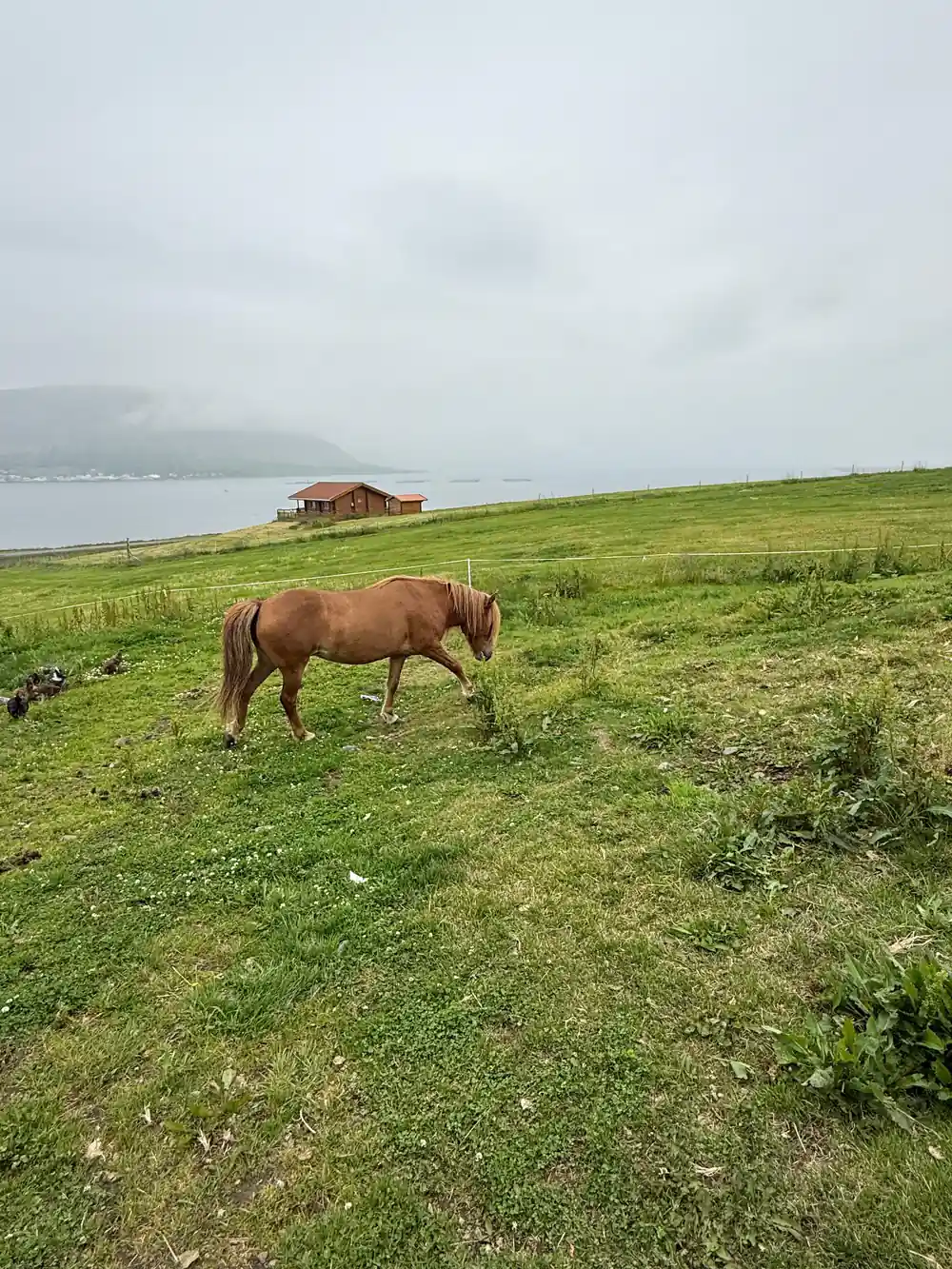
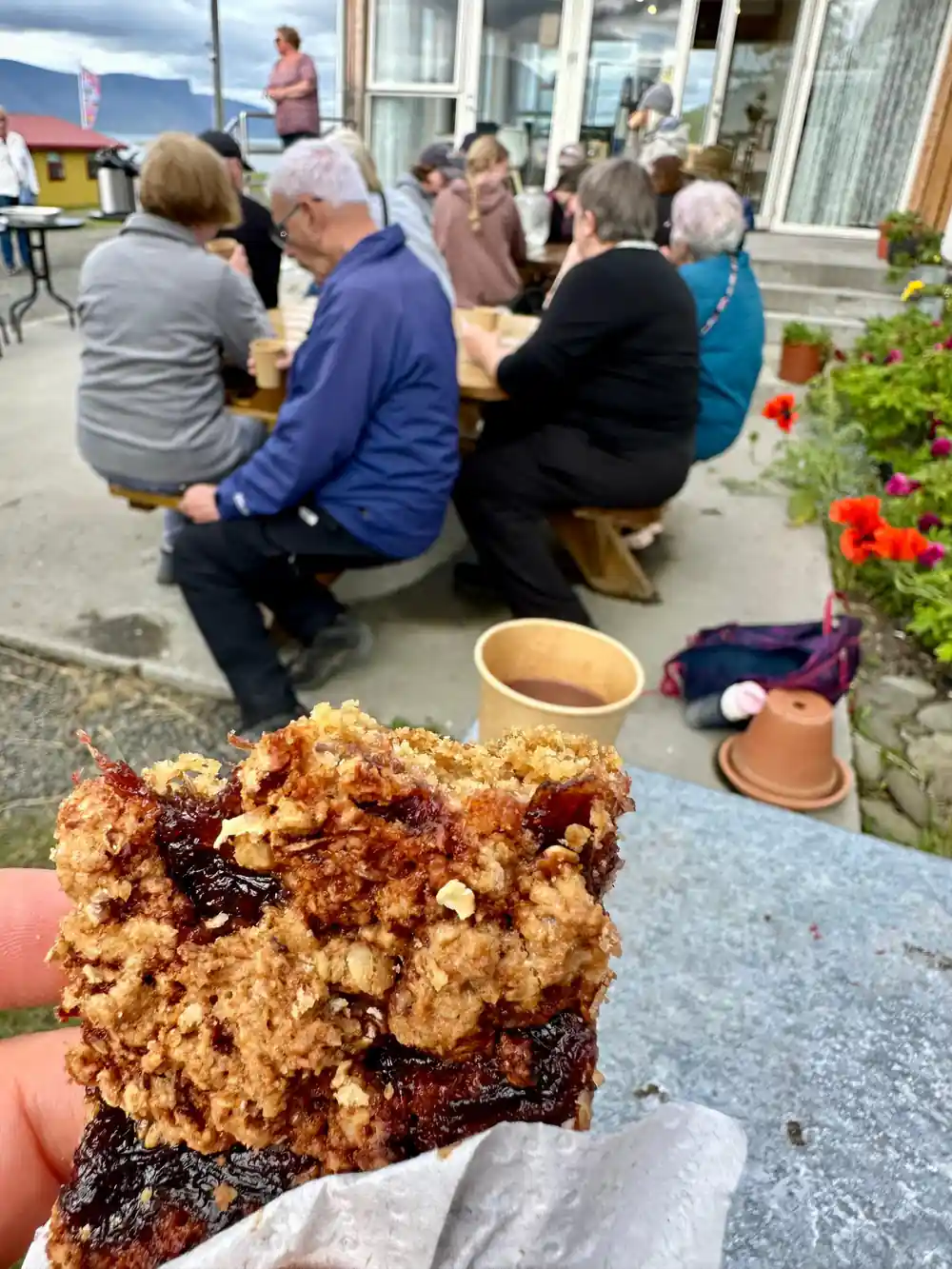
Four hours, of which roughly two are on a coach, forty-five minutes are at the waterfall and thirty are at a farm guesthouse.
That ratio is the single most important fact about this excursion, and it is not a criticism. The waterfall is the best part of an hour away in each direction and there is no shorter route to it. Anyone selling you a Dynjandi trip with less driving is selling you a different waterfall.
Whether that is good value depends entirely on how you feel about a coach window. If the drive is dead time to you, this is a long way to go for forty-five minutes. If two hours of empty fjords, striped mountain walls and abandoned farms is part of what you came to Iceland for, then the ratio is fine and the waterfall is a bonus at the far end of it.
One more thing worth weighing: this is the only excursion from this port that reaches something of national significance. Everything else on offer here is about the town and the fjord it sits in, both of which are pleasant and neither of which is a hundred metres tall.
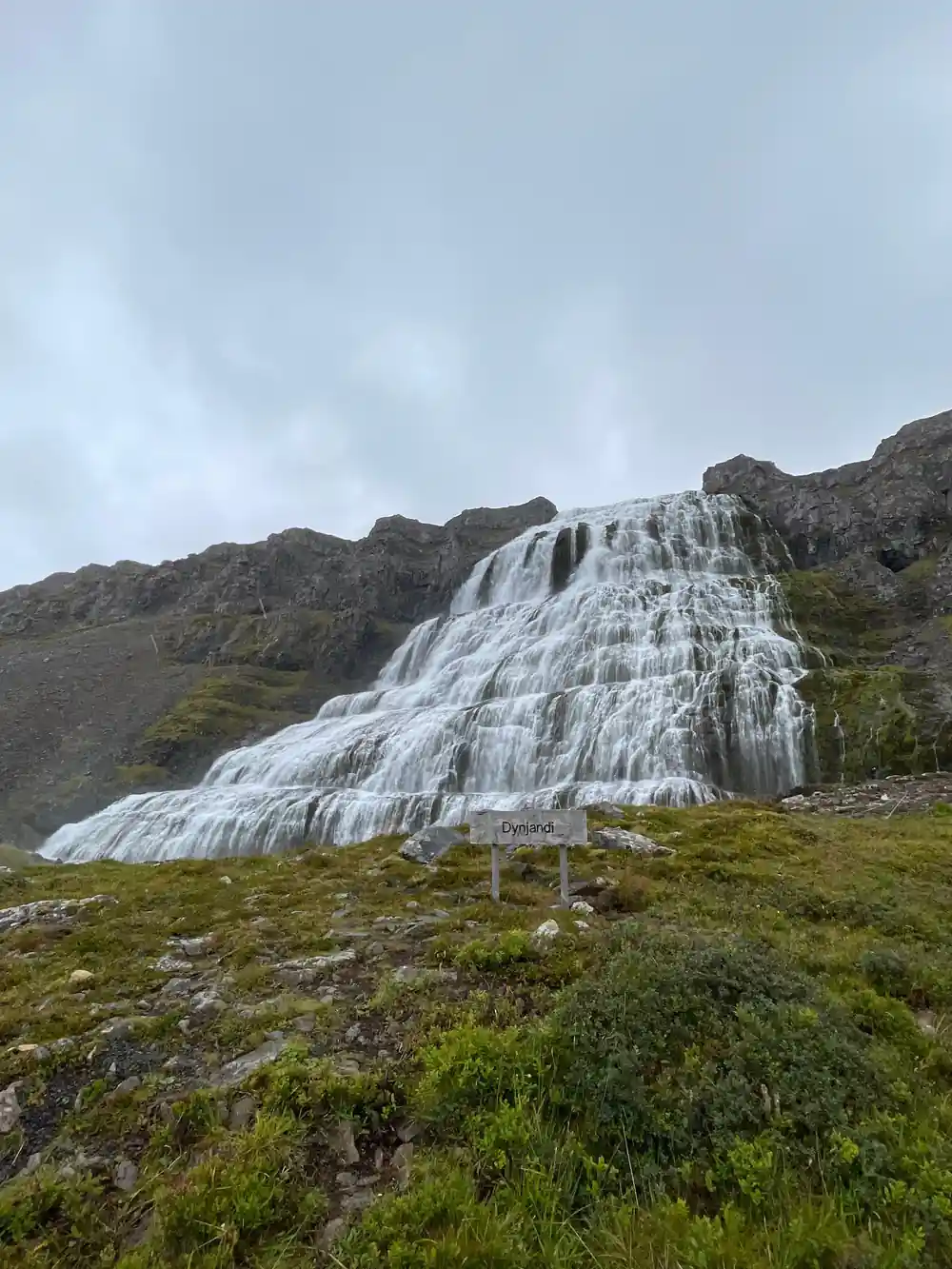
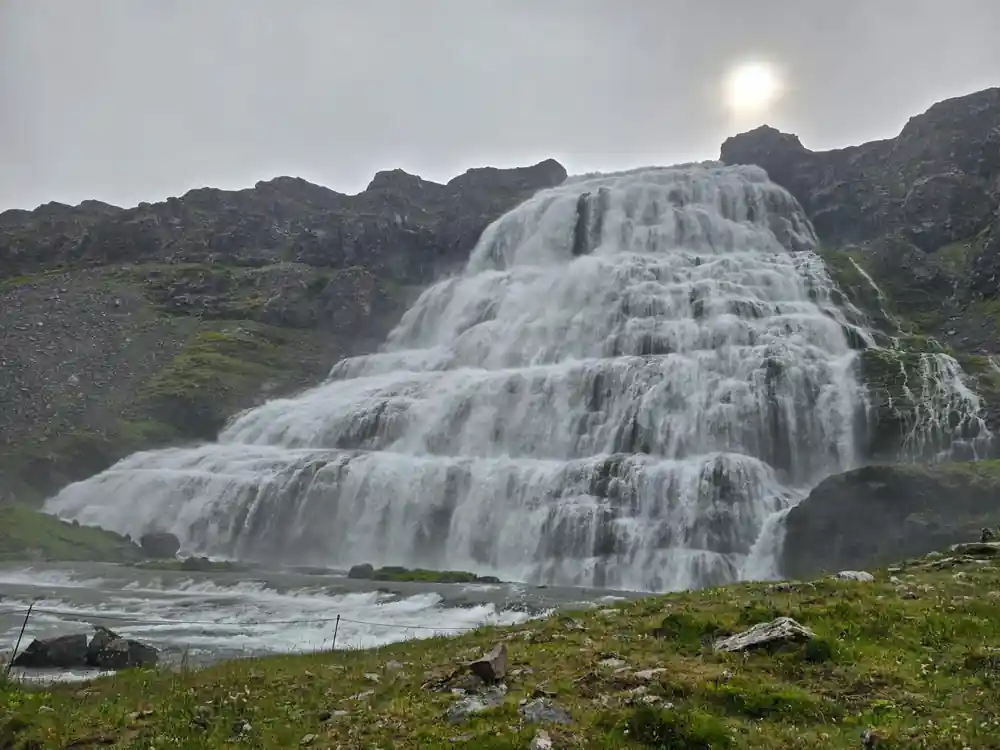
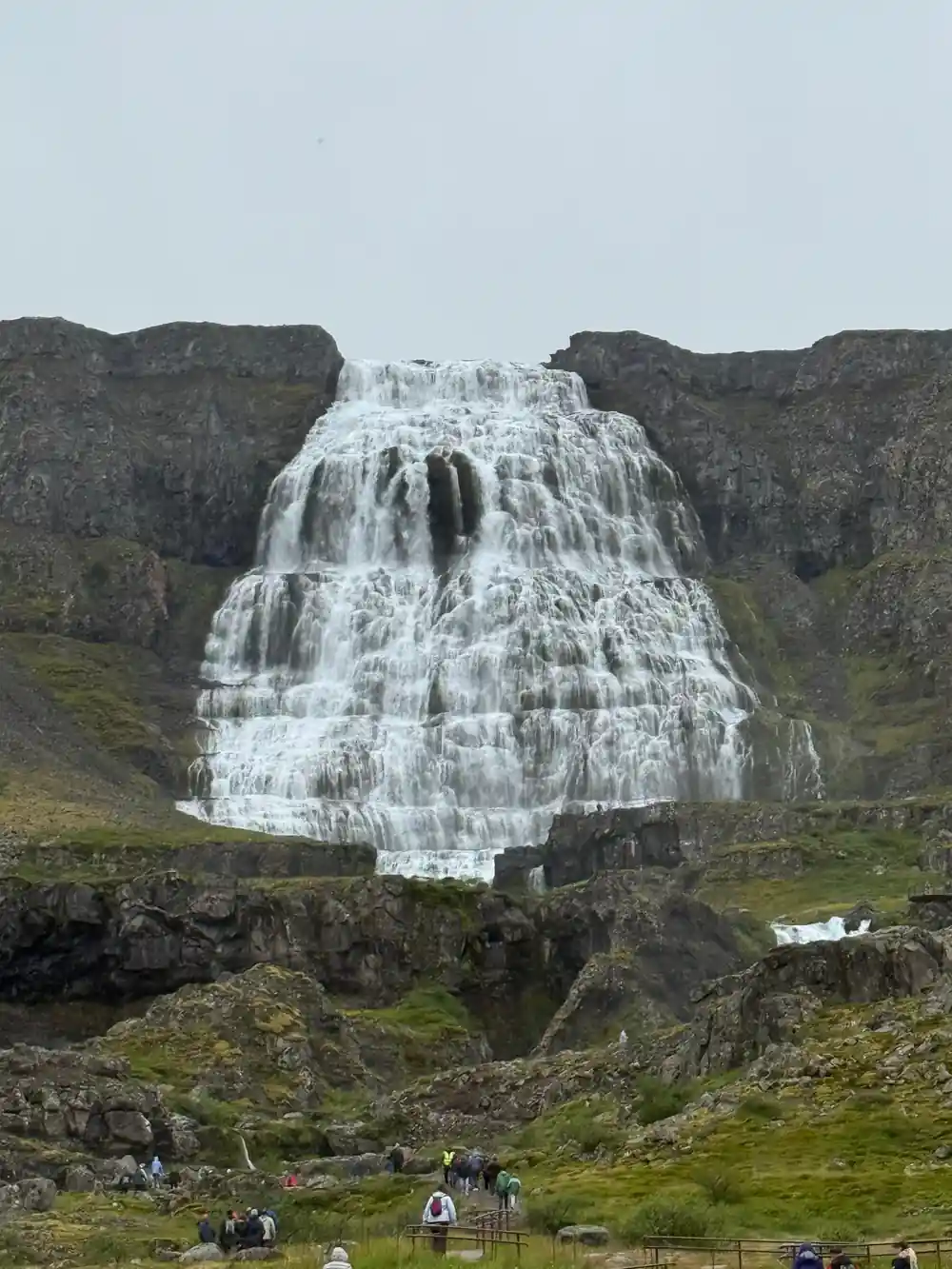
Dynjandi in flat grey light, which is most days
How it compares to the famous ones
Most visitors' reference points are the south-coast waterfalls: the one you can walk behind, the one on the cliff, and the enormous one on the Golden Circle. Dynjandi is a different proposition from all of them.
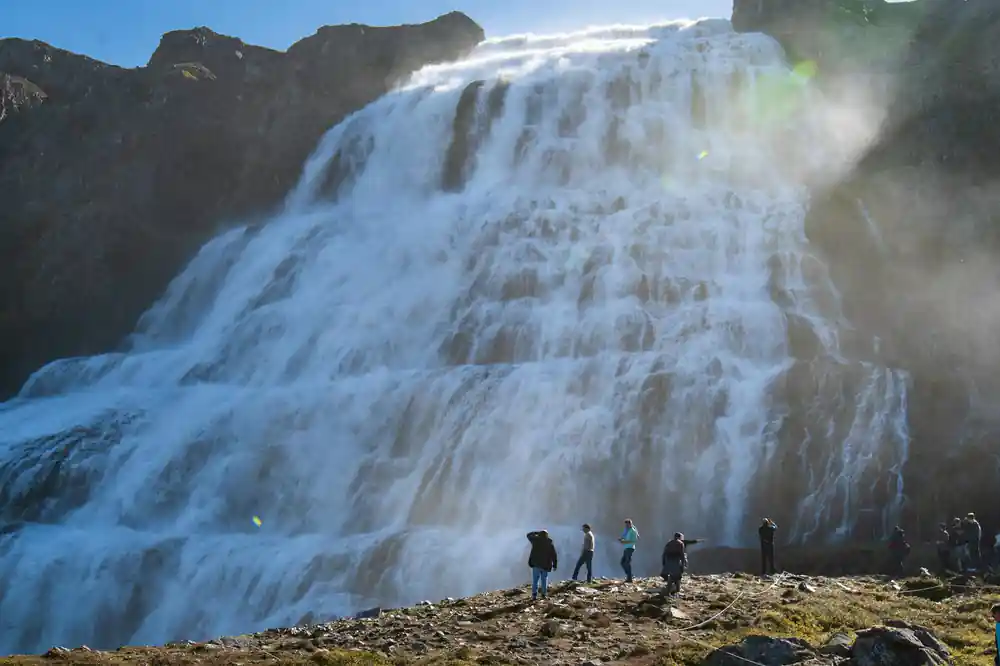
It is taller than the south-coast pair and shaped unlike anything else in the country. It has more water than one and considerably less roar than another. What it does not have is a car park full of coaches, a café, a viewing platform or a queue for the photograph.
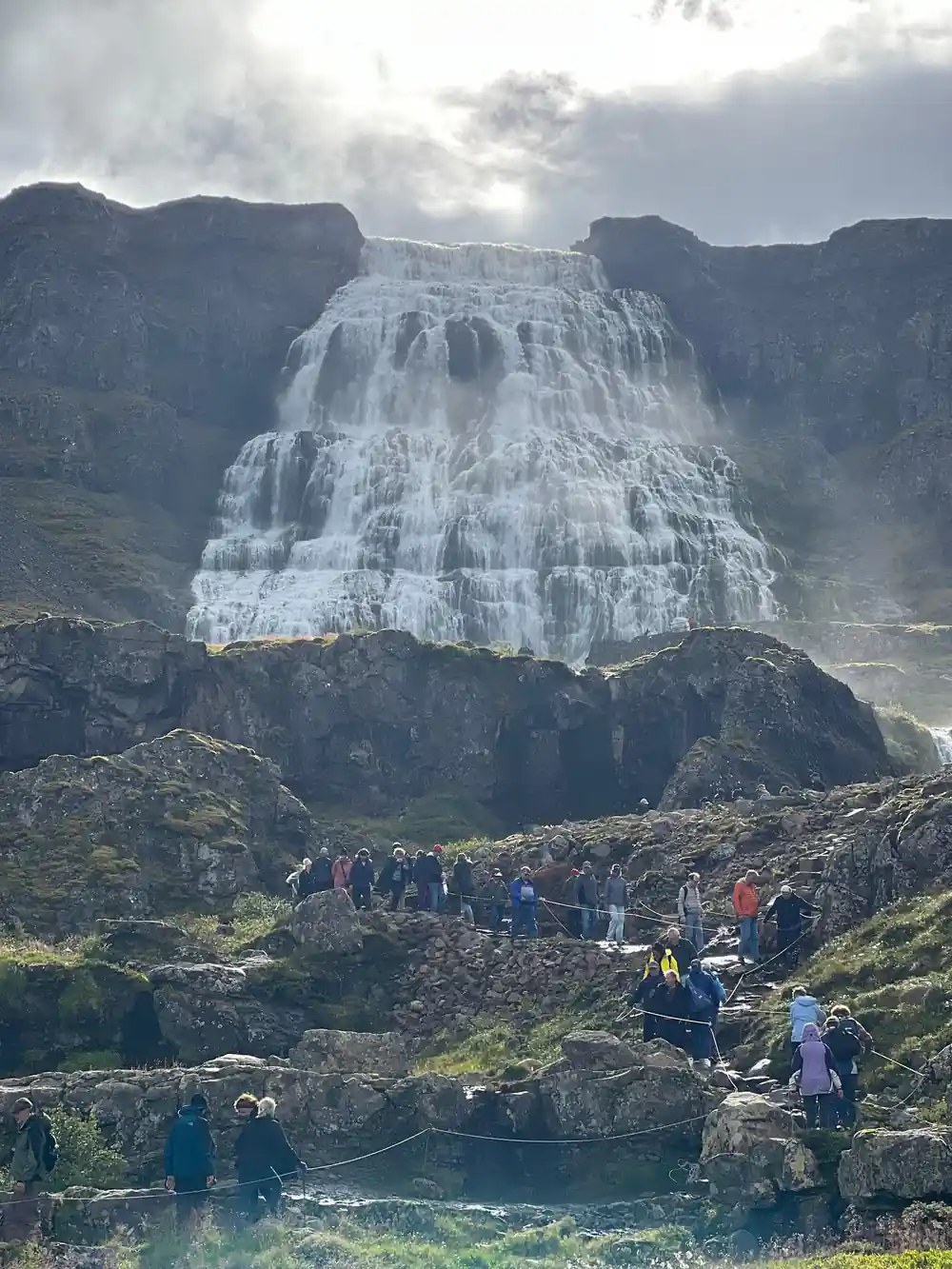
The trade is access. Those falls are minutes from a main road on a route every visitor drives. Dynjandi is on the far side of a mountain range in a region most visitors never reach, and the reward for that is standing at a hundred-metre waterfall with a handful of other people instead of four hundred.
If you have already seen the famous ones, this will not feel like more of the same. If you have not, it is a strong first one.
What bad weather does to it
Less than people fear.
The waterfall is unaffected by rain except to run harder, and a wet day puts threads of water down every mountain wall along the road as well. Low cloud sitting halfway down the fjords is, if anything, better than a blue sky for photographs of this particular landscape.
What weather does affect is comfort. Forty-five minutes standing still in wind-driven rain without a proper waterproof is unpleasant, and that is entirely within your control. Wear the right coat and a bad day is a good day.
The one genuine loss is a very low cloud base that hides the top of the fall. It happens, it is not common, and even then the six lower falls are all still there.
Who should think twice
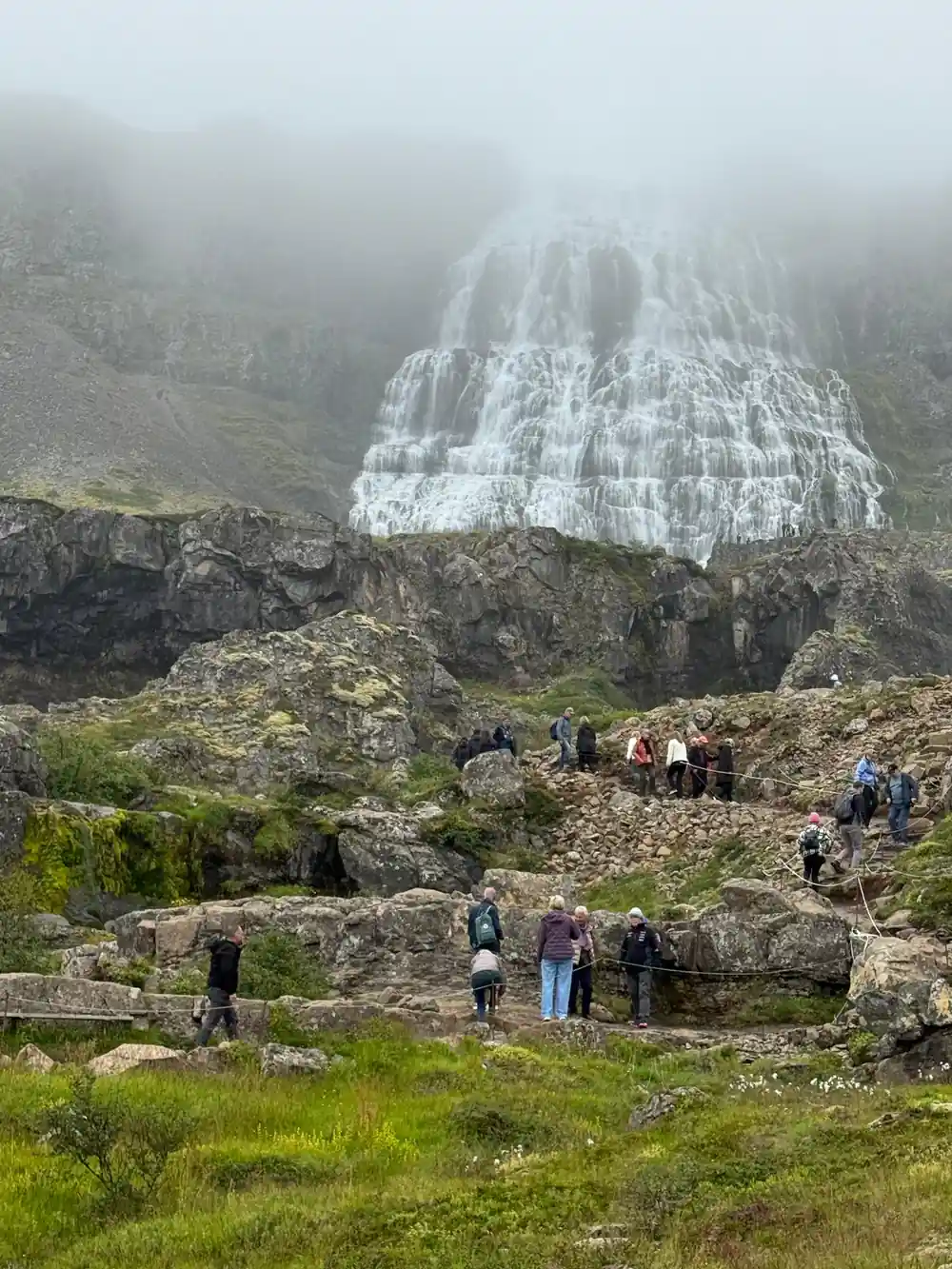
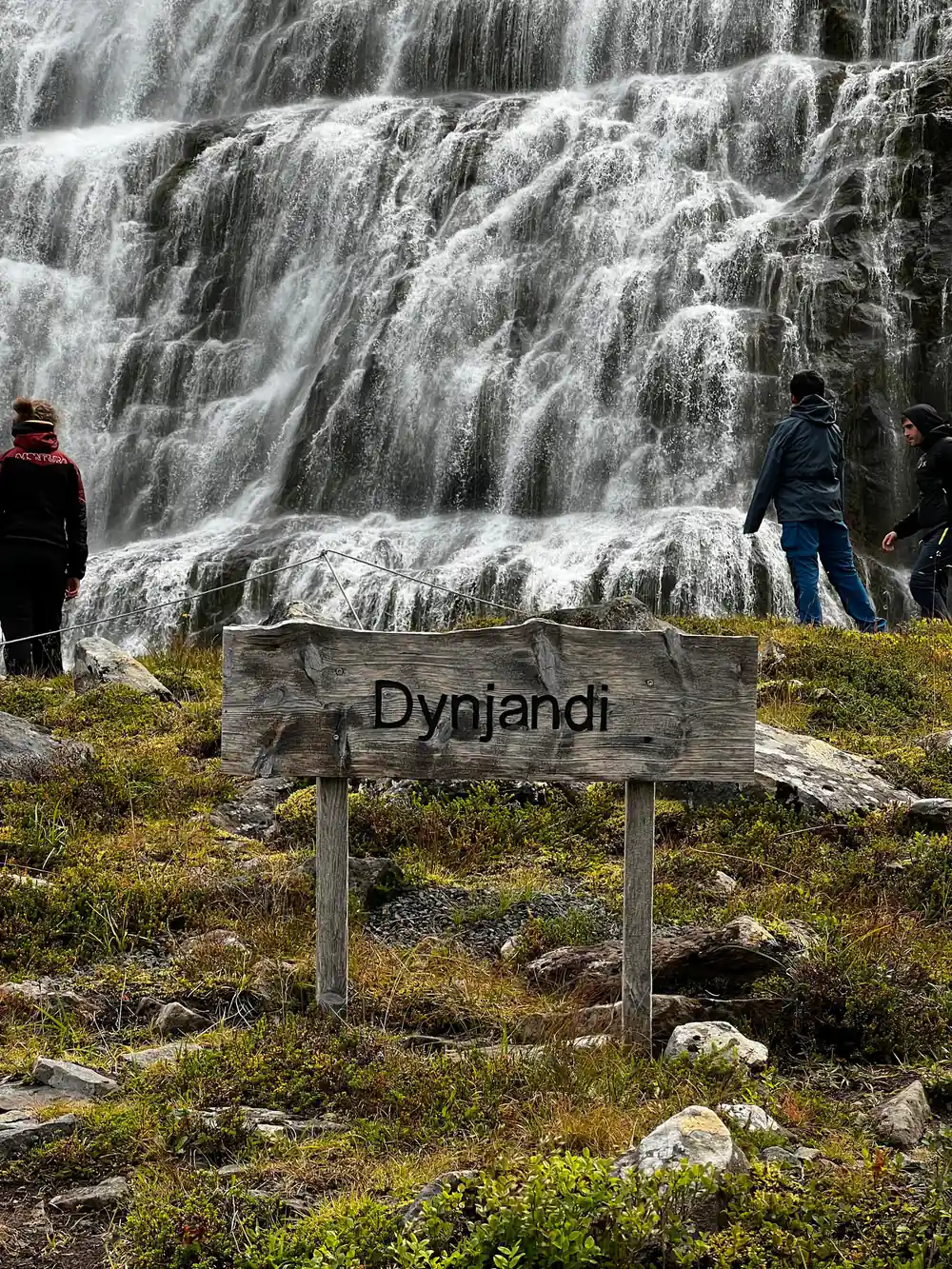
Anyone for whom fifteen minutes uphill on uneven rock is a real difficulty. You will still see the waterfall, and you will still see the lower falls near the car park, but you will not reach the base of the main one and that is where the scale lands.
Wheelchair users and anyone with significant mobility limits should treat the path as inaccessible and decide on that basis. The car park view is genuinely good; it is not the same trip.
Small children are fine on the coach and at the farm, and need watching closely on the path, which has drops beside it in places.
And anyone who dislikes being on a bus. Two hours is two hours, and no amount of scenery changes that for someone who would rather be walking around a town.
What people wish they had known
Three things come up again and again from people who have done it.
First, that there are six more waterfalls on the way up and that they eat the clock. Almost nobody is told this in advance and it changes how you spend the forty-five minutes.
Second, that the ground is wet rock. Shoes with grip are not a nice-to-have.
Third, that the last toilets before the farm stop are at the waterfall car park, and the farm stop is a good while later.
None of those is a reason not to go. All of them are reasons to read this before rather than after.
Yes, with the right coat and the right shoes
from US$144Reserve now & pay later