If you read nothing else
- Every fjord has to be driven around, so short lines take long times.
- The mountain pass this route used to climb is now bypassed underground.
- You will pass more sheep than cars, in either direction.
- High ground here closes, and it closes without much notice.
Why a short distance takes so long
Look at the Westfjords on a map and the shape is immediately obvious: a hand with the fingers spread, or a leaf eaten to its veins. Deep fjords cut in from every side, and between them sit flat-topped mountains with almost vertical walls.
A road has three options and all of them are slow. It can run all the way in to the head of a fjord and all the way back out, which turns a five-kilometre gap into forty. It can climb over the high ground between two fjords, which means a mountain pass with hairpins, weather and a closure season. Or it can go through the rock, which is expensive and takes decades to fund.
The drive from Ísafjörður to Dynjandi is somewhere under eighty kilometres and takes the best part of an hour, and every minute of that is explained by the shape of the coastline rather than by the state of the road.
The upshot is that nobody in the Westfjords quotes distances. They quote times, and they are usually right.
The tunnel that made this a day trip
For most of the twentieth century, getting from Ísafjörður to Arnarfjörður meant climbing Hrafnseyrarheiði, a high mountain pass that closed for a large part of the year. Dynjandi was effectively a summer waterfall, unreachable from the north for months at a time.
The Dýrafjörður tunnel changed that. Bored through the mountain between two fjords and opened in 2020, it replaced the pass with a level run underground and turned a seasonal route into a year-round one.
It is the reason a cruise ship calling here can sell a four-hour excursion to a waterfall on the far side of a mountain range at all. Before it, the same trip was a longer, riskier and often impossible drive.
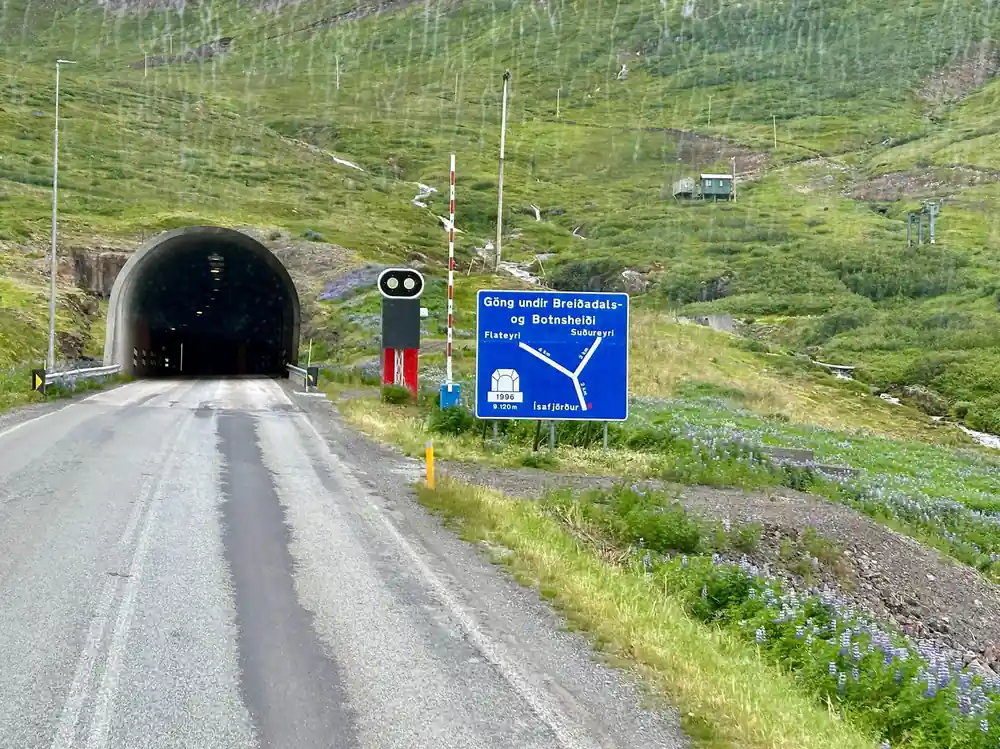
Iceland's tunnels are worth paying attention to for their own sake. Several in this region are single-lane with passing places cut into the rock, lit and signed so that traffic in one direction gives way inside the mountain. The coach handles it routinely, which is more than most drivers manage the first time.
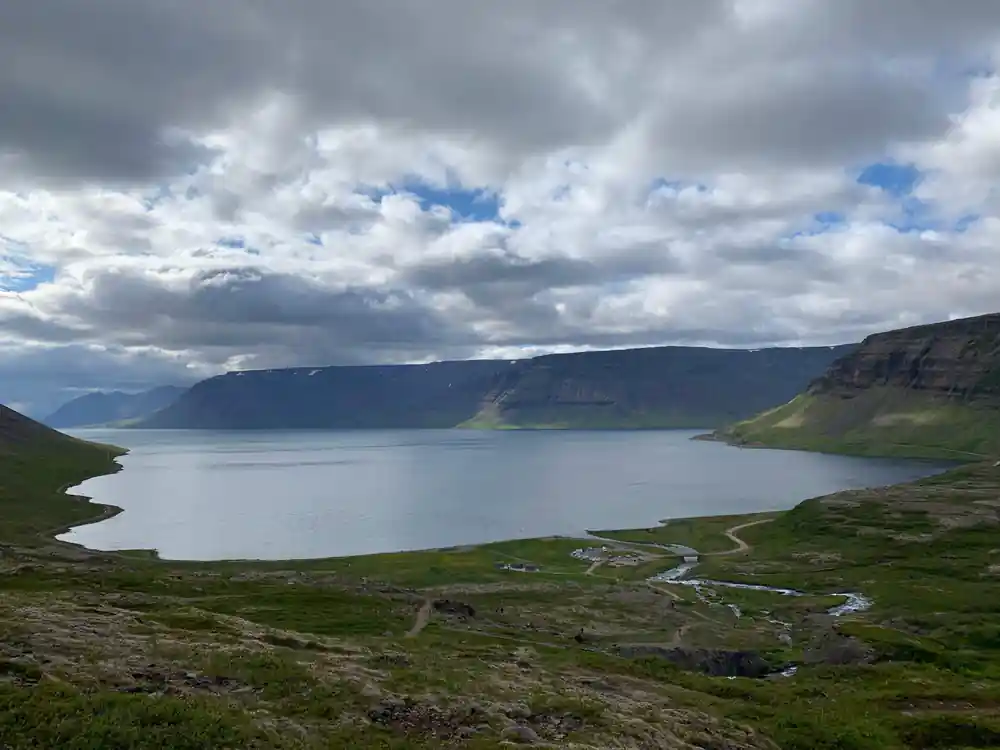
The road running along a green valley with nothing on it
What you actually see
The coach window is not dead time and it is worth choosing a seat accordingly.
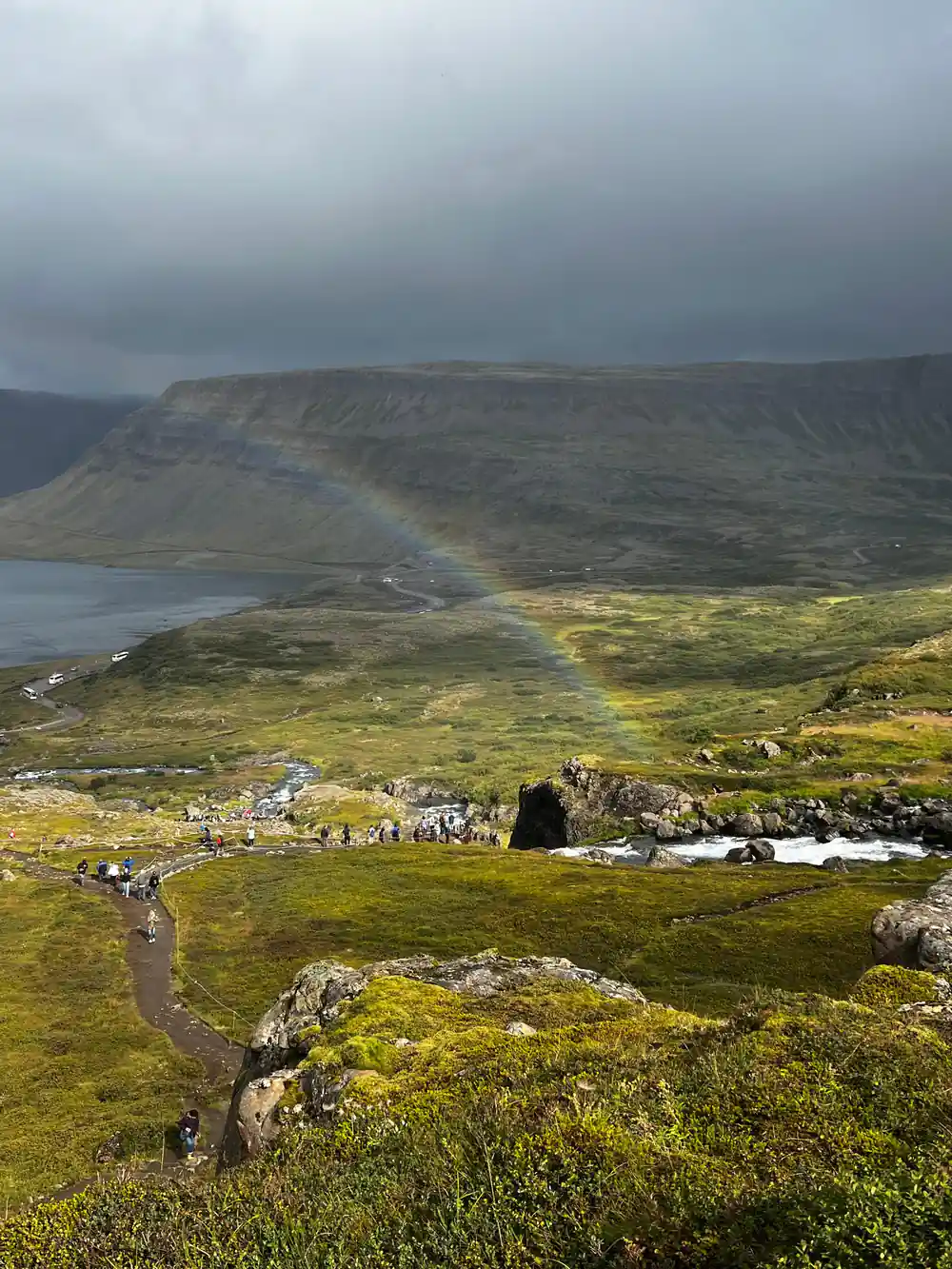
You run along the length of fjords with water on one side and a wall of horizontally striped rock on the other, each stripe a separate lava flow. Waterfalls come off the tops of those walls constantly after rain, in threads rather than rivers, and there can be a dozen in view at once.
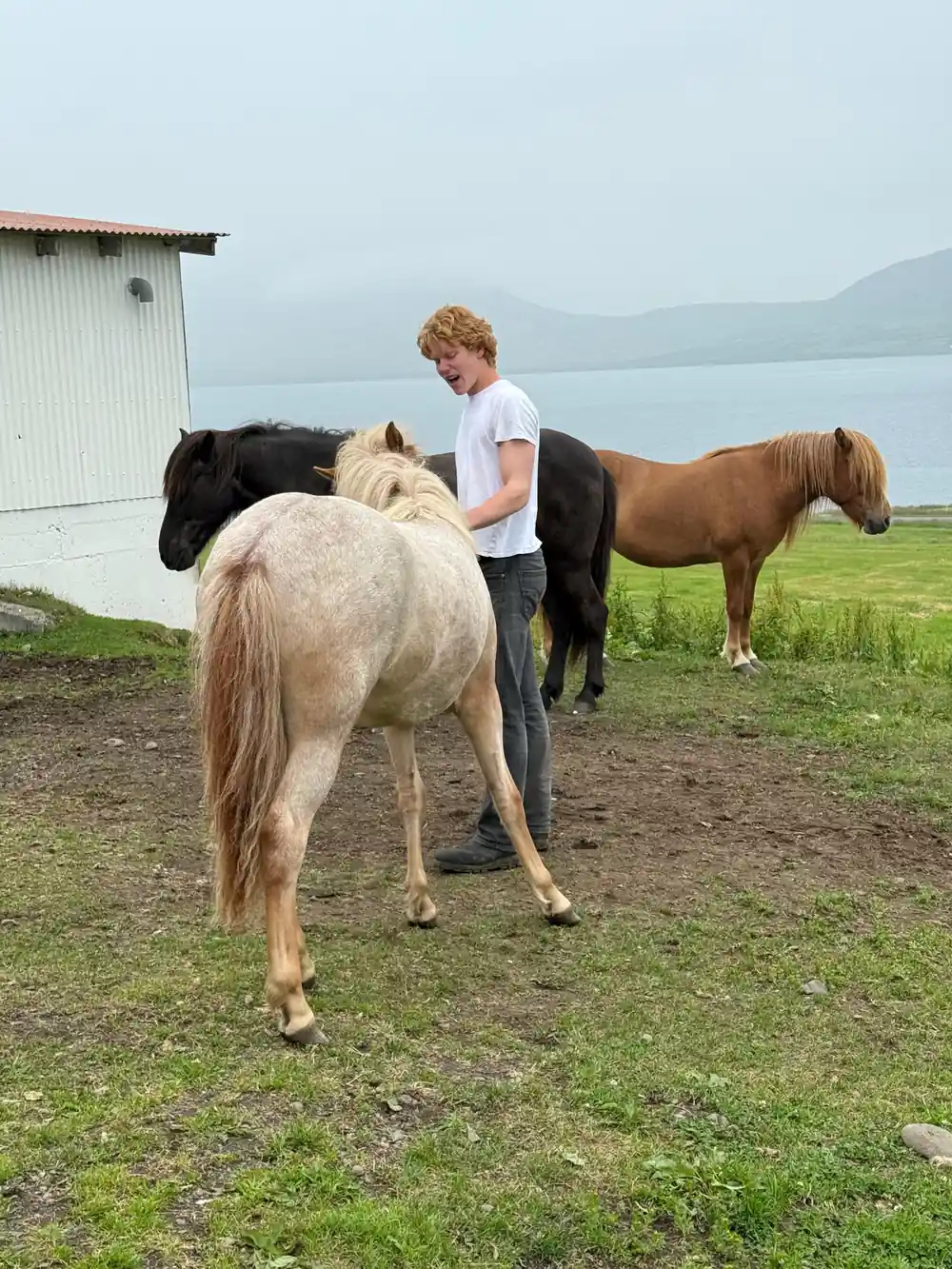
At the water's edge there are farms: a house, a barn, a wire fence and a red or green roof, usually with sheep and often with Icelandic horses. Between them are the ones that failed, which are the same buildings with the roofs gone.
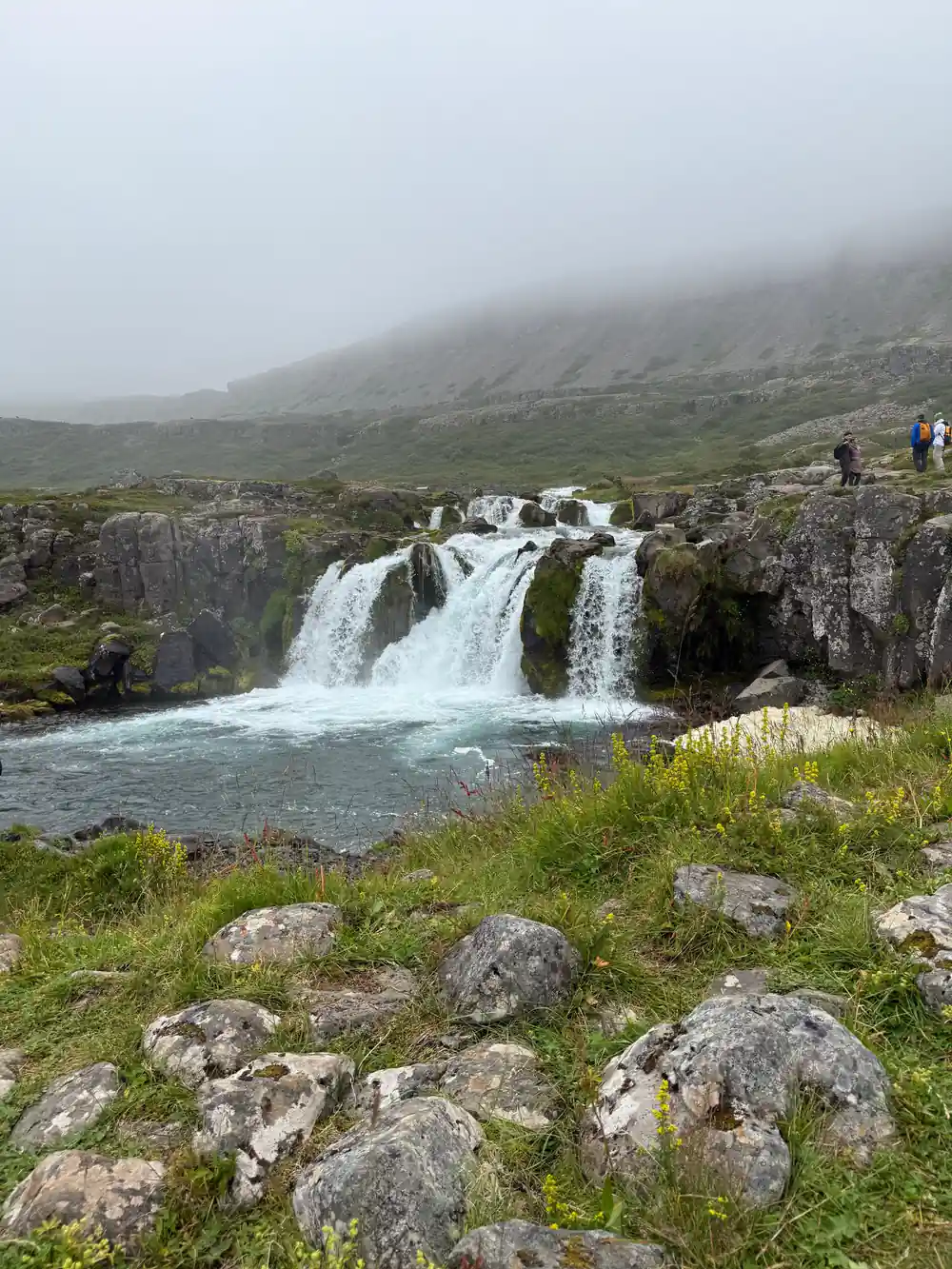
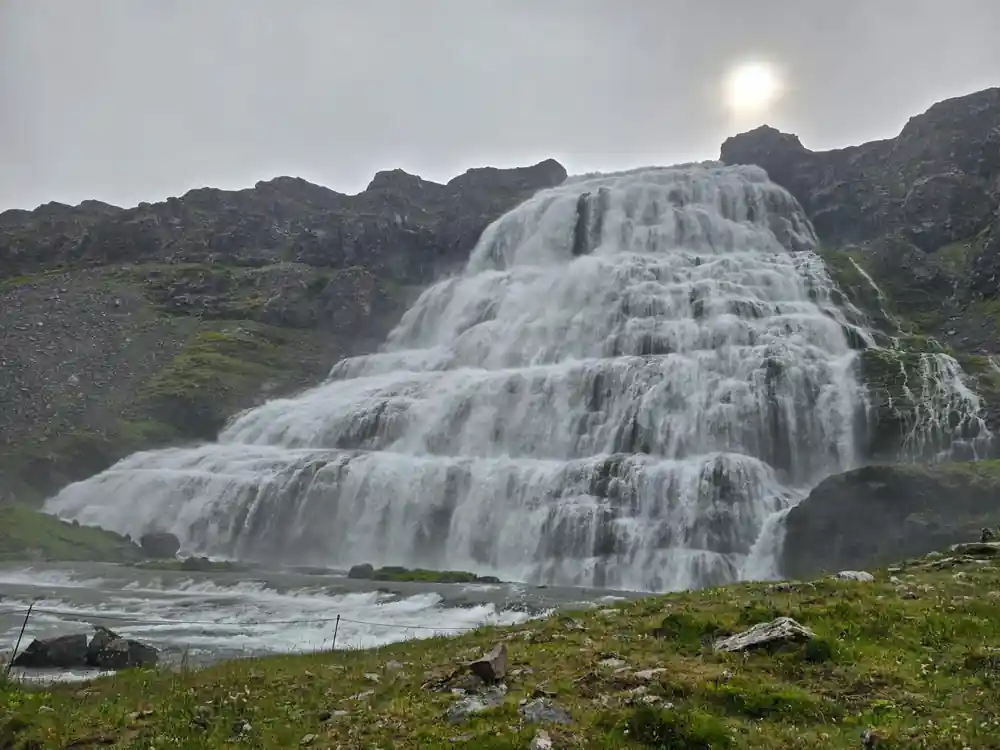
Then you come over into Arnarfjörður and Dynjandi appears at the head of the bay, a white mark on a dark mountain, visible long before the coach gets anywhere near it.
Sit on the right going out if you have a choice. Both sides are good, but the water tends to be on that side for the longer stretches of the outbound run.
The emptiness is the point
There is very little traffic. On a normal day outside the cruise season this road carries a few dozen vehicles, and even in high summer you can drive for twenty minutes without meeting one.
This is not a remote track. It is the main road, the one the post uses and the one the farms depend on, and it is empty because there is almost nobody here to fill it. The whole Westfjords region has around seven thousand residents spread over an area the size of a small country.
For a visitor arriving from a cruise ship with four thousand people on it, the contrast is the most memorable part of the day after the waterfall itself. It is a rare thing to be able to look at a landscape and see no other person in it, and this road does that for most of its length.
It also changes how the waterfall lands. Arriving at a famous natural feature usually means arriving at a car park full of other people who came for the same reason. Here you arrive from an hour of nothing, which is the correct preparation for something a hundred metres tall.
Underground
The mountain pass this route used to climb closed for months every winter. A tunnel opened in 2020 replaced it, and made a day trip to Dynjandi possible from the north.
Winter, and what closes
The tunnel is open all year, and that has taken most of the drama out of this route. What has not gone away is the weather on the sections that are still exposed.
Snow, ice and above all wind close roads in this part of Iceland regularly through the winter, sometimes for hours and sometimes for days. The road authority publishes conditions continuously and Icelandic drivers check them the way other people check the time.
This matters less for a cruise passenger than it sounds, because the cruise season and the closure season barely overlap. Ships call here in the milder months, when the road is a straightforward drive and the only weather question is how wet you will get standing under the waterfall.
An hour of empty road for a hundred metres of water
from US$144Reserve now & pay later