If you read nothing else
- A guesthouse on a farm that also runs sheep and horses.
- An afternoon habit with a long history, not a tourism invention.
- The growing season here is too short for arable farming of any kind.
- The Westfjords have been emptying for a century and it shows from the coach.
What the stop is
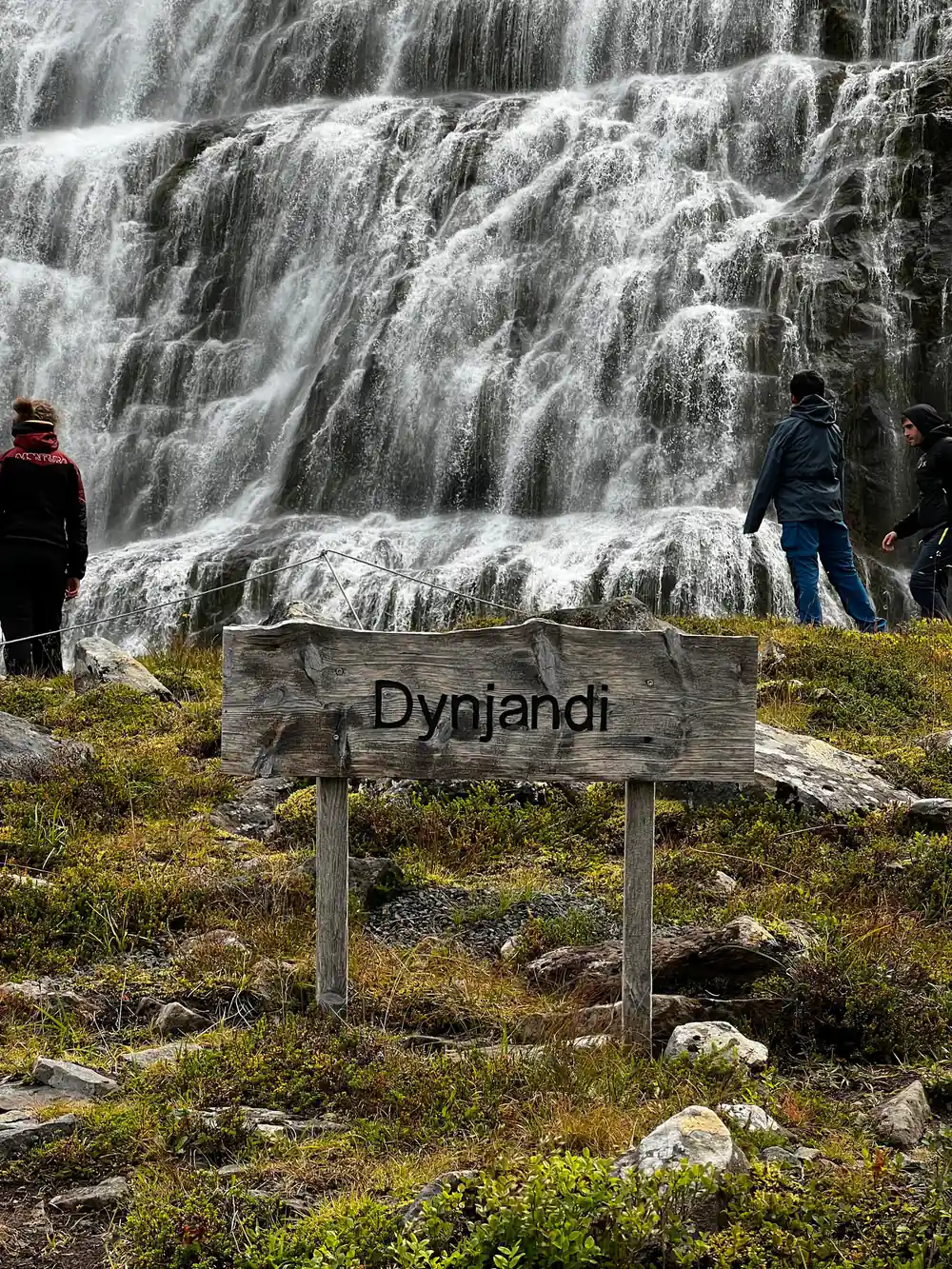
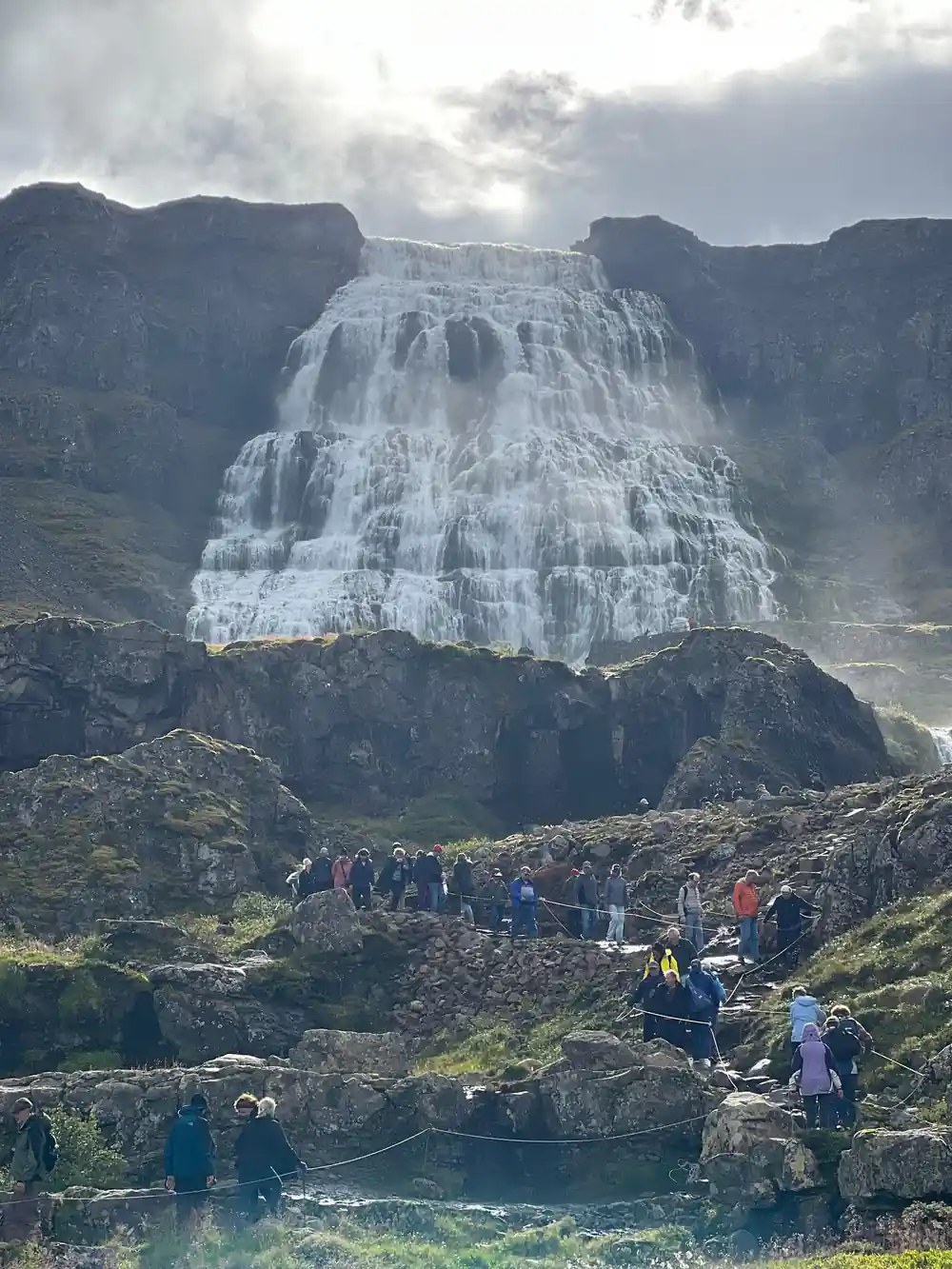
On the way back from the waterfall the coach turns off and pulls up at a farm guesthouse. You get half an hour, coffee, tea and cake, and a toilet that is not in a car park.
It is easy to read this as a scheduling convenience, and it is that. It is also the only time in the day you are inside a Westfjords building that somebody lives in, which is a different thing from looking at farms through a window for two hours.
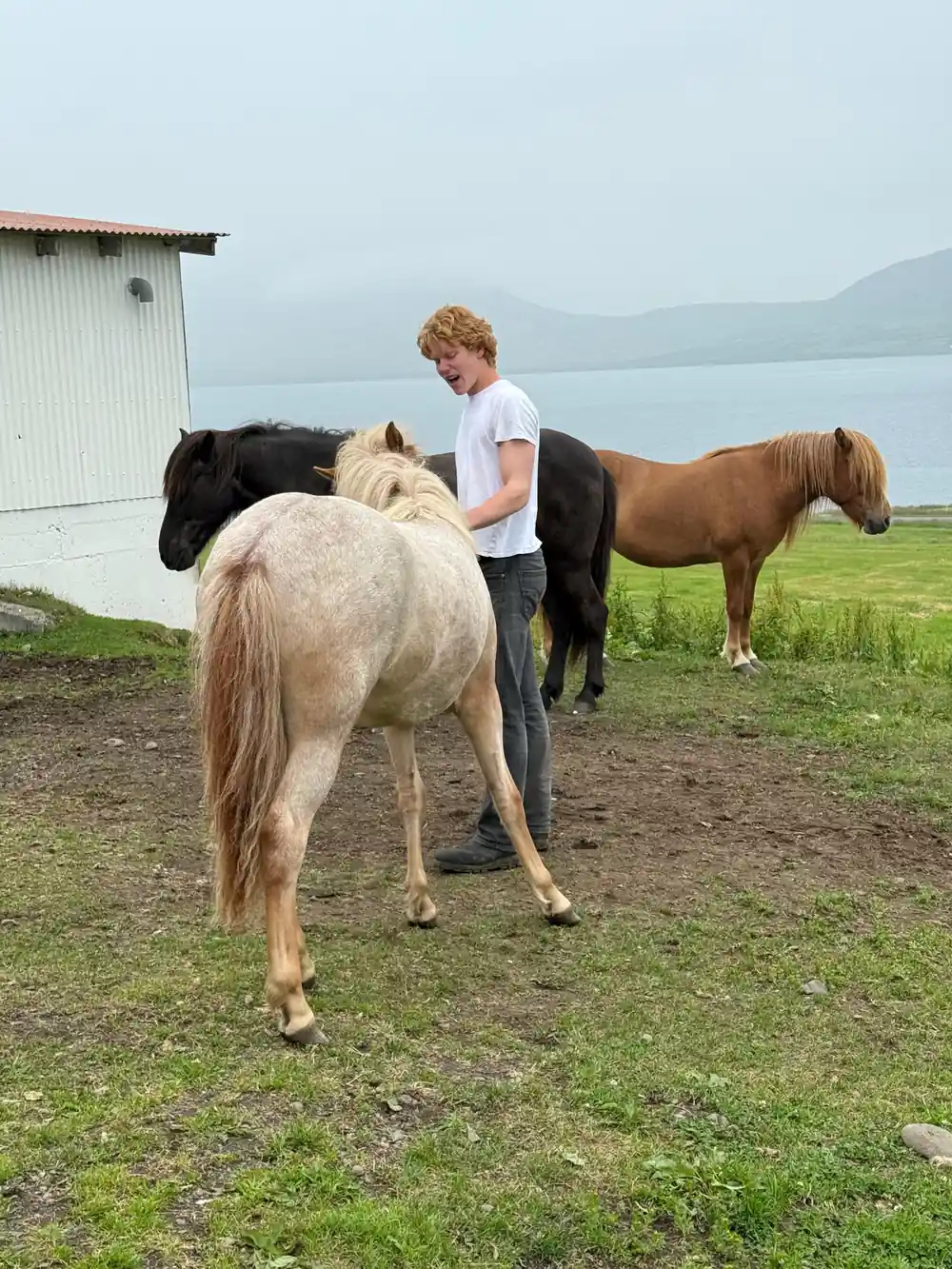
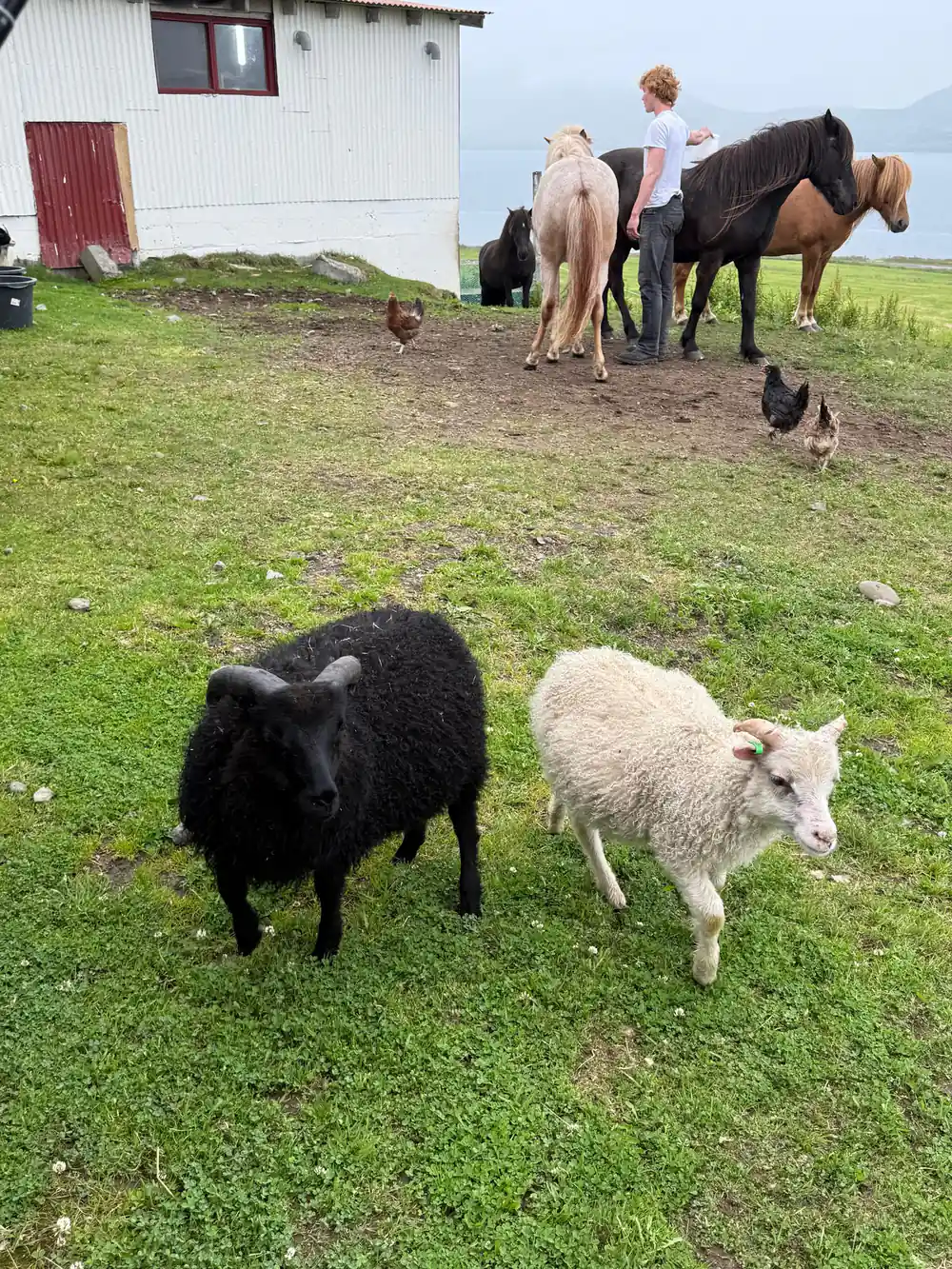
The guesthouse is a farm that takes visitors rather than a visitor attraction that keeps some animals. There are usually horses in the field, often sheep, sometimes hens, and in early summer sometimes a lamb that a child on the tour will end up holding.
It also comes at the right point in the day. You have spent forty-five minutes standing under a waterfall, probably in a wind, and being handed a hot drink in a warm kitchen afterwards is a considerably better piece of scheduling than it looks on the itinerary.
Coffee and cake, and why it is a real thing
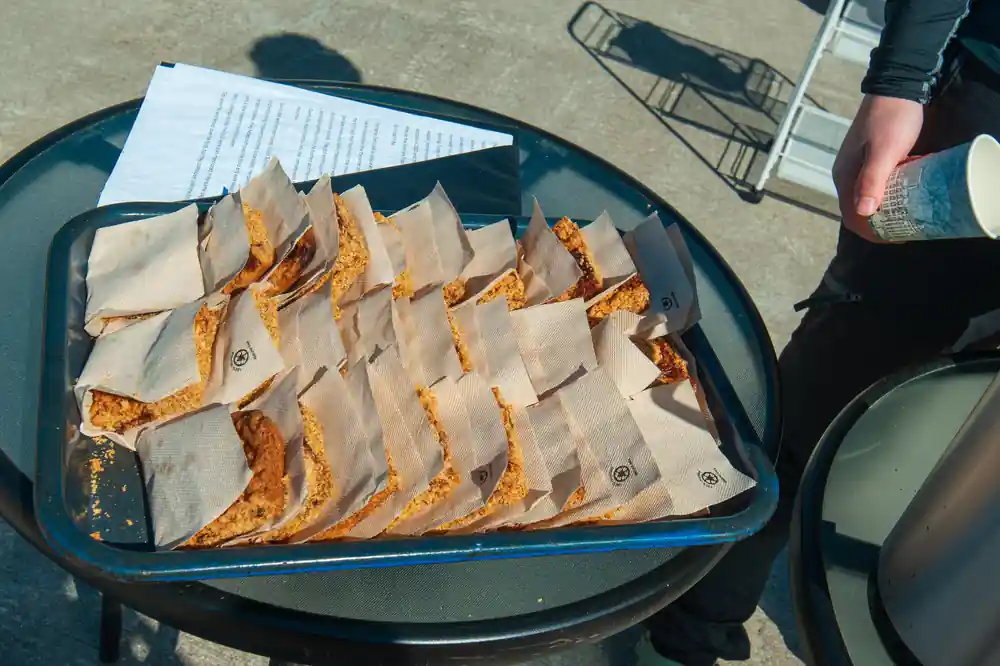
Icelanders drink a great deal of coffee, and the afternoon coffee with something sweet is an established domestic habit rather than something invented for tour groups.
What arrives with it varies. It may be a plain sponge, a layered cream cake, pancakes rolled with sugar or jam, or the twisted fried dough that Icelanders call kleinur. All of them are the kind of thing made in a farm kitchen, and none of them is elaborate.
The logic behind the tradition is not hard to work out. Coffee is imported, sugar is imported and flour is imported, and for most of Icelandic history all three were expensive and none of them grew here. Producing something sweet for a visitor was therefore a way of showing that they mattered, and that meaning has stuck around long after the ingredients stopped being difficult.
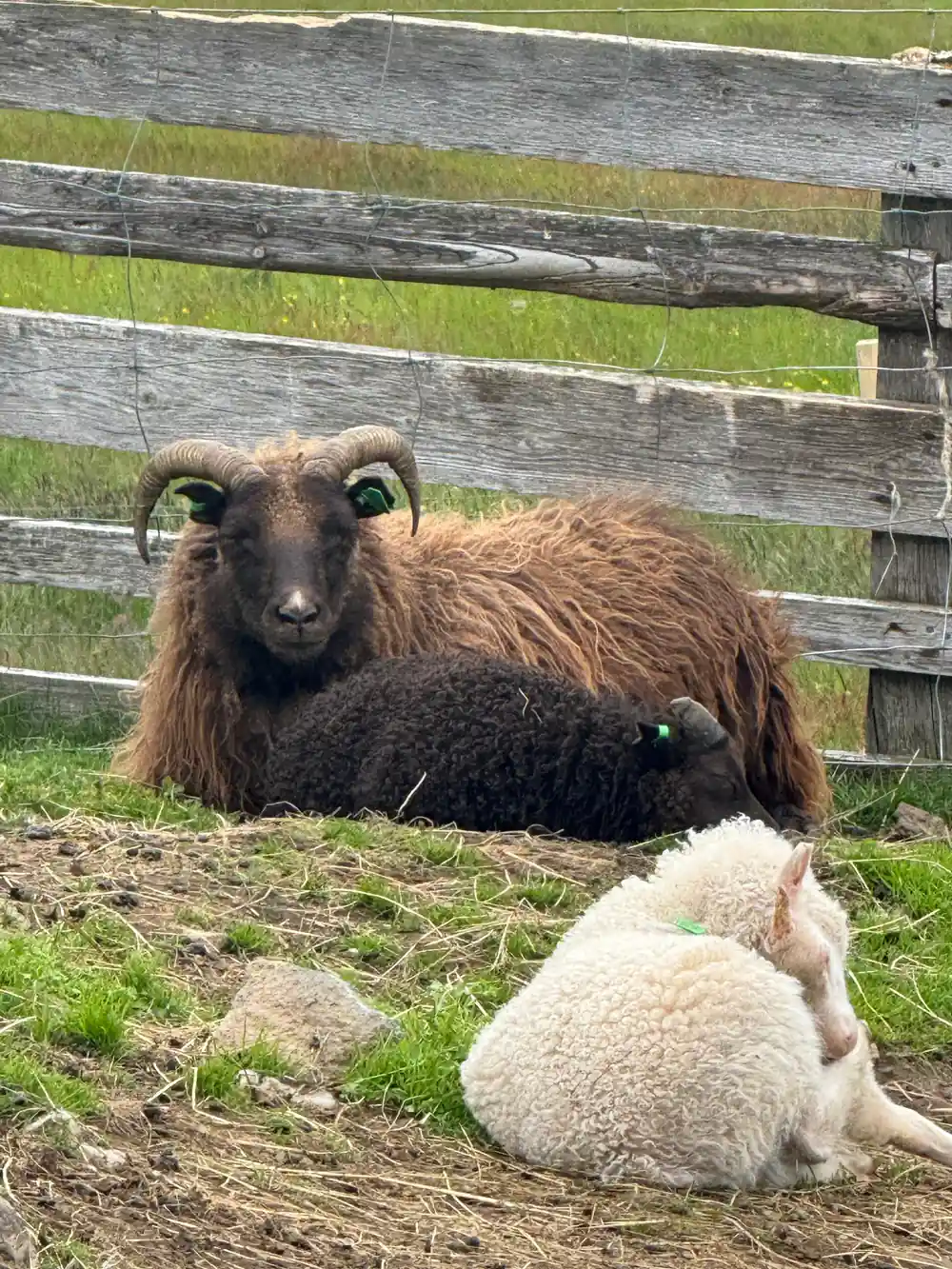
Sheep on farm grass with the fjord behind
What a Westfjords farm actually does
Sheep, mostly, and it is worth understanding why the list is that short.
There is effectively no arable farming here. The growing season is a handful of weeks, the soil is thin, the wind is constant and the sun is unreliable, so the crop is grass and the grass becomes hay and the hay feeds animals through a winter that runs from October to May. What you see rolled in black plastic beside every barn is next winter.
Sheep suit that. They are put out onto the mountain in early summer, they range freely across ground no fence could enclose, and they are gathered in again in September in the annual round-up that remains one of the fixed points of the rural Icelandic year. Icelandic horses are kept alongside them, and some farms keep eider ducks for down, which is a genuinely Westfjords speciality.
Add a few guest rooms, a summer of visitors and whatever other work is available, and that is a living. Just about.
Everything about that list is dictated by a winter of seven or eight months and a summer that arrives late and leaves early. A farm here is not choosing sheep over wheat. There is no version of this place where wheat was ever an option.
The ruins you passed on the way
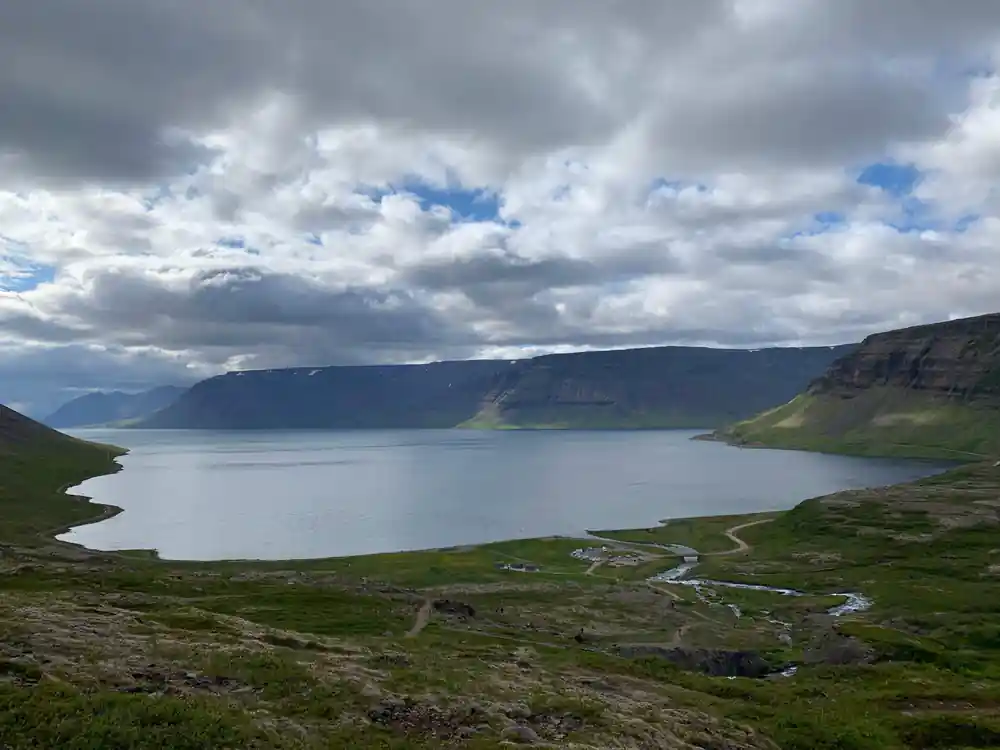
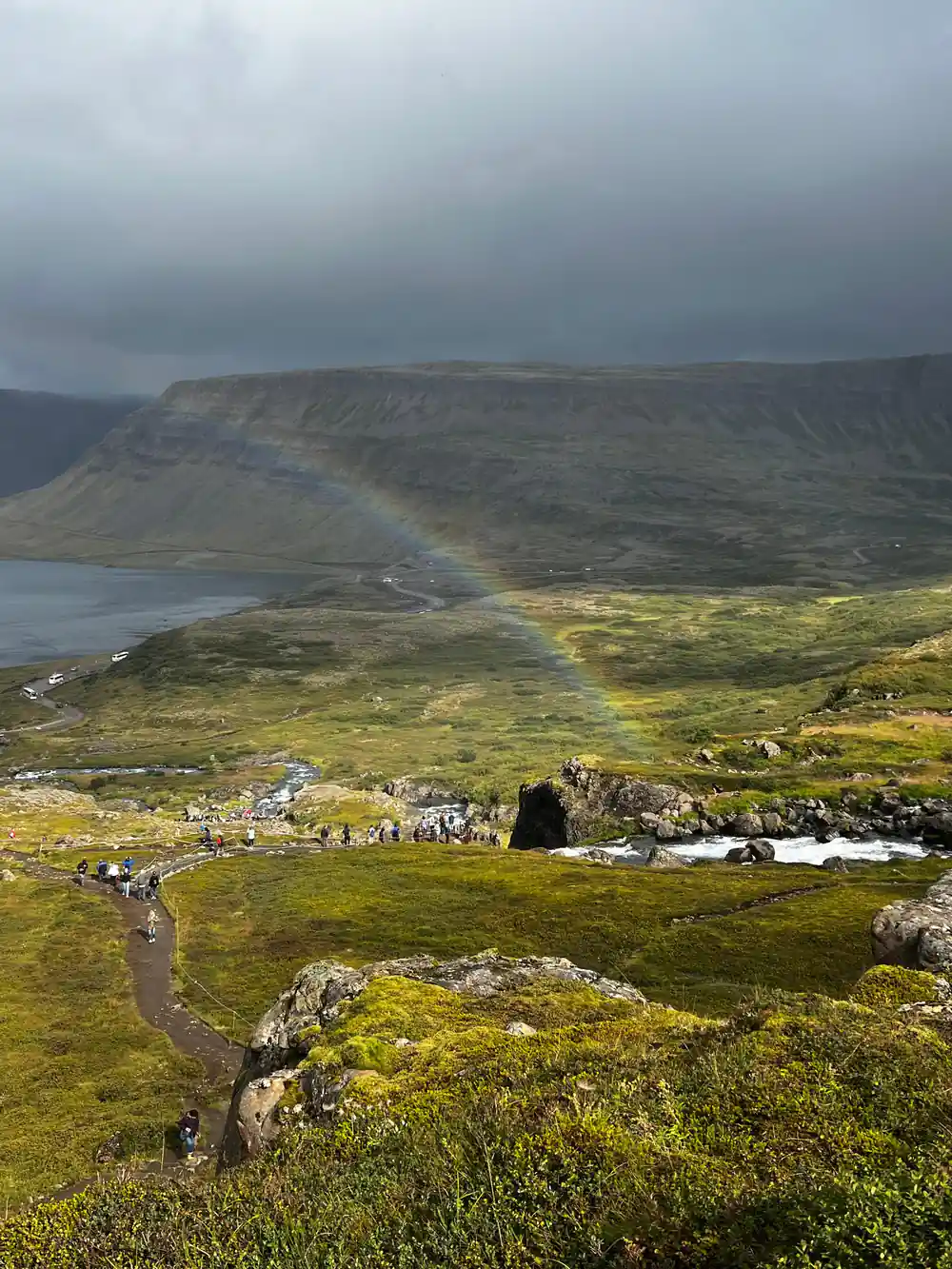
If you looked out of the window on the drive you will have seen abandoned farms, and there are more of them than working ones.
The Westfjords held a much larger population a century ago, when the fishing was done from small boats out of every inlet and a farm at the head of a fjord made economic sense. Mechanised fishing concentrated the industry into a few harbours. Quota systems concentrated it further. Roads, schools, hospitals and work all pulled towards the south-west, and people followed.
The regional population is now around seven thousand and has been falling for decades. Whole fjords that once had a farm on every patch of level ground now have none at all.
This is why the coffee stop is worth more attention than a coach break normally gets. The people making the coffee are the reason there is still anybody here.
The buildings themselves last a surprisingly long time. Concrete and corrugated iron in a cold dry wind decay slowly, so a farm abandoned in the 1960s can still be standing with its walls square and its roof half on, which is why the landscape reads as recently left rather than long gone.
7,000
That is the population of the entire Westfjords, spread over an area the size of a small country, and it has been falling for a hundred years.
Is it staged?
No, and the giveaway is how ordinary it is.
There is no demonstration, no costume, no gift shop and nobody explaining a craft. There is a kitchen, a table, cake, a view of a fjord and some animals in a field. The farm is being itself, and a coach happens to arrive at it a few times a week in summer.
For some visitors that will be underwhelming, and it is fair to say so. For others it is the part of the day they talk about afterwards, precisely because it is the only unmanaged half hour in a scheduled excursion.
Half an hour in a kitchen at the end of a fjord
from US$144Reserve now & pay later