If you read nothing else
- And fifteen back, on rock and gravel, gaining height the whole way.
- Which is why almost nobody manages it in fifteen minutes.
- The rock is wet from spray even when it is not raining.
- Photograph on the way down. That is the whole trick.
What the path is actually like
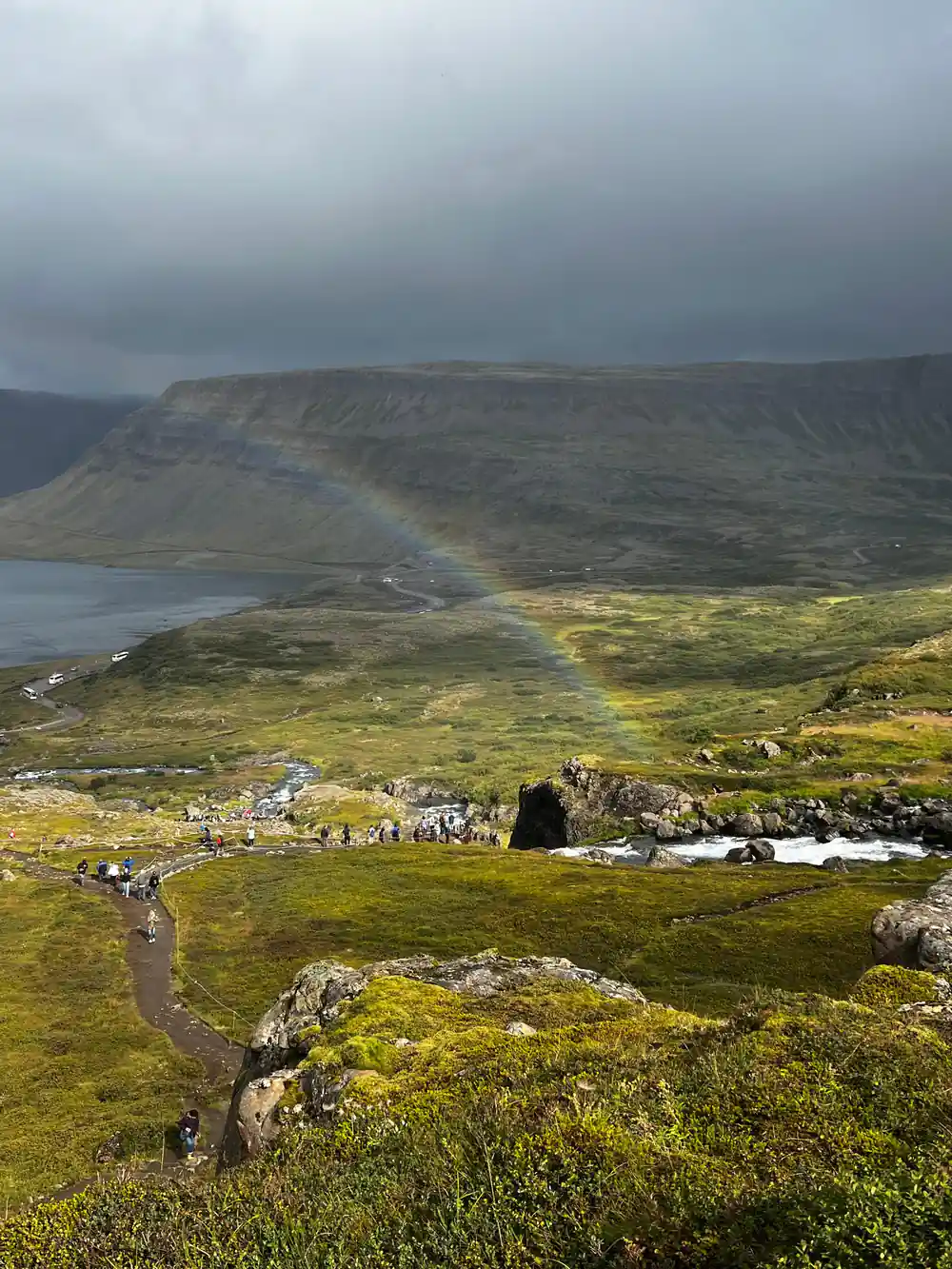
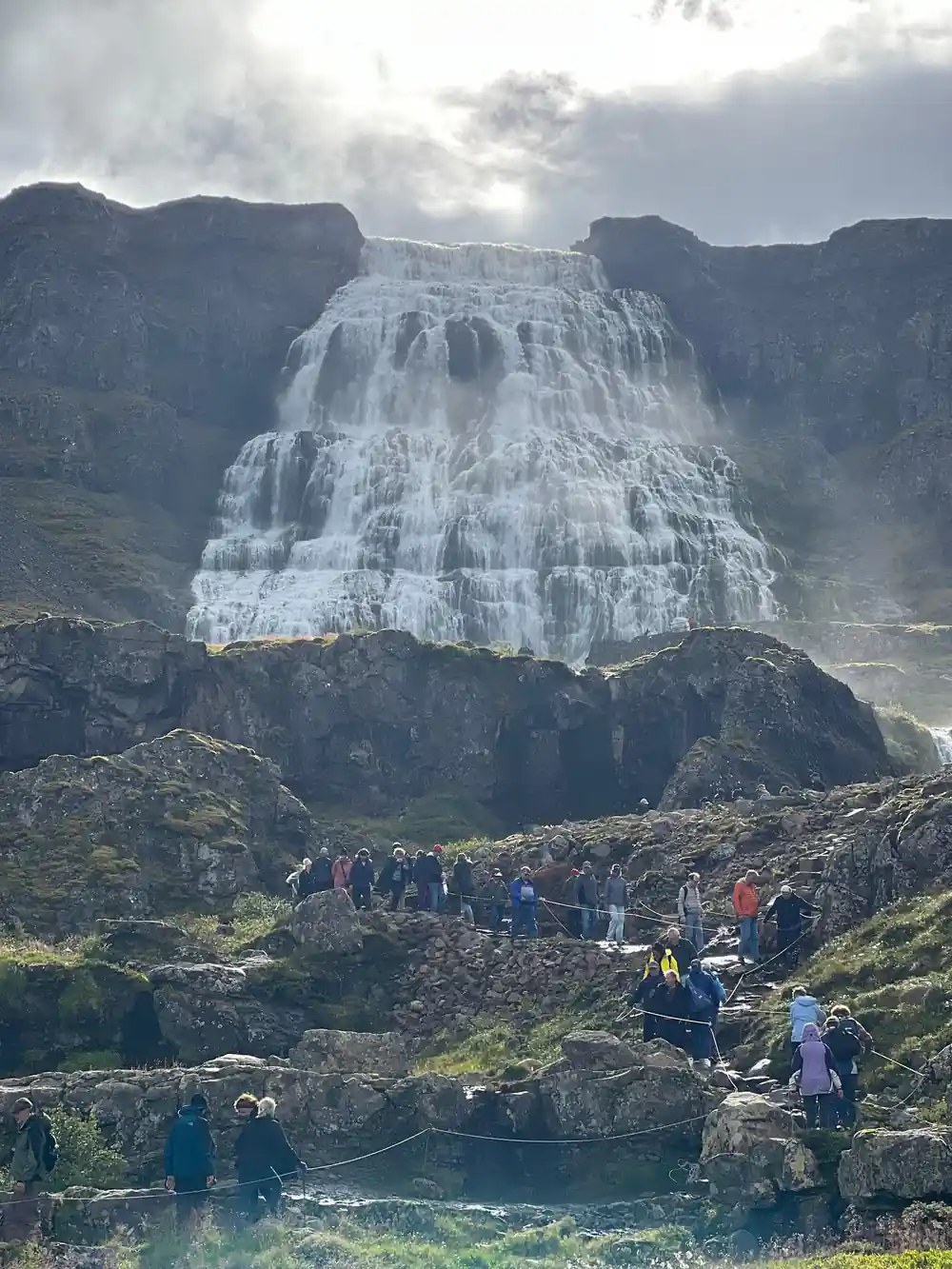
It is a walking path rather than a hike, and it is also not a stroll. From the car park it climbs steadily on a made surface of rock, gravel and stone steps, with sections where the footing is uneven and one or two places where a rope handrail marks the edge.
The height gain is real. You are climbing from the valley floor towards the base of a hundred-metre waterfall, and although you do not go all the way to the top, you finish a good way above where you started. Most reasonably mobile people manage it comfortably. Anyone with a bad knee, a dodgy hip or poor balance will feel it.
Fifteen minutes is the usual figure for the climb, and that is accurate for someone walking steadily without stopping, which describes almost nobody.
It is also entirely exposed. There is no shelter of any kind between the car park and the base of the fall, so whatever the weather is doing when you get off the coach is what you are walking in for the next three quarters of an hour.
Why nobody does it in fifteen minutes
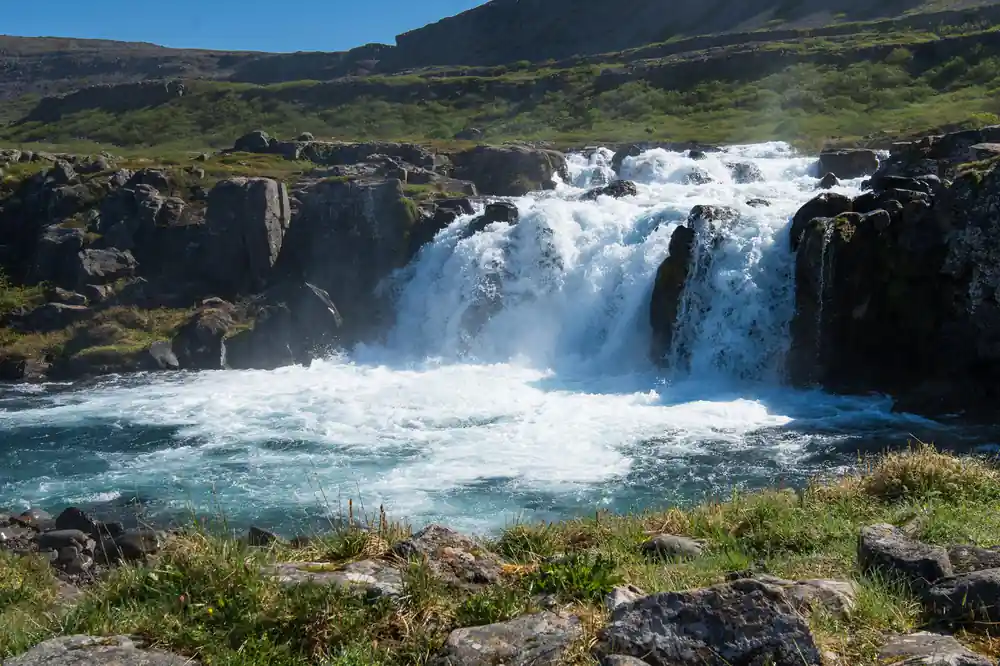
Because the six lower falls are in the way, and each of them is genuinely worth stopping for.
The pattern goes like this. You set off intending to walk straight up. Two minutes later a waterfall drops into a pool immediately beside the path and you stop. Three minutes after that another one comes out of a gorge below you. Then a wide one over green rock. By the time you reach the base of Dynjandi you have used two thirds of your time and taken forty photographs.
The people who see everything are the ones who walk up briskly, spend their time at the top, and photograph the lower falls on the way back down. It sounds trivial. It is the difference between seeing seven waterfalls and seeing four.
How close you get
Close. The path takes you to the foot of the main fall, near enough that the noise makes conversation difficult and near enough that you get wet if the wind is blowing the spray your way.
You cannot go behind it and you cannot climb beside it, and both restrictions are sensible. What you can do is stand at the bottom of a hundred metres of moving water and look up, which is a different experience from looking at it from the car park and is the reason to make the climb at all.
It is also the best place to understand the shape. From below, the staircase of basalt steps that spreads the water is directly overhead, and the way each ledge throws the flow further outward is obvious in a way it never is from a distance.
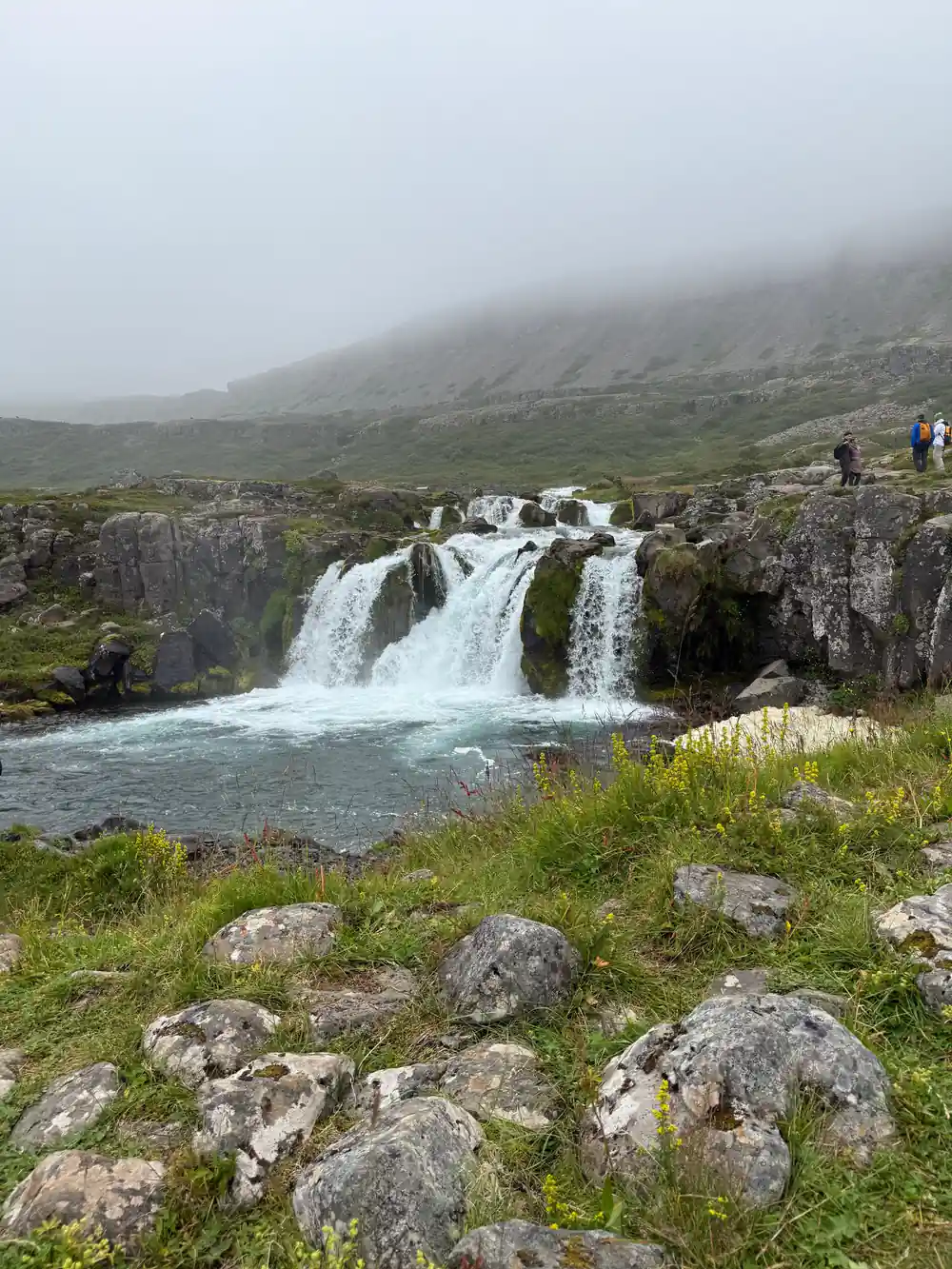
The path climbing past one of the lower falls
Footwear, and the one real hazard
Wear something with grip. That is the entire equipment list, and it is not optional.
The rock near the falls is permanently damp from spray, and wet basalt with a film of algae on it is genuinely slippery. Add real rain, which happens often here, and a smooth-soled shoe becomes a problem on a downhill slope. Walking boots are ideal. Trainers with a decent tread are fine. Fashion trainers and anything with a slick sole are not.
The other thing worth having is a waterproof with a hood. Spray, wind and rain arrive in combination, and an umbrella is useless in this valley.
If the climb is not for you
You are not stuck at the coach, which is worth saying because people assume they are.
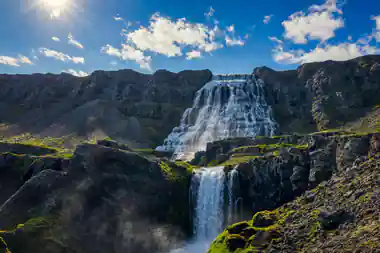
The lower falls begin close to the car park, and the first of them are reachable on nearly level ground within a couple of minutes of getting off. Dynjandi itself is fully visible from the parking area and from the first part of the path, and the classic wide photograph of the whole fall is actually better taken from lower down than from its base.
So the trade is not between the walk and nothing. It is between the base of the main fall and a comfortable view of all seven from below, and the second option is a perfectly good forty-five minutes.
The ground immediately around the car park is level and firm, and there are places to sit. Somebody waiting there is not waiting in a lay-by; they are sitting under a hundred-metre waterfall with three others in earshot.
Facilities, and the practical notes
There are toilets at the car park. Use them, because the next opportunity is the farm stop later in the tour.
There is no café, no shop and no shelter beyond the toilet block, which is a deliberate consequence of the site's protected status. Whatever you want during those forty-five minutes needs to be with you when you get off the coach.
Mobile signal is patchy in the valley. If you are the kind of traveller who agrees a meeting time and place with the people you are travelling with, this is a good occasion for it.
Fifteen minutes up, six waterfalls on the way
from US$144Reserve now & pay later
Worth knowing
How long is the walk?
How steep is it?
What is the footing like?
Can you get to the bottom of the main fall?
What do you pass on the way?
Is forty-five minutes enough?
What if I cannot manage the climb?
Are there toilets?
Car park to the base
Get off and start walking
The clock starts when the coach doors open. Anyone who lingers at the bottom loses the time at the top.
Pass the lower falls without stopping
They are the temptation and they are also on the way back. Note them and keep going.
Climb the rock path
Steady uphill on gravel, stone and steps, with a rope handrail where the ground drops away.
Reach the foot of Dynjandi
The noise makes conversation hard and the spray reaches you. Look up rather than out.
Photograph on the way back
Every lower fall gets its turn, in better order and with no pressure on the clock.
Toilets at the car park
The next stop is the farm guesthouse, which is a while away. Sort it out here.